Fr, 20.11.2026 | Original article from: Concentrating on Chromatography
Mason Chilmonczyk explains how Andson Biotech’s DynaChip uses microfluidic buffer exchange to simplify native mass spectrometry and support real-time biopharmaceutical analysis.Fixing Mass Spec's Bubbles, Clogs & Leaks with Microfluidics
- Photo: Concentrating on Chromatography: Fixing Mass Spec's Bubbles, Clogs & Leaks with Microfluidics
- Video: Concentrating on Chromatography: Fixing Mass Spec's Bubbles, Clogs & Leaks with Microfluidics
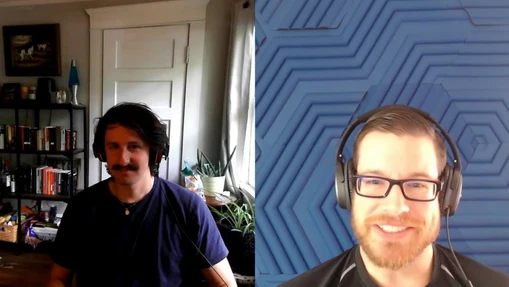
Mass spec instrumentation keeps getting more powerful — so why does sample prep still eat up hours of every workflow? In this episode of Concentrating on Chromatography, host David Oliva sits down with Mason Chilmonczyk, PhD, mechanical engineer and co-founder of Andson Biotech, to unpack how microfluidics is rewriting the front end of mass spectrometry.
Mason developed a miniaturized tangential flow filtration device — the DynaChip — during his PhD at Georgia Tech, engineered to eliminate the "bubbles, clogs, and leaks" that plague nanoelectrospray ionization (nano-ESI) and native mass spec workflows. He and David dig into why scientists accept sample prep bottlenecks as inevitable, how online buffer exchange can turn hours of cleanup into seconds, and what it really means to "democratize" mass spectrometry so that someone with zero MS experience can be running samples independently within weeks.
They also explore one of the most exciting frontiers in the field: using real-time mass spec coupled to bioreactors to finally decode the analytical blind spots in cell therapy manufacturing — and why more consistent, less invasive sample prep could be the key to reducing batch failures in next-generation therapeutics.
In this episode, you'll learn:
- How a mechanical engineer ended up solving one of analytical chemistry's most persistent problems
- What's actually happening inside the DynaChip's 5-micron microfluidic channels
- Why "bubbles, clogs, and leaks" are the real bottleneck in LC-MS and native MS — not the instruments
- How online buffer exchange compresses hours of sample prep into seconds
- What "democratizing mass spec" looks like in practice (and why it matters for biopharma)
- Why cell therapy manufacturing needs untargeted, real-time analytics — not just better instruments
- How mass spec could help predict potency, efficacy, and reduce batch-to-batch variability in cell therapies
- The engineering challenges of interfacing a front-end device with every major mass spec platform (Thermo, Waters, SCIEX)
Video Transcription
For Mason Chilmonczyk, PhD, CEO and co-founder of Andson Biotech, one of the biggest challenges in mass spectrometry is not necessarily the instrument itself, but getting samples into it reliably. In an interview with David Oliva on Concentrating on Chromatography, he discusses how microfluidics can simplify sample preparation, make native mass spectrometry more accessible, and create new opportunities for real-time monitoring in biopharmaceutical and cell therapy manufacturing.
From Mechanical Engineering to Mass Spectrometry
Mason Chilmonczyk's path into mass spectrometry began outside analytical chemistry. With bachelor's, master's, and doctoral degrees in mechanical engineering, he approached the field from an engineering perspective.
During his PhD research at the Georgia Institute of Technology, Chilmonczyk developed a microfluidic mass exchanger designed to perform buffer exchange directly within a flowing sample stream. This technology eventually became the foundation of Andson Biotech and its DynaChip platform, which enables online sample preparation coupled directly to mass spectrometry.
His engineering background helped him identify challenges that many analytical chemists encounter regularly but may have come to accept as unavoidable.
Chilmonczyk summarizes these challenges in three words: "Bubbles, clogs, and leaks."
These problems are particularly familiar in nano-electrospray ionization (nanoESI), where low flow rates and small fluidic channels can make reliable sample introduction difficult.
Rather than focusing exclusively on improving the mass spectrometer, Chilmonczyk saw an opportunity to redesign the systems that prepare and deliver samples to the instrument.
Why Sample Preparation Remains a Bottleneck
Mass spectrometry instrumentation has advanced considerably, enabling scientists to detect increasingly large and complex molecules at lower concentrations.
However, sample preparation has not always progressed at the same pace.
Many laboratories still rely on established procedures involving spin columns, offline buffer exchange, multiple handling steps, and time-consuming optimization.
These methods can deliver excellent results, but they also introduce additional work and potential variability.
In native mass spectrometry, the challenges become even more significant.
Researchers aim to investigate proteins and other biomolecules while preserving structural characteristics and molecular interactions that may be altered during conventional preparation.
This creates a difficult balance: samples must be cleaned sufficiently for mass spectrometric analysis without unnecessarily disrupting the molecular structures being studied.
Chilmonczyk emphasizes that native mass spectrometry does not necessarily reproduce the exact molecular structure present in solution. Nevertheless, it can provide valuable information about biomolecular organization and interactions that may be lost under denaturing conditions.
As research increasingly focuses on complex biological systems, including monoclonal antibodies, adeno-associated viruses (AAVs), oligonucleotides, and other therapeutic molecules, the need for gentle and reproducible sample preparation continues to grow.
Inside the DynaChip: Miniaturized Tangential Flow Filtration
The central technology behind Andson Biotech's approach is microfluidic tangential flow filtration (TFF).
Tangential flow filtration is already widely used in biopharmaceutical manufacturing for filtration, concentration, and buffer exchange.
The principle involves two liquid streams separated by a membrane. One stream contains the sample, while the other contains a suitable buffer. Small molecules and unwanted components can move across the membrane, enabling the sample composition to be modified.
During his doctoral research, Chilmonczyk and his colleagues miniaturized this process into a microfluidic device.
In the DynaChip, the sample flows through a channel approximately 5 µm high, separated from the buffer channel by a membrane only a few micrometers thick.
This miniaturization dramatically reduces the distances over which molecules must diffuse.
As a result, buffer exchange can occur extremely rapidly.
Chilmonczyk describes the ability of the microfluidic device to remove sodium chloride from samples containing concentrations as high as 5 M within approximately one second under the demonstrated conditions.
The rapid buffer exchange process offers several advantages:
- Faster sample preparation: Buffer exchange takes place directly within the flowing sample stream rather than through separate offline preparation steps.
- Low sample consumption: The microfluidic format operates with very small liquid volumes.
- Direct integration with nanoESI: Low-flow operation makes the technology suitable for coupling with nano-electrospray ionization.
- Improved reproducibility: Controlled fluidic conditions can reduce variability associated with manual preparation.
- Online analysis: Samples can pass through the buffer exchange system and proceed directly into the mass spectrometer.
Chilmonczyk recalls demonstrations in which workflows that previously required one or two hours could produce comparable analytical data in approximately five minutes using the new approach.
Importantly, the DynaChip does not provide chromatographic separation. Its role is to perform sample cleanup and buffer exchange, making it particularly useful for suitable biological samples rather than replacing LC separations in all complex-mixture applications.
Making Microfluidics Reliable Enough for Everyday Use
Miniaturization creates its own engineering challenges.
Microfluidic systems are also susceptible to bubbles, blockages, and leaks—the very problems Chilmonczyk originally wanted to overcome.
One of the biggest challenges in commercializing the DynaChip was therefore ensuring that individual microfabricated devices performed consistently.
Producing a functional chip during academic research was only the beginning. Manufacturing devices with reproducible performance across different batches and laboratories required additional development.
Andson Biotech addressed these challenges through improvements in microfabrication, integrated sensors, fluidic connections, and automated diagnostic routines.
Another important consideration was compatibility with existing mass spectrometers.
Laboratories use instruments from different manufacturers, each with its own hardware and software environment.
The company therefore designed its system to connect to mass spectrometers through a relatively simple fluidic interface while also supporting communication required for more advanced automated workflows, including autosampler integration.
According to Chilmonczyk, the resulting platform can be installed and used to begin analyzing samples during a laboratory demonstration in approximately 30 minutes.
The goal is to make advanced sample preparation practical without requiring laboratories to redesign their entire mass spectrometry workflow.
Democratizing Advanced Mass Spectrometry
Chilmonczyk frequently describes Andson Biotech's mission as making advanced mass spectrometry more accessible.
For him, this means reducing the specialized expertise required to operate and troubleshoot analytical workflows.
He illustrates the concept with an example from his own team.
A new intern joined Andson Biotech without previous practical experience operating a mass spectrometer. Within approximately six weeks, she was independently performing quality assurance measurements on the company's consumables and evaluating results such as protein glycoform resolution.
Chilmonczyk contrasts this experience with his own doctoral research, when obtaining his first useful mass spectrometry data took approximately 18 months.
Although mass spectrometry remains a sophisticated analytical technique, he believes that better engineering, clearer interfaces, and integrated diagnostics can significantly shorten the learning process.
The approach reflects his experience with other engineering equipment, where well-designed instruments help users understand what is happening and guide them through troubleshooting procedures.
For mass spectrometry, this could mean allowing more scientists to focus on experimental questions rather than spending large amounts of time resolving sample introduction problems.
Real-Time Mass Spectrometry for Cell Therapy Manufacturing
One of the most promising applications discussed in the interview is cell therapy manufacturing.
Unlike conventional pharmaceutical products, cell therapies involve living biological systems whose behavior can change throughout production.
Even when manufacturing conditions remain similar, differences in starting materials or cellular activity can affect how a batch develops.
Chilmonczyk argues that this dynamic behavior is one of the key challenges in understanding and controlling cell therapy processes.
An important analytical question is how to identify molecular signals that reflect the current state of the cells and potentially relate to therapeutic potency, efficacy, or safety.
Cells continuously release proteins and other molecules into their surrounding environment.
Monitoring changes in these secreted molecules could provide valuable information about cellular activity during manufacturing.
However, the most informative molecular markers are not always known in advance.
This is where untargeted mass spectrometry combined with rapid online sample preparation could offer an important advantage.
Rather than measuring only a predetermined group of biomarkers, researchers could potentially follow broader molecular changes over time and identify patterns associated with different cellular states.
By connecting microfluidic sample preparation and mass spectrometry directly to a bioreactor, laboratories could perform more frequent analyses without repeatedly interrupting the manufacturing process for extensive offline sample preparation.
Andson Biotech is exploring this approach through NIH-funded research and collaborations with pharmaceutical companies.
The objective is to investigate whether real-time molecular measurements can provide additional insights into cell therapy production and eventually support more informed process decisions.
Understanding Cell Therapy Dynamics and Batch Variability
Chilmonczyk highlights mesenchymal stromal cell therapies as one example of the challenges involved.
These therapies may require cellular activation through different processing conditions, and individual batches can produce substantially different analytical results even when similar manufacturing procedures are followed.
He argues that understanding the timing and evolution of molecular changes may be just as important as measuring their final concentrations.
If a particular molecular signal increases during cellular activation, for example, its rate of change and relationship to other signals may provide additional information about the state of the developing therapy.
More frequent measurements could help researchers investigate these relationships and better understand sources of batch-to-batch variability.
However, the identification and validation of molecular indicators that reliably predict therapeutic performance remain significant research challenges.
The opportunity is therefore not simply to collect more mass spectra, but to determine which measurements provide meaningful information about the biological process.
Native MS Opportunities in Biopharmaceutical Analysis
Beyond cell therapies, Chilmonczyk sees considerable potential for online sample preparation in established biopharmaceutical applications.
One example involves the analysis of monoclonal antibodies during cell culture.
Traditional workflows may require samples to be collected and processed offline before molecular characteristics can be evaluated.
Using online buffer exchange coupled to native mass spectrometry, Andson Biotech has demonstrated the ability to analyze samples directly from culture media and resolve protein glycoforms.
Such measurements could make it possible to monitor changes in molecular characteristics throughout a manufacturing process rather than relying exclusively on measurements taken at selected stages.
Chilmonczyk also points to emerging applications involving larger biomolecular assemblies, where conventional sample preparation can influence the structures or interactions that researchers want to investigate.
Advances in mass spectrometry, including charge detection mass spectrometry (CDMS), are creating new analytical possibilities for these complex molecules.
At the same time, those advances increase the importance of delivering samples to the instrument in a suitable form.
Different Approaches to Innovation Across the Pharmaceutical Industry
One surprising aspect of Chilmonczyk's experience has been the diversity of attitudes toward emerging analytical technologies.
Some pharmaceutical companies are actively investing in native mass spectrometry and cell therapy research, while others continue to prioritize established analytical methods.
He notes that even among large pharmaceutical organizations, there is no single approach to adopting new technologies.
Some laboratories immediately recognize opportunities for microfluidic sample preparation, while others see limited value for their existing workflows.
For Chilmonczyk, this reinforces the importance of matching technologies to the right analytical problems.
It also highlights the value of collaboration between engineering specialists and analytical chemists.
The development of the DynaChip required not only microfabrication expertise but also practical knowledge of mass spectrometry, sample handling, and laboratory workflows.
The Future of Sample Preparation and Mass Spectrometry
For Chilmonczyk, the next advances in mass spectrometry may depend as much on improving sample preparation as on developing more powerful analytical instruments.
Microfluidic technologies offer opportunities to reduce preparation times, improve reproducibility, and connect analytical measurements more directly to biological processes.
Native mass spectrometry and real-time bioprocess monitoring are two areas where these capabilities could become particularly valuable.
The challenge now is to translate promising technological developments into reliable tools that researchers can incorporate into everyday laboratory operations.
As mass spectrometry continues to expand into increasingly complex biological applications, making sample preparation faster, gentler, and easier to operate could be an important step toward unlocking the full capabilities of modern instrumentation.
This text has been automatically transcribed from a video presentation using AI technology. It may contain inaccuracies and is not guaranteed to be 100% correct.
Concentrating on Chromatography Podcast
Dive into the frontiers of chromatography, mass spectrometry, and sample preparation with host David Oliva. Each episode features candid conversations with leading researchers, industry innovators, and passionate scientists who are shaping the future of analytical chemistry. From decoding PFAS detection challenges to exploring the latest in AI-assisted liquid chromatography, this show uncovers practical workflows, sustainability breakthroughs, and the real-world impact of separation science. Whether you’re a chromatographer, lab professional, or researcher you'll discover inspiring content!
You can find Concentrating on Chromatography Podcast in podcast apps:
and on YouTube channel