We, 7.10.2026 | Original article from: LabRulezGCMS Library
This week we bring you application notes by Agilent Technologies, LECO, Shimadzu, and Thermo Fisher Scientific!News from LabRulezGCMS Library - Week 41, 2026
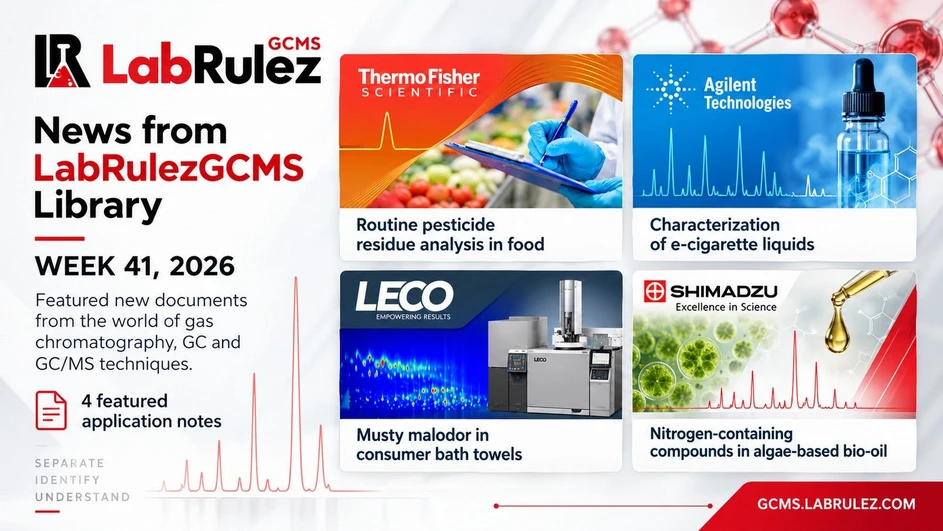
LabRulez / AI: News from LabRulezGCMS Library - Week 41, 2026
Our Library never stops expanding. What are the most recent contributions to LabRulezGCMS Library in the week of 5th October 2026? Check out new documents from the field of the gas phase, especially GC and GC/MS techniques!
👉 SEARCH THE LARGEST REPOSITORY OF DOCUMENTS ABOUT GCMS AND RELATED TECHNIQUES
👉 Need info about different analytical techniques? Peek into LabRulezLCMS or LabRulezICPMS libraries.
This week we bring you application notes by Agilent Technologies, LECO, Shimadzu, and Thermo Fisher Scientific!
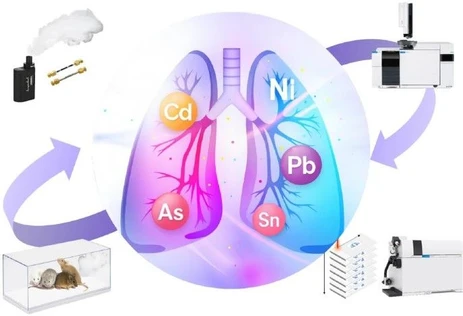
1. Agilent Technologies: Comprehensive Characterization of E-Cigarette Liquids
Identifying e-liquid sample constituents using GC/MS with Agilent MassHunter Unknowns Analysis and Target Deconvolution
- Application note
- Full PDF for download
E-cigarette and vaping products have gained widespread popularity over the past decade and are now available in a broad range of formulations and flavors. Unlike conventional cigarettes, these products generate an inhalable aerosol by heating a liquid formulation rather than combusting tobacco. As a result, the chemical composition of the e-liquid directly influences the composition of the generated aerosol and therefore plays an important role in product quality and consumer exposure.
E-liquid formulations are typically composed of carrier solvents such as propylene glycol (PG) and vegetable glycerin (VG), together with flavoring ingredients and other formulation additives. Although these major constituents are generally known, commercial products can contain dozens to hundreds of individual flavor-related compounds, manufacturing residues, impurities, reaction products, and degradation products. Consequently, characterization of e-liquid formulations presents a significant analytical challenge, particularly when unexpected or previously unrecognized compounds are present.
The Japanese market presents a unique analytical scenario compared to many international markets. In Japan, nicotine‑containing e-liquids are subject to regulatory controls and therefore are not commonly distributed through conventional retail channels. As a result, many commercially available vaping liquids sold in Japan are marketed as nicotine-free formulations. Nevertheless, analytical laboratories may need to verify the absence of nicotine or investigate imported products where nicotine may be present.
Flavoring agents represent another important class of compounds within vaping products. Among these, menthol is one of the most frequently encountered flavor additives because of its characteristic cooling sensation and widespread consumer acceptance. Consequently, menthol serves as an excellent model target compound for evaluating targeted confirmation workflows in complex e-liquid matrices.
Gas chromatography/mass spectrometry (GC/MS) remains one of the most powerful analytical techniques for characterization of volatile and semivolatile compounds in vaping products. When operated in full-scan mode, GC/MS provides comprehensive mass spectral information for every detectable chromatographic peak, enabling both targeted and non-targeted investigations from a single acquisition. However, the complexity of e-liquid formulations frequently results in overlapping chromatographic peaks and coeluting components that can complicate traditional data review approaches based solely on the total ion chromatogram.
To address these challenges, advanced data-processing tools have become increasingly important. MassHunter Unknowns Analysis enables automated detection of chromatographic components, spectral deconvolution, and library searching, allowing for comprehensive non-target screening of complex samples. Target Deconvolution is a targeted screening capability available within Agilent MassHunter Quantitative Analysis software. The workflow is designed for compounds of known analytical interest and utilizes user-defined target libraries containing compound-specific mass spectral information. Unlike conventional extracted‑ion chromatogram (EIC) approaches, Target Deconvolution evaluates the overall spectral pattern of the target compound and compares it against the reference library. By leveraging full-scan GC/MS data, the software can selectively recognize and confirm target analytes even in the presence of chromatographic overlap, matrix interference, or coeluting compounds. This approach enables targeted screening and compound confirmation without requiring dedicated SIM acquisition methods.
In this study, two commercially available e-cigarette liquids obtained in Japan were diluted with dichloromethane and analyzed using a 5977C GC/MS system operating in fullscan mode. To demonstrate both comprehensive screening and target confirmation capabilities, menthol and nicotine reference standards were added to the sample prior to analysis. The resulting full-scan data were processed using both Unknowns Analysis and Target Deconvolution.
Experimental
Instrumentation
- GC/MS: Agilent 8890 GC and Agilent 5977C GC/MSD
- Column: Agilent J&W DB-624 UI, 30 m × 0.32 mm, 1.8 μm
Conclusion
A commercially available e-cigarette liquid was successfully characterized using full-scan GC/MS following simple dilution with dichloromethane. To evaluate both comprehensive screening and targeted confirmation capabilities, menthol and nicotine reference standards were added to the sample prior to analysis.
Unknowns Analysis enabled automated component detection, spectral deconvolution, and library searching, providing comprehensive characterization of the e-cigarette matrix and revealing both major and minor constituents throughout the chromatographic profile. The deconvolution workflow improved the detection and identification of compounds in chromatographically complex regions, demonstrating the value of non-target screening for vaping products that contain flavor-related compounds and formulation additives.
Target Deconvolution was subsequently applied to the same full-scan dataset and successfully confirmed both menthol and nicotine within the fortified sample. By extracting compound-specific spectral information from the complex matrix, the workflow provided confident confirmation of compounds of interest without requiring additional targeted acquisition methods, such as SIM analysis or reinjection of the sample.
The complementary use of Unknowns Analysis and Target Deconvolution demonstrates how a single GC/MS full‑scan acquisition can support both discovery of unexpected compounds and confirmation of targeted analytes. This integrated approach maximizes the analytical value of each injection, simplifies data review, and increases confidence in compound identification.
The integrated workflow provides an efficient and information-rich strategy for characterization of complex vaping-product samples using a single GC/MS full-scan acquisition.
2. LECO: Investigation of Musty Malodor in Consumer Bath Towels with GCxGC and TOFMS
- Application note
- Full PDF for download
Malodor aromas can be an issue for many different types of samples, including consumer fabrics like clothing and bath towels. With these fabrics, a musty malodor can sometimes arise after extended use. These odors can be challenging to remove with standard laundry and washing cycles, so they are a concern for consumers. Determining the source of these aromas with analytical tools can also be a challenge because the fabric materials can be quite complex and the specific analytes contributing to the aroma may be present at very low levels.
Comprehensive two-dimensional gas chromatography (GCxGC) with time-of-flight mass spectrometry (TOFMS) is a powerful tool for investigating these types of malodors. GCxGC helps to address the sample complexity by improving the peak capacity with two dimensions of complementary separations. This can uncover more of the chemical information about complex samples that may be challenging to determine with a traditional single-dimension GC separation. The Pegasus BTX TOFMS helps to address the sensitivity challenges by providing low-level detection with full m/z range non-skewed spectral data that can be readily searched against mass spectral databases to provide identifications for analytes, even at very low levels. This combination leads to detailed chemical data about challenging samples that can be screened for target analytes and investigated to determine non-targeted analytes of importance.
In this work, we investigated the volatile and semi-volatile chemical components of used consumer towels with a goal toward exploring the musty malodors. A collection of towel swatches, some with the malodor and some without, were sampled with headspace solid phase microextraction (HS-SPME) and analyzed with GCxGC-TOFMS. There were some analytes of interest with known aroma properties similar to what was observed with the sensory analysis of the towels. An additional non-targeted review of the data was also performed to determine other analytes of potential interest. Various software tools facilitated these data analysis tasks and are also discussed.
Experimental
Four post-use consumer towels were analyzed with GCxGC-TOFMS for their volatile and semi-volatile chemical profile. Sensory analysis had determined that three of the towels (001, 002, and 003) had some presence of a musty malodor, and one towel (004) was a control with a different dominant odor character. Prior to GCxGC-TOFMS analysis, each towel swatch (approximately 2x1.25 inches) was moistened with 300 µL of DI water and placed in a 20 mL HS-SPME vial. The vial was heated at 40 °C for 60 min in an LPAL agitator and then sampled with HS-SPME at a time between 0.5 and 24 h after heating. For HS-SPME, each vial was incubated for 10 min at 65 °C and extracted with a tri-phase fiber (PDMS, DVB, C-WR) for 30 min at the same temperature. The samples were then analyzed with LECO’s Pegasus BTX 4D, as described in Table 1. An alkane standard was also analyzed with the same methods for retention index (RI) determinations. Data were analyzed with ChromaTOF for peak finding and ChromaTOF Tile for automated differentiation.
Conclusions
In this work, LECO’s Pegasus BTX 4D GCxGC-TOFMS was used to evaluate a set of towel swatches, some with malodors. The samples were very complex with many analytes spanning a large dynamic range. GCxGC effectively separated individual analytes within this complex sample and the BTX TOFMS provided MS detection with excellent sensitivity. This hardware combination helped uncover more analyte information than could be determined with a single GC separation. The data were reviewed for target analytes that were hypothesized to connect with the malodor, and a non-targeted review was performed with ChromaTOF Tile to uncover additional analytes that may be of interest. Many analytes with relevant aroma descriptors and sample trends were determined.
3. Shimadzu: Quantification of Nitrogen-Containing Compounds in Algae-Based Bio-Oil Using ELEM-SPOT
- Application note
- Full PDF for download
User Benefits
- Even in samples with complex matrices, nitrogen-containing compounds (N-compounds) can be detected selectively and with high sensitivity, enabling analysis with an equimolar response.
- With the same setup, qualitative analysis can also be performed as a conventional GC-MS system.
- By using the Gas Selector, oxygen-containing compounds (O-compounds) can also be analyzed using the same setup.
Expectations for algal biomass are growing as a next-generation key resource toward a carbon-neutral, low-carbon society. In addition to its high CO₂-reduction potential, algal biomass has attracted attention because it can be cultivated without competing with food resources, and its utilization is expected across a wide range of fieldsincluding fuels and materials.
Unlike fossil resources, algal biomass contains many amino-acidderived N-compounds. Because these compounds can cause catalyst poisoning in downstream refining processes, accurate determination of their content and optimization of the process are essential. However, selective and highly sensitive detection of compounds containing heteroatoms (e.g., N and O) in a complex matrix has been challenging with conventional technologies. Our proprietary ELEM-SPOT system combines a GC-MS with the combustion catalytic reactor EL-30, enabling the world’s first selective and highly sensitive analysis of N- and O-compounds in complex samples. In this article, we present an application example of analyzing N-compounds in algae-based bio-oil using ELEM-SPOT.
We have signed a comprehensive clean-energy research collaboration agreement with TotalEnergies, Université de Pau et des Pays de l’Adour (UPPA), and the University of Oviedo (UO). This system merges jointly owned patented technology from TotalEnergies, UPPA, and UO with our analytical technology.
Analytical Conditions
The analytical conditions are summarized in Table 1. In ELEMSPOT, in addition to parameters such as the EL-30 combustion furnace temperature and combustion gas flow rate, there are additional settings that are not available in conventional GC-MS (GCMS-QP2020 NX + EL-30 with Auto-injector AOC-30i). All these parameters can be easily configured using the LabSolutions software.
Conclusion
Biomass feedstocks derived from algae contain N-compounds, and removal processes are important when they are used for producing fuels and chemicals. In this article, we presented an application example in which N-compounds in algae-based biooil were selectively detected and quantified using ELEM-SPOT. With this system, we were able to specifically detect only Ncompounds among hundreds of components. In addition, the total N concentration calculated using a standard of known concentration was in good agreement with the result obtained by a chemiluminescence method.
4. Thermo Fisher Scientific: Empowering routine pesticide residue analysis in food with a GC-MS/MS platform using hydrogen as the carrier gas
- Application note
- Full PDF for download
Application benefits
High-sensitivity GC-MS/MS performance with AEI and hydrogen
The Thermo Scientific™ TSQ™ 9610 GC-MS/MS system equipped with Advanced Electron Ionization (AEI) delivers exceptional sensitivity and robustness when operated with hydrogen as the carrier gas. The combination of AEI and hydrogen enhances ionization efficiency and peak sharpness, enabling reliable trace-level quantitation of pesticide residues in complex food matrices.
Regulatory compliance and data confidence
The TSQ 9610 GC-MS/MS system’s workflow fully supports compliance with international regulatory guidelines, including EU SANTE requirements. Highly specific selected reaction monitoring (SRM) transitions provide accurate quantitation and confirmation, ensuring data integrity and regulatory confidence.
Hydrogen as a strategic and sustainable carrier gas
Hydrogen provides a sustainable and cost-effective alternative to helium, ensuring long-term supply security and reduced operational costs while maintaining high chromatographic efficiency and analytical performance.
Robust, high-throughput multi-residue workflow
The Thermo Scientific™ TSQ™ 9610-AEI platform delivers long-term stability with minimal maintenance and supports high-throughput analysis of approximately 400 pesticides using a single mixture and calibration curve, reducing hands-on time and simplifying routine laboratory operation.
Introduction
Pesticides are widely used in agriculture to protect crops and ensure food supply stability. However, their improper use may result in residues in food products, posing potential risks to consumer health. Regulatory authorities worldwide have therefore established maximum residue limits (MRLs) and require laboratories to monitor and control pesticide levels across a wide range of food matrices.
Gas chromatography coupled with tandem mass spectrometry (GC-MS/MS) is a reference technique for the analysis of volatile and semi-volatile pesticides. In the context of global helium shortages and sustainability concerns, hydrogen is increasingly adopted as an alternative carrier gas. When combined with the Thermo Scientific™ TSQ™ 9610 triple quadrupole mass spectrometer and AEI ion source, hydrogen enables fast, sensitive, and robust GC-MS/MS analysis while maintaining regulatory compliance and analytical reliability.
Experimental
Instrument configuration and method
- Gas chromatograph: TRACE 1610 GC
- Mass spectrometer: TSQ 9610 mass spectrometer
- Ion source: AEI
- Carrier gas: Hydrogen
- Acquisition mode: SRM
Conclusions
- High-performance hydrogen GC-MS/MS: The TSQ 9610-AEI mass spectrometer delivers sensitive, selective, and robust pesticide residue analysis using hydrogen as the carrier gas.
- Regulatory compliance: The method demonstrates the ability to meet the LOQ required by regulations. This signifies that our method is capable of accurately and precisely determining the presence of pesticides at levels that comply with regulatory standards.
- Validated performance: The method meets stringent validation criteria, including linearity, accuracy, precision, and robustness.
- Sustainable and cost-effective operation: Hydrogen provides a reliable and sustainable alternative to helium with enhanced analytical performance.
- Robust and routine-ready: Excellent robustness and stability enable high sample throughput with minimal maintenance, while supporting the quantification of approximately 400 pesticides using a single calibration curve.
- Complementary to LC-MS/MS and LC-HRMS: GC-MS/MS using the TSQ 9610 system provides a powerful and complementary approach to LC-MS/MS and LC-HRMS workflows, contributing to comprehensive pesticide residue coverage across diverse compound classes.