We, 3.9.2025 | Original article from: The Multidimensional Chromatography (MDC) Workshop
Discover how GC×GC-TOFMS enables detailed, nontargeted analysis of complex fingermark residues. Learn about method optimization, hidden compound resolution, and forensic applications.Method optimization of fingermark residue using comprehensive GCxGC (Emma Macturk, MDCW 2025)
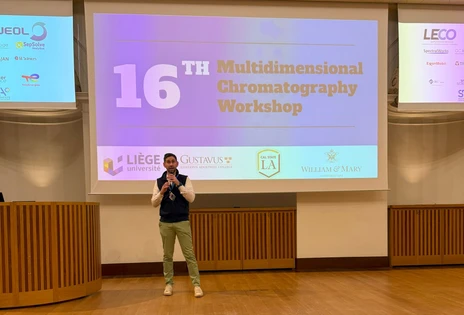
- Photo: MDCW: Method optimization of fingermark residue using comprehensive twodimensional gas chromatography (Emma Macturk, MDCW 2025)
- Video: LabRulez: Emma Macturk: Method optimization of fingermark residue using comprehensive GCxGC (MDCW 2025)
🎤 Presenter: Emma Macturk (William & Mary, Williamsburg, USA)
💡 Book in your calendar: 17th Multidimensional Chromatography Workshop (MDCW) 13 - 15. January 2026
Abstract
Optimization is a crucial step in method development of routine analytical techniques. Fingermark residue, consisting of sweat and oil from sebaceous glands, is a complex biological mixture with fatty acids, fatty alcohols, and steroid hormones.
Fingermarks have been analyzed using techniques such as liquid chromatography, capillary electrophoresis, and gas chromatography (GC) all coupled to mass spectrometry. There has been little research however in full, nontargeted characterization of fingermark residue using advanced chromatographic methods such as comprehensive two-dimensional gas chromatography (GC×GC-TOFMS). The goal of this study was to optimize a method for the nontargeted analysis of fingermark residue using GC×GC-TOFMS.
A starting method based on a one-dimensional GC and GC×GC comparison was used to analyze residue samples. Full method optimization included testing five parameters (modulation period, hot pulse time, hold time at oven start, hold time at oven end, and oven ramp rate) with three options each and one parameter (secondary oven offset) with two options. Parameter options were compared to each other as a group and the best option chosen for the optimized method. The optimized method was evaluated as a whole with all optimized parameters. Fingermark deposition, regeneration, and sample preparation were optimized with different extraction processes with the goal of quantitation of analytes.
Method optimization using GC×GC fully resolved hidden peaks such as the steroid hormone allopregnane. A fully optimized method will be used in future studies to differentiate between endogenous fingermark compounds and exogenous contamination compounds from the environment.
Video transcription
In forensic science, fingerprints are central to suspect identification. While complete fingerprints can be matched to individuals, fingermarks—incomplete or smudged prints—often lack sufficient ridge detail for identification. However, the chemical residue within these fingermarks, consisting of sweat and sebaceous secretions, still holds valuable information.
This residue contains a complex mixture of compounds such as fatty acids, fatty alcohols, steroids, and environmental contaminants. Analyzing these components can reveal class characteristics like sex and relative age, or even traces of external substances.
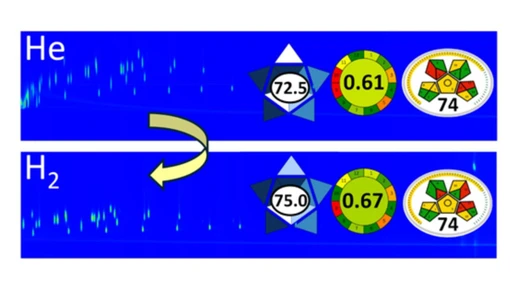
This presentation highlights the optimization of non-targeted fingermark residue analysis using comprehensive two-dimensional gas chromatography (GC×GC) and the translation of methods from helium to hydrogen carrier gas.
Fingermark Residue and Its Significance
- Definition: Fingermarks are incomplete fingerprints containing sweat and oil residues.
- Potential Information: Provide chemical class characteristics (e.g., sex, age group).
- Traditional Methods: Most studies have used one-dimensional GC for targeted analysis of a small set of compounds.
- Research Gap: Limited studies applying non-targeted GC×GC-TOFMS for full chemical profiling of fingermarks.
Experimental Workflow
Sample Preparation
- Fingermarks were deposited on microscope slides.
- Residues were extracted with cotton swabs.
- Extracts were centrifuged, evaporated, and reconstituted to equal volumes.
- Samples were analyzed using GC×GC with a cryogenic thermal modulator.
- Data processing was performed in ChromaTOF software.
Method Optimization
Six GC×GC parameters were systematically varied:
- Modulation period
- Hot pulse time
- Oven hold times (start and end)
- Ramp rate
- Secondary oven offset
Multiple options were tested for each parameter. Optimized conditions favored longer modulation and hot pulse times, which improved analyte resolution.
Results and Findings
Improved Chromatographic Separation
- Initial chromatograms showed congested peaks and wraparound artifacts.
- Optimized parameters resulted in cleaner separations, improved analyte identification, and reduced peak overlap.
Identified Compound Classes
- Endogenous: cholesterol, squalene, long-chain fatty acid methyl esters, fatty alcohols, steroids.
- Exogenous (anthropogenic): sunscreen agents (octocrylene, octisalate, avobenzone), moisturizers, and plasticizers.
The ability to distinguish endogenous fingerprint compounds from exogenous contaminants is highly valuable for forensic investigations.
Translation to Hydrogen Carrier Gas
Motivation
- Helium, the traditional GC carrier gas, is increasingly scarce and expensive.
- Hydrogen offers an efficient, sustainable alternative, but requires method translation.
Approach
- The Agilent Method Translator (RTC modeler) was used to translate 1D GC parameters from helium to hydrogen.
- Three translated methods were compared:
- Hydrogen Translate: one-to-one transfer from helium method.
- Hydrogen Speed: minimized runtime.
- Hydrogen Efficiency: optimized for resolution.
Evaluation
- All hydrogen methods achieved separations comparable to helium.
- Some peak tailing observed in hydrogen efficiency mode.
- Hydrogen Translate (one-to-one) provided the best overall balance of peak shape and analyte resolution.
Forensic Implications
- Non-targeted analysis revealed hidden and unexpected compounds, including anthropogenic substances relevant to forensic casework.
- Method allows separation of compounds from clean fingerprints vs. environmental contamination.
- Exogenous compounds of forensic interest could include:
- Gunshot residue
- Pepper spray
- Sunscreen or cosmetic residues
Conclusion
- Non-targeted GC×GC analysis enables comprehensive profiling of fingermark residues.
- Successfully differentiated endogenous compounds from exogenous contaminants.
- Method translation from helium to hydrogen carrier gas was effective, offering cost savings and sustainability without compromising performance.
- Optimized workflows can enhance forensic investigations by providing deeper chemical insights into fingermarks.
This text has been automatically transcribed from a video presentation using AI technology. It may contain inaccuracies and is not guaranteed to be 100% correct.
-Workshop-LOGO_s.webp)