

SunFire Prep Silica columns are general purpose columns used under normal phase conditions.
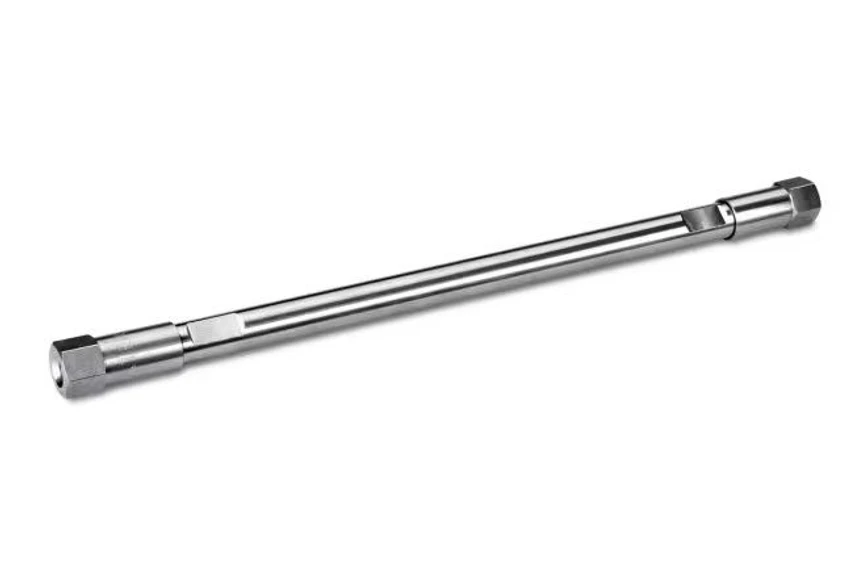 Waters: SunFire Silica HPLC Columns
Specifications
- Chemistry: Silica
- Separation Mode: Normal Phase
- Particle Substrate: Silica
- pH Range Min: 2 pH
- pH Range Max: 8 pH
- Maximum Pressure: 6000 psi (415 Bar)
- Endcapped: No
- Silanol Activity: High
- Particle Shape: Spherical
- Pore Size: 100 Å
- System: HPLC
- USP Classification: L3
SunFire Columns
Superior mass loading at low pH
High efficiency at a low pH can be challenging. Waters SunFire HPLC Columns, available in analytical and preparative dimensions, help you do just that with state-of-the-art bonded silica designed for high mass loading, excellent low pH stability, superior peak shapes, and high efficiency.
SunFire Analytical Columns are available in 2.5 µm to 10 µm particle sizes across two reversed-phase column chemistries, C18 and C8, sure to meet your silica-based HPLC column requirements. For preparative applications, in addition to the C18 and C8 chemistries, SunFire silica is offered in 5 and 10 µm particle sizes for preparative normal-phase purification.
Overview
- Exceptional loading capacity for both analytical and preparative columns
- Excellent low pH stability for longer lifetimes
- Superior peak shapes for faster and easier integration
- Low mass spectral (MS) bleed, for enhanced analyte MS signal
- Seamless scalability from analytical to optimum bed density (OBD) preparative columns
- Recommended Use: For increased mass loading with excellent column stability.
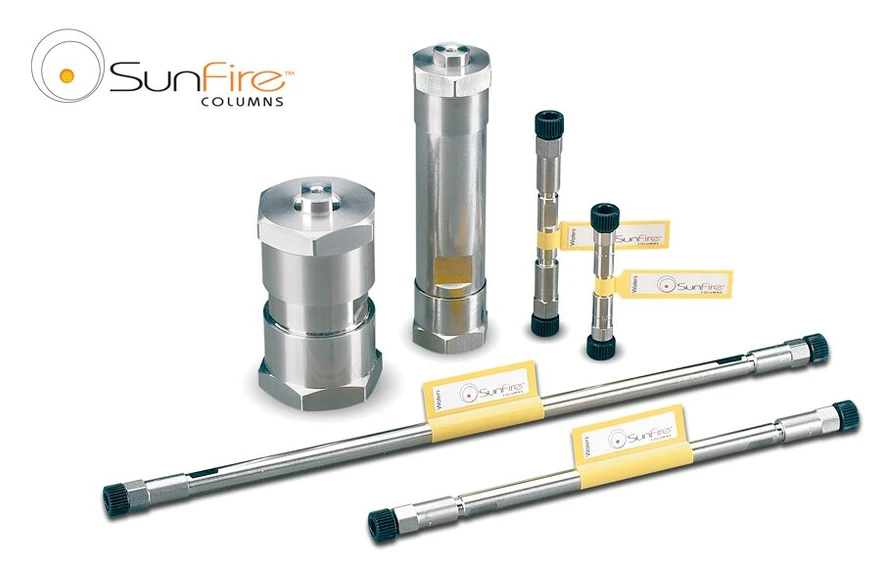 Waters: SunFire Columns