

BASIC INFORMATION
- TITLE: QTOF quantitative and qualitative analysis training
- CATEGORY: LC-MS/MS training
- LOCATION: Lodz, PL
- TRAINING TIME: 3 days
- NUMBER OF PARTICIPANTS: up to 5 people
- EQUIPMENT: SCIEX QTOF LC-MS/MS
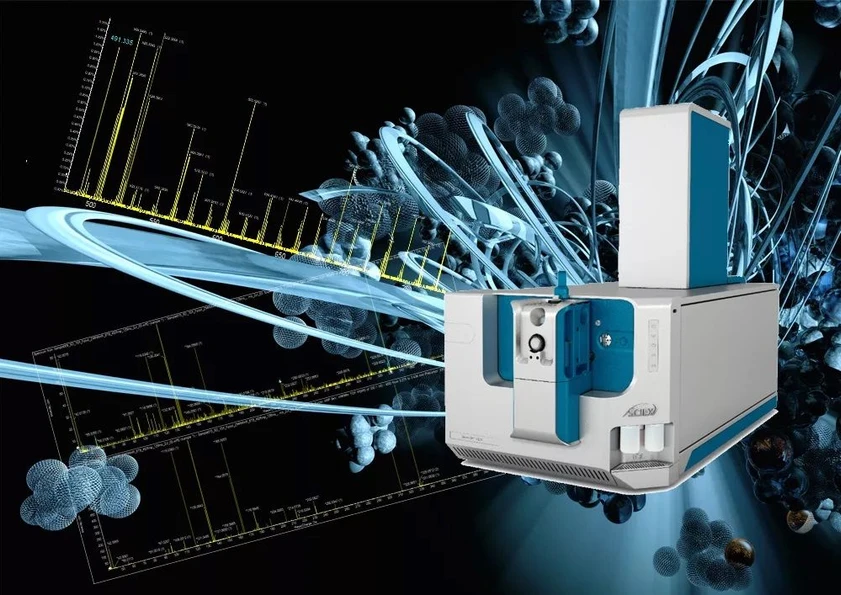 Bioanalytic: Bioanalytic QTOF quantitative and qualitative analysis training.
TRAINING COURSE DESCRIPTION
Qualitative and quantitative analysis of QTOF - the training is designed for laboratory personnel using high-resolution (HR) LC-MS/MS systems for qualitative and quantitative analysis. The following topics are covered during the training:
- QTOF spectrometer calibration
- Targeted and untargeted methods
- Quantitative analysis (TOF MS, MRMhr)
- Qualitative and quantitative analysis - DDA (IDA) vs DIA (SWATH) methodology
- Software and its use in high-resolution data analysis
- Reporting of results
The purpose of the training is to introduce users to the capabilities of the LC-HR-MS/MS (QTOF) system in quantitative and qualitative analysis. To point out the advantages of high resolution in identifying or confirming the presence of substances in a sample and also the strengths of modern QTOF systems in parallel quantitative analysis.
Training program
Day I
Theoretical part
- The principle of operation and capabilities of the QTOF system
- Comparison of typical analytical procedures and their application
- Targeted and quantitative analysis (TOF MS vs MRMhr)
- DDA (IDA) vs DIA (SWATH) methodology.
- Supporting software - Molecule Profiler, ACD Labs, MarkerView
- General principles of compound fragmentation
Day II
Objective - to develop methods for quantitative analysis, confirmation or search for metabolites of a known substance, general characterization of the sample.
Practical part:
- Creation and optimization of the MRMhr targeted method
- Creation and optimization of a non-targeted method IDA
- Creation and optimization of the non-targeted method SWATH
- Data acquisition (overnight)
Day III
Objective - quantitative analysis, confirmation of the presence or identification of metabolites of a known substance, general characterization of the sample (identification of compounds present in the sample), profiling.
Practical part:
- Quantitative analysis - TOF MS vs MRMhr
- Methods for searching and analyzing data
- IDA vs SWATH data
- Manual search and identification
- Automated search and identification - SciexOS, databases
- Molecule Profiler, MarkerView
- Summary and discussion

