


BASIC INFORMATION
- TITLE: Quantitative LC-MS/MS analysis training
- CATEGORY: LC-MS/MS training
- LOCATION: Lodz, PL
- TRAINING TIME: 3 days
- NUMBER OF PARTICIPANTS: up to 5 people
- EQUIPMENT: SCIEX QTRAP LC-MS/MS
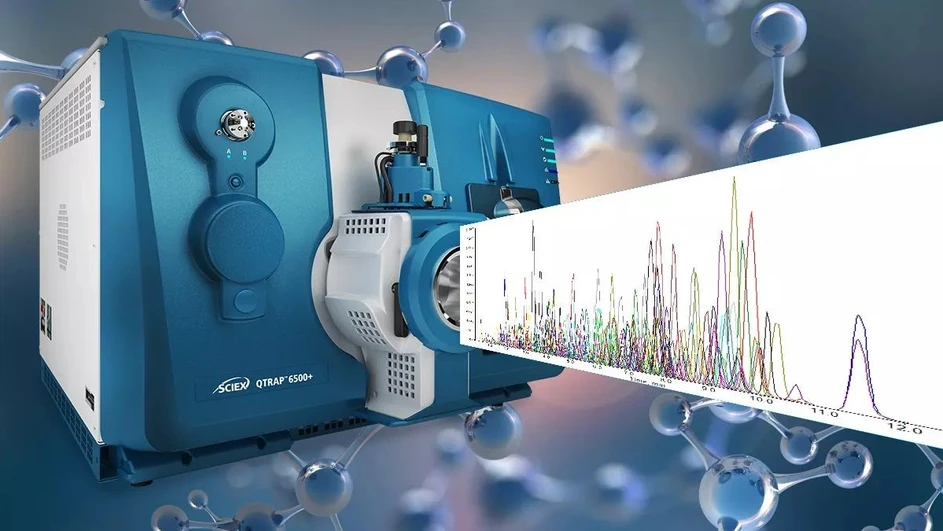 Bioanalytic: Bioanalytic Quantitative LC-MS-MS analysis training.
TRAINING DESCRIPTION
Quantitative LC-MS/MS analysis - the training is designed for laboratory personnel using LC-MS/MS systems for quantitative analysis. The following topics are covered during the training:
- Triple quadrupole spectrometer calibration
- MRM pair formation and optimization
- Optimization of ion source parameters
- Optimization of chromatographic parameters
- Sample preparation using the example of blood drawn on Mitra® samplers (VAMS)
- Matrix effect, internal standards (ISTD), matrix curves
- Validation of the quantitative method
- Reporting of results
The goal of the training is to introduce users to the procedures and capabilities of the LC-MS/MS system and software to achieve sensitivity, selectivity, precision and reproducibility in quantitative analysis while covering the widest possible linear range of concentrations.
Training program
Day I
Theoretical part:
Triple quadrupole structure, ionization, MRM and sMRM scanning, chromatography, multimethods
Practical part:
- Q1/Q3 calibration (10 Da/s), MS/MS - resolution, m/z, intensity.
- MRM pair formation and optimization (manual, semi-automatic, automatic).
- Ion source optimization - T-concector and FIA
- Gradient vs isocrat, dosing, column selection, temperature selection, other important parameters
- Establishment and optimization of LC-MS/MS method.
- How to take care of MS cleanliness - ionization time programming, multi-way valve, cleaning of ion source and instrument front end
Sample preparation in pure solvent (standard curve, QC, solvent, solvent+ISTD, test samples), overnight analysis sequence.
Day II
Practical part - preparation of whole blood samples (Mitra®):
- Preparation of matrix standard curves
- Preparation of quality control (QC) samples in three concentrations
- Preparation of blank samples (without ISTD and with ISTD).
- Preparation of samples for recovery determination (“pre-spiked” and “post-spiked”)
- Preparation of test samples
Theoretical part:
- Samples in the matrix - discussion of the matrix effect and ways to level it.
- Optimization of sample preparation method and LC-MS/MS method
Practical part:
- Sample extraction from Mitra® samplers for LC-MS/MS analysis.
- Sequence of analysis of prepared samples overnight
Day III
Theoretical part:
- Validation of the quantitative LC-MS/MS method
Practical part:
- Software - data integration algorithms, signal smoothing, weighing.
- Matrix curves vs curves in solvent, influence of ISTD (Sciex OS).
- Method validation - validation criteria, determination of LOD, LLOQ, ULOQ, linearity, working range of the method, repeatability, recovery.
- Preparation of summary validation reports
- Reporting of results from test samples - report vs export of data to Excel.
- Summary and discussion.

