

BASIC INFORMATION
- TITLE: Basic LC-MS/MS training
- CATEGORY: LC-MS/MS training
- LOCATION: Lodz, PL
- TRAINING TIME: 3 days
- NUMBER OF PARTICIPANTS: up to 5 people
- EQUIPMENT: SCIEX QTRAP & QTOF LC-MS/MS
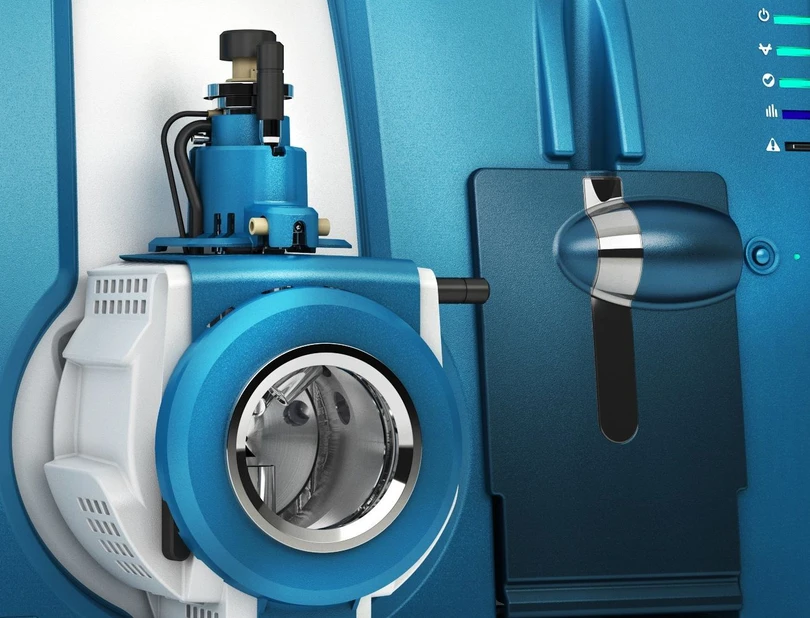 Bioanalytic: Bioanalytic Basic LC-MS-MS training.
TRAINING DESCRIPTION
Basic LC-MS/MS training covers the theoretical basics of mass spectrometry and familiarization with the basic operation of the instrument. Basic LC-MS/MS training is primarily aimed at those who are new to LC-MS/MS equipment or who wish to become familiar with this analytical technique. During the training, the following will be presented:
- principles of developing and optimizing quantitative and qualitative methods on low (triple quadrupole, QTRAP) and high resolution (QTOF) instruments,
- basic functionality of the software,
- procedures and objectives of instrument calibration,
- principles of maintaining the cleanliness of mass spectrometer operation.
Basic LC-MS/MS training - the program
Day I
Theoretical classes:
- Introduction to LC
- Introduction to mass spectrometry (basics)
- Quantitative analysis.
Practical part:
QTRAP:
- QTRAP scanning modes on the instrument - Q1, , MS2, MRM, demonstration and discussion on the example of a selected pesticide of the fragmentation spectrum and its fragmentation pathway.
- MRM pair formation (manual, semi-automatic, automatic).
- optimization of ion source parameters -T-conector
- explanation of the main parameters related to LC (column selection, gradient vs isocrat, autosampler)
- LC-MS/MS method setup and optimization
QTOF:
- manual and automatic optimization of MRMHR
- ion source and LC parameters (transfer from method developed above)
Sequence of quantitative analysis on both instruments.
Day II
Quantitative analysis:
- data processing and analysis,
- reporting - Sciex OS (QTRAP, QTOF).
- Discussion of types of integration algorithms (MQ4, autopeak) and integration parameters.
- independent selection of integration parameters and plotting of master curves.
- independent data analysis and generation of analysis report.
Qualitative analysis:
- Theoretical introduction - introduction to qualitative analysis:
- qwadrupole modes (Prec/NL),
- trap modes (EMS, EPI, MS3),
- QTOF modes (TOF MS, TOF MS/MS).
- mixed methods,
- targeted vs. untargeted analysis,
- DDA (IDA) - discussion of method development,
Practical part:
- creation of qualitative methods on QTRAP (Prec-IDA, MRM-IDA), other parameters (LC, ion source) as the previous day,
- LightSight - discussion of operation, creation of MRM-IDA multimethod for selected pesticide and analysis of samples (night).
- QTOF - creation of IDA method, other parameters (LC, ion source) as the previous day.
Sequence of qualitative analysis overnight.
Day III
Qualitative data analysis:
QTRAP:
- Discussion of Prec-IDA, MRM-IDA results - what we see in different types of MS and MS/MS scans. Manual review of data and via IDA Explorer (SciexOS).
- Analysis of results in LightSight, comparison with Prec-IDA, for example - advantages/disadvantages
QTOF:
- search for potentially present compounds in the sample,
- manual comparison of blank vs. test sample,
- manual by XIC extraction (by sum formula),
- Formula finder - derivation of sum formula on TOF MS data and verification of fragmentation on TOF MS/MS data
- search in IDA Explorer mode - application of filters: similarity, isotopic distribution, mass defect,
- database searching,
- Molecule Profiler - demonstration of software capabilities on selected pesticide example,
Instrument calibration:
- resolution, mass-to-charge ratio, intensity,
- Q1 and Q3, LIT (MS and MS/MS), TOF MS and TOF-MS/MS
- Automation vs. manual calibration,
LC-MS/MS application examples
Summary
Discussion

