
Zaměření
Type of News
Focus
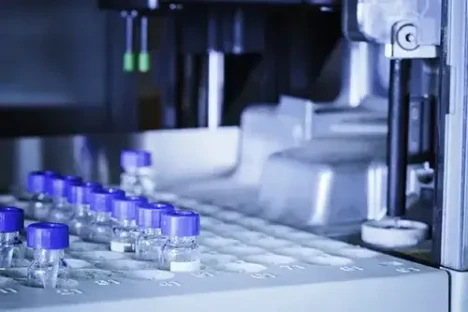
Maintenance and Care of HPLC Columns
Learn HPLC column care best practices, including cleaning, regeneration, storage, and preventive maintenance to extend column life, reduce downtime, and ensure reliable chromatographic results.
2D-LC (Two-dimensional Liquid Chromatography): What, When and Why to Use it
Learn how two-dimensional liquid chromatography (2D-LC) overcomes the limits of 1D-LC. Explore its principles, operating modes, applications, and the latest advances shaping modern analytical science.
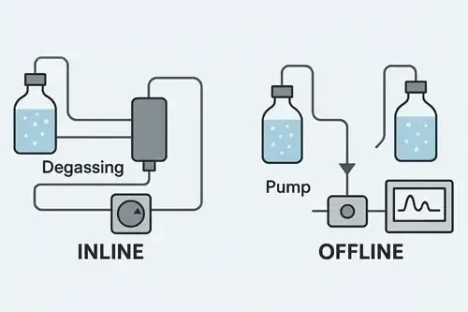
Degassing Techniques in HPLC: Inline vs Offline
Learn why mobile phase degassing is essential for reliable HPLC performance. Compare inline and offline degassing methods, their advantages, limitations, and practical troubleshooting tips.
Protein Purification by HPLC: Methods, Benefits, and Best Practices
Discover how HPLC enables efficient protein purification for biopharmaceuticals, proteomics, and biotechnology. Learn about purification modes, key benefits, optimization strategies, and best practices.
Solvent Switching in Liquid Chromatography Columns: How to Change Column Solvents Safely
Learn how to safely switch solvents in an LC column, verify solvent miscibility, use IPA between immiscible systems, and prevent irreversible column damage.
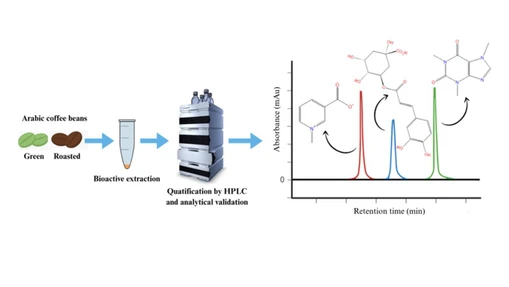
Optimization of Methodology for Simultaneous Quantification of Trigonelline, 5-Caffeoylquinic Acid, and Caffeine in Green and Roasted Coffee Extracts by HPLC
A fast HPLC-UV method was optimized to quantify trigonelline, 5-CQA, and caffeine in multiple Arabica cultivars. The method proved robust and highlighted major cultivar and roasting-related changes.

Overcoming Peak Tailing of Basic Analytes: Silica Type A Stationary Phases RP
Learn how to minimize peak tailing when analyzing basic compounds on type A silicas. Explore pH adjustment, mobile phase modifiers, and modern type B silica columns for sharper, more symmetrical peaks.
A Systematic Approach to HPLC Peptide Analysis
Learn how to develop robust HPLC methods for peptide analysis using systematic screening of column chemistry, pH, and gradients for optimal selectivity and reproducibility.

Column contamination – what is happening, and how it can be avoided
Column contamination is a leading cause of shortened HPLC column lifetime, leading to high back pressure. Learn why it happens and how to prevent blocked frits with simple precautions.

Overcoming Peak Tailing of Basic Analytes in Silica Type A Stationary Phases in RP
Struggling with peak tailing of basic compounds in RP-LC using type A silica columns? Discover how low-pH buffers and silanol suppressors can improve peak shape—plus why type B silica is a better choice.