Overcoming Peak Tailing of Basic Analytes: Silica Type A Stationary Phases RP

We, 5.11.2025 | Original article from: Phenomenex
Learn how to minimize peak tailing when analyzing basic compounds on type A silicas. Explore pH adjustment, mobile phase modifiers, and modern type B silica columns for sharper, more symmetrical peaks.
  • Photo: Phenomenex: Overcoming Peak Tailing of Basic Analytes: Silica Type A Stationary Phases RP
  • Video: Phenomenex: High Efficiency Liquid Chromatography Columns

In this technical tip, we will address the common issue of peak tailing encountered when working with basic analytes and “type A” silicas and offer two strategies to overcome it.

Introduction

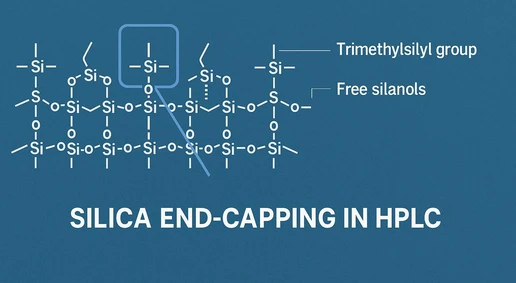
Early reversed phase columns were based on “type A” silicas, these materials had substantial metal contamination, causing the silanol groups on the surface of the silica to have greater and more variable activity. Manufacturers endcapped the materials as far as possible after bonding with C18 reagents, in an attempt to reduce the number of sites where ion exchange could take place. However basic compounds would generally tail badly. Let’s explore how we can overcome this limitation.

Strategies for peak shape improvement

  • Working at low pH can help neutralise the silanol groups on the silica surface, preventing ion exchange from taking place. A 10-20 mM phosphate buffer, pH 2.5 is ideal for this purpose, although care must be taken if using acetonitrile as the organic solvent, to avoid precipitating the phosphate buffer when running a gradient.
  • Adding a competing base (or silanol suppressor) to the mobile phase. Mobile phase additives like TEA (triethylamine) at 5 mM concentration would typically be used. The idea here is that the competing base associates with the anionic silanol groups, reducing their availability to interact with analytes. This approach, whilst successful, generally leads to short column lifetime as silanol suppressors also tend to cause more rapid column stationary phase and endcapping hydrolysis, which in turn exposes more silica allowing for more tailing to occur.

These strategies will help diminish the tailing effect but may not completely remove it as demonstrated in the below example chromatograms (Figure A and B).
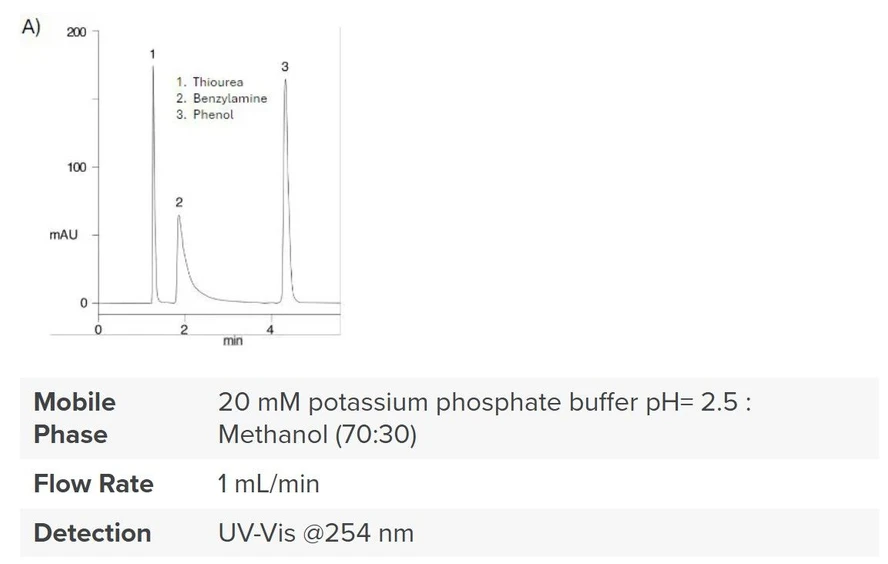
Phenomenex: Figure A shows the moderate effect of using an acidic pH to mitigate tailing for benzylaminePhenomenex: Figure A shows the moderate effect of using an acidic pH to mitigate tailing for benzylamine
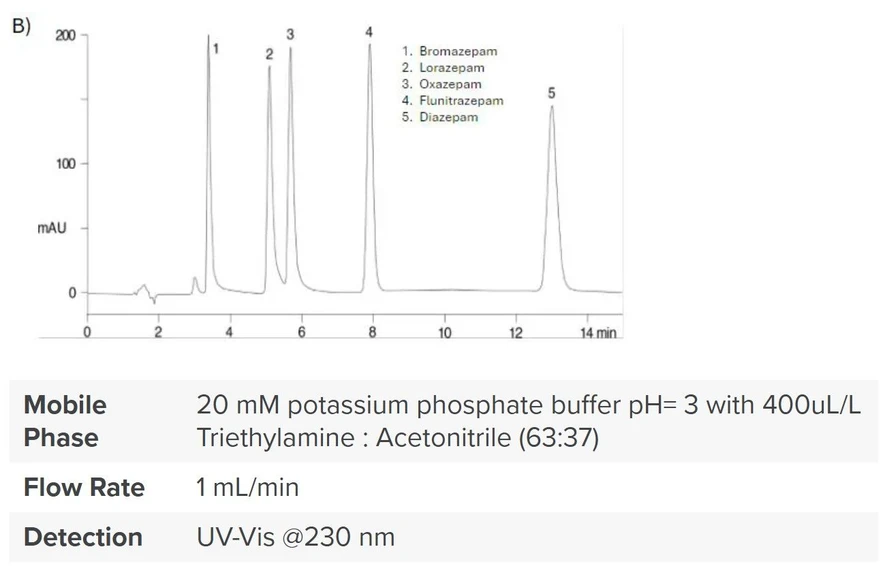
Phenomenex: Figure B shows the resulting chromatography after adding triethylamine as a modifierPhenomenex: Figure B shows the resulting chromatography after adding triethylamine as a modifier

We recommend the use of type B (ultra-pure) silica in the development of new separations. Luna™ Omega fully porous and Kinetex™ Core-Shell columns provide excellent peak shape for challenging compounds.

Increase Peak Efficiency and Reduce Peak Asymmetry

Assessing the Impact of SecurityLINK™ PEEKsil Fingertight Fitting System on Increased Peak Efficiency and Reduction in Peak Asymmetry on Optimized Instrumentation.


Phenomenex
LinkedIn Logo
 

Related articles

The Role of End-Capping in RP
Article | Academy

The Role of End-Capping in RP

New end-capping technologies can significantly improve the analysis of compounds that were once considered challenging.
Overcoming Peak Tailing of Basic Analytes in Silica Type A Stationary Phases in RP
Article | Academy

Overcoming Peak Tailing of Basic Analytes in Silica Type A Stationary Phases in RP

Struggling with peak tailing of basic compounds in RP-LC using type A silica columns? Discover how low-pH buffers and silanol suppressors can improve peak shape—plus why type B silica is a better choice.
Basic analytes and the benefits of modified silica supports in reversed-phase liquid chromatography
Article | Academy

Basic analytes and the benefits of modified silica supports in reversed-phase liquid chromatography

C18 columns with residual positive charge improve peak shape of basic analytes at low pH by reducing silanol interactions and enabling 100% aqueous mobile phases.
The Role of End-Capping in Reversed-Phase
Article | Academy

The Role of End-Capping in Reversed-Phase

Learn how silica end-capping improves HPLC column performance. Discover how C18, PS-C18, Polar C18, and XB-C18 chemistries enhance retention, peak shape, and selectivity for various analytes.
 

Related articles

The Role of End-Capping in RP
Article | Academy

The Role of End-Capping in RP

New end-capping technologies can significantly improve the analysis of compounds that were once considered challenging.
Overcoming Peak Tailing of Basic Analytes in Silica Type A Stationary Phases in RP
Article | Academy

Overcoming Peak Tailing of Basic Analytes in Silica Type A Stationary Phases in RP

Struggling with peak tailing of basic compounds in RP-LC using type A silica columns? Discover how low-pH buffers and silanol suppressors can improve peak shape—plus why type B silica is a better choice.
Basic analytes and the benefits of modified silica supports in reversed-phase liquid chromatography
Article | Academy

Basic analytes and the benefits of modified silica supports in reversed-phase liquid chromatography

C18 columns with residual positive charge improve peak shape of basic analytes at low pH by reducing silanol interactions and enabling 100% aqueous mobile phases.
The Role of End-Capping in Reversed-Phase
Article | Academy

The Role of End-Capping in Reversed-Phase

Learn how silica end-capping improves HPLC column performance. Discover how C18, PS-C18, Polar C18, and XB-C18 chemistries enhance retention, peak shape, and selectivity for various analytes.
 

Related articles

The Role of End-Capping in RP
Article | Academy

The Role of End-Capping in RP

New end-capping technologies can significantly improve the analysis of compounds that were once considered challenging.
Overcoming Peak Tailing of Basic Analytes in Silica Type A Stationary Phases in RP
Article | Academy

Overcoming Peak Tailing of Basic Analytes in Silica Type A Stationary Phases in RP

Struggling with peak tailing of basic compounds in RP-LC using type A silica columns? Discover how low-pH buffers and silanol suppressors can improve peak shape—plus why type B silica is a better choice.
Basic analytes and the benefits of modified silica supports in reversed-phase liquid chromatography
Article | Academy

Basic analytes and the benefits of modified silica supports in reversed-phase liquid chromatography

C18 columns with residual positive charge improve peak shape of basic analytes at low pH by reducing silanol interactions and enabling 100% aqueous mobile phases.
The Role of End-Capping in Reversed-Phase
Article | Academy

The Role of End-Capping in Reversed-Phase

Learn how silica end-capping improves HPLC column performance. Discover how C18, PS-C18, Polar C18, and XB-C18 chemistries enhance retention, peak shape, and selectivity for various analytes.
 

Related articles

The Role of End-Capping in RP
Article | Academy

The Role of End-Capping in RP

New end-capping technologies can significantly improve the analysis of compounds that were once considered challenging.
Overcoming Peak Tailing of Basic Analytes in Silica Type A Stationary Phases in RP
Article | Academy

Overcoming Peak Tailing of Basic Analytes in Silica Type A Stationary Phases in RP

Struggling with peak tailing of basic compounds in RP-LC using type A silica columns? Discover how low-pH buffers and silanol suppressors can improve peak shape—plus why type B silica is a better choice.
Basic analytes and the benefits of modified silica supports in reversed-phase liquid chromatography
Article | Academy

Basic analytes and the benefits of modified silica supports in reversed-phase liquid chromatography

C18 columns with residual positive charge improve peak shape of basic analytes at low pH by reducing silanol interactions and enabling 100% aqueous mobile phases.
The Role of End-Capping in Reversed-Phase
Article | Academy

The Role of End-Capping in Reversed-Phase

Learn how silica end-capping improves HPLC column performance. Discover how C18, PS-C18, Polar C18, and XB-C18 chemistries enhance retention, peak shape, and selectivity for various analytes.