

Protecting Europe's Waters: Reliable Sample Prep for Water Framework Directive Compliance
GCMSArticle | Environment

Protecting Europe's Waters: Reliable Sample Prep for Water Framework Directive Compliance

Stringent Water Framework Directive requirements drive high analytical sensitivity. EQS limits, GC-MS determination of priority substances, and the critical role of sample preparation in practice.
Protecting Europe's Waters: Reliable Sample Prep for Water Framework Directive Compliance
Safe Sample Prep for PFAS Analysis: PTFE-Free Concentrators Explained
GCMSLCMSArticle | Science and research

Safe Sample Prep for PFAS Analysis: PTFE-Free Concentrators Explained

Organomation explains how PFAS-free nitrogen evaporators eliminate fluoropolymer contamination by replacing PTFE tape with a PTFE-free sealant, ensuring safe and reliable PFAS sample preparation.
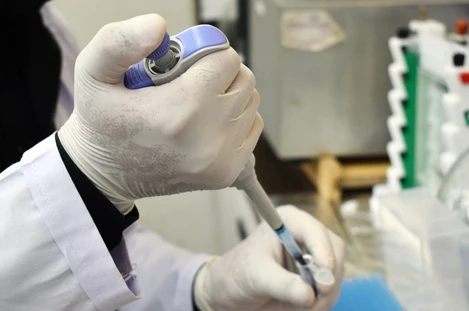
Safe Sample Prep for PFAS Analysis: PTFE-Free Concentrators Explained
The Role of Nitrogen Evaporation in Solvent Exchange
GCMSLCMSArticle | Product

The Role of Nitrogen Evaporation in Solvent Exchange

Learn how nitrogen evaporators make solvent exchange faster, gentler, and contamination-free—boosting sample integrity and efficiency in modern analytical labs.
The Role of Nitrogen Evaporation in Solvent Exchange
The Critical Role of Nitrogen Blowdown in SPE Sample Preparation
LCMSGCMSArticle | Science and research

The Critical Role of Nitrogen Blowdown in SPE Sample Preparation

Explore how nitrogen blowdown enhances sample prep efficiency in SPE workflows using Waters Oasis, Agilent Bond Elut and Phenomenex Strata, improving analyte recovery, sensitivity and method reliability.
The Critical Role of Nitrogen Blowdown in SPE Sample Preparation
Exploring the Environmental Impact of Tire-Derived Materials Using LC-MS/MS
LCMSVideo | Science and research

Exploring the Environmental Impact of Tire-Derived Materials Using LC-MS/MS

PhD student Jonathan Navarro Ramos shares insights on detecting tire-derived pollutants like 6PPD and 6PPD-quinone using LC–MS/MS and HRMS, revealing global environmental and health impacts.

Exploring the Environmental Impact of Tire-Derived Materials Using LC-MS/MS
How Nitrogen Blowdown Supports the SCIEX Lipidyzer Platform: Enhancing Lipidomics Sample Preparation
LCMSArticle | Product

How Nitrogen Blowdown Supports the SCIEX Lipidyzer Platform: Enhancing Lipidomics Sample Preparation

Nitrogen blowdown ensures gentle solvent removal in SCIEX Lipidyzer workflows, preserving delicate lipid species and boosting reproducibility in lipidomics research.

How Nitrogen Blowdown Supports the SCIEX Lipidyzer Platform: Enhancing Lipidomics Sample Preparation
How much time can I save drying my samples in a nitrogen evaporator?
GCMSLCMSArticle | Product

How much time can I save drying my samples in a nitrogen evaporator?

Spending too much time on sample evaporation? Nitrogen evaporators speed up workflows by replacing slow, manual, or inefficient solvent removal methods with fast and controlled evaporation.
How much time can I save drying my samples in a nitrogen evaporator?
How long will it take to evaporate your samples in a nitrogen evaporator?
GCMSLCMSArticle | Product

How long will it take to evaporate your samples in a nitrogen evaporator?

Our Evaporation Time Calculator allows you to determine exactly how long it will take for your samples to dry down.
How long will it take to evaporate your samples in a nitrogen evaporator?
How Ineffective Sample Preparation is Costing Academic Researchers
LCMSGCMSArticle | Product

How Ineffective Sample Preparation is Costing Academic Researchers

This article delves into the importance of efficient sample preparation and how tools like Organomation's blowdown evaporators can revolutionize laboratory workflows.
How Ineffective Sample Preparation is Costing Academic Researchers
Evaporation to Dryness Through Nitrogen Blowdown
GCMSLCMSArticle | Product

Evaporation to Dryness Through Nitrogen Blowdown

Organomation's nitrogen dryers are designed to make the sample dry down process simple, while minimizing some of the common risks that become especially prominent when evaporating to dryness.
Evaporation to Dryness Through Nitrogen Blowdown