


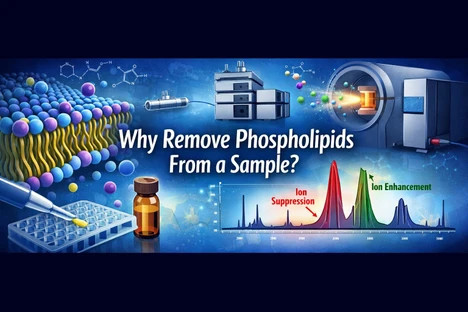
Why Remove Phospholipids From a Sample?
Phospholipids in serum and plasma can cause ion suppression, reduced MS sensitivity, and shorter column lifetime. Learn why phospholipid removal is critical for reliable LC-MS analysis.

All My Analytes are Neutrals, but Contaminants are Acids or Amines. What is the Best Way to Concentrate and Clean Up my Analytes of Interest?
How can neutral analytes be efficiently concentrated in the presence of ionized acidic or basic contaminants? This SPE tip explains how mixed-mode cartridges improve selectivity and cleanup.
Sample Preparation for Oligonucleotides
Practical guide to oligonucleotide sample preparation using SPE. Learn how to optimize wash and elution steps for clean extracts and reliable LC-MS bioanalysis.
Sample Prep for N-linked Glycans
A streamlined workflow for N-linked glycan sample preparation, combining PNGase F digestion, fluorescent labeling, and HILIC SPE clean-up for reliable HPLC and LC-MS analysis.
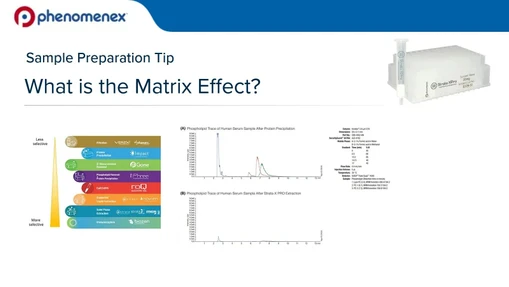
Sample Preparation Tip - What is the Matrix Effect?
Matrix effects can suppress or enhance analyte signals and compromise accuracy. Learn how sample prep techniques—especially SPE with Strata-X PRO—reduce phospholipid interference and improve LC-MS results.

How is Normal Phase (NP) SPE Different from Reversed-Phase (RP) SPE?
A clear guide to Normal Phase SPE: when to use it, how polar interactions drive retention, and which solvents to choose in increasing polarity—plus a quick reference list for optimized sample preparation.
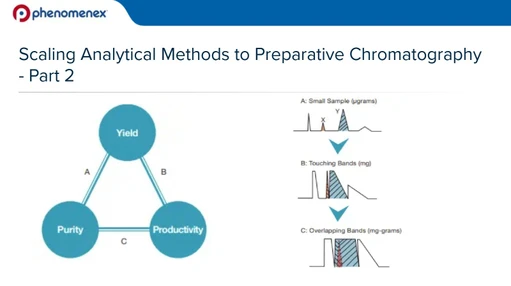
Scaling Analytical Methods to Preparative Chromatography - Part 2
Learn how to evaluate column loadability when scaling from analytical to preparative HPLC, and how to balance purity, yield, and productivity for optimal purification.
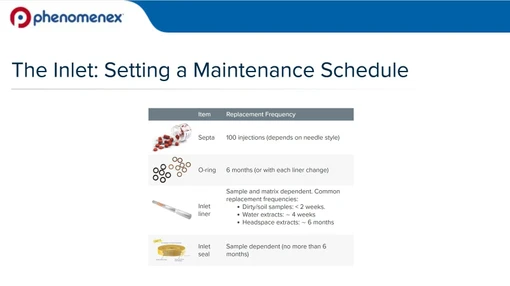
GC Technical Tip - The Inlet: Setting a Maintenance Schedule
GC performance often declines due to worn or contaminated inlet parts. Regular replacement of liners, septa, and key components reduces failures, prevents downtime, and keeps results consistent.