A new material can eliminate bacteria and viruses —all it needs is light
ICPMSScientific article | Science and research

A new material can eliminate bacteria and viruses —all it needs is light

Scientists developed a light-activated, eco-friendly coating that kills bacteria without antibiotics. Its first use? Dental splints that disinfect the mouth using near-infrared light.
A new material can eliminate bacteria and viruses —all it needs is light
Folin-Ciocâlteu, RP-HPLC (reverse phase-high performance liquid chromatography), and LC-MS (liquid chromatography-mass spectrometry) provide complementary information for describing cider (Malus spp.) apple juice
LCMSScientific article | Science and research

Folin-Ciocâlteu, RP-HPLC (reverse phase-high performance liquid chromatography), and LC-MS (liquid chromatography-mass spectrometry) provide complementary information for describing cider (Malus spp.) apple juice

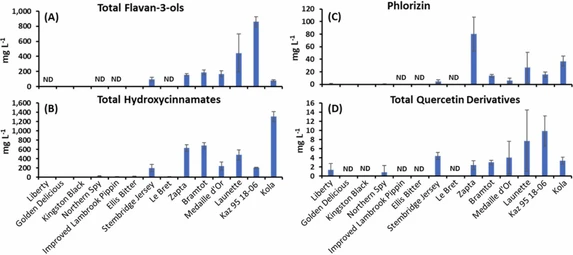
The study analyzes polyphenol profiles in 14 apple genotypes using Folin, RP-HPLC, and LC-MS to identify apples with potential for cider production, breeding, and health-related applications.
Folin-Ciocâlteu, RP-HPLC (reverse phase-high performance liquid chromatography), and LC-MS (liquid chromatography-mass spectrometry) provide complementary information for describing cider (Malus spp.) apple juice
Evaluating lead leaching from uPVC pipes into drinking water: Characterization with SEM-EDX and ICP-OES
ICPMSScientific article | Science and research

Evaluating lead leaching from uPVC pipes into drinking water: Characterization with SEM-EDX and ICP-OES

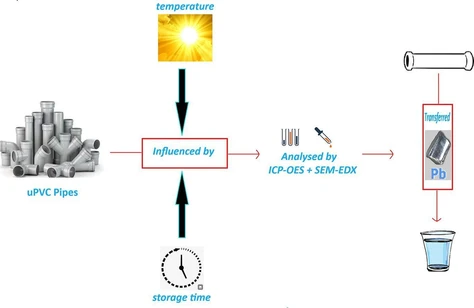
Assess lead leaching from locally sourced uPVC pipes into drinking water under varying temperature and time, using ICP-OES for quantification and SEM-EDX for surface mapping of lead.
Evaluating lead leaching from uPVC pipes into drinking water: Characterization with SEM-EDX and ICP-OES
LC-MS-based metabolomics for detecting adulteration in Tribulus terrestris-derived dietary supplements
LCMSScientific article | Science and research

LC-MS-based metabolomics for detecting adulteration in Tribulus terrestris-derived dietary supplements

Assess authenticity and detect adulteration in Tribulus terrestris supplements using untargeted LC-HRMS metabolomics combined with chemometric and AI tools.
LC-MS-based metabolomics for detecting adulteration in Tribulus terrestris-derived dietary supplements
Optimized Pretreatment for Accurate Determination of Elemental Composition of Extra Virgin Olive Oil (EVOO) Using ICP-OES and ICP-MS: A Comprehensive Study
ICPMSScientific article | Science and research

Optimized Pretreatment for Accurate Determination of Elemental Composition of Extra Virgin Olive Oil (EVOO) Using ICP-OES and ICP-MS: A Comprehensive Study

This study optimized and validated a pretreatment method to accurately quantify trace elements in Italian EVOOs using ICP-OES and HR-ICP-MS, and explored regional differences via PCA.
Optimized Pretreatment for Accurate Determination of Elemental Composition of Extra Virgin Olive Oil (EVOO) Using ICP-OES and ICP-MS: A Comprehensive Study
Metabolomics of Withania somnifera L. extracts by an integrated LC-MS and NMR approach and evaluation of their tyrosinase inhibitory activity
ICPMSLCMSScientific article | Science and research

Metabolomics of Withania somnifera L. extracts by an integrated LC-MS and NMR approach and evaluation of their tyrosinase inhibitory activity

This study analyzed Withania somnifera extracts from various eco-friendly methods using LC-MS/NMR, and evaluated their metabolite profiles and tyrosinase inhibitory activity.
Metabolomics of Withania somnifera L. extracts by an integrated LC-MS and NMR approach and evaluation of their tyrosinase inhibitory activity
Ion chromatography coupled with optical emission spectrometry (IC-ICP-OES) methodology for the analysis of inositol phosphates in food and feed
ICPMSLCMSScientific article | Science and research

Ion chromatography coupled with optical emission spectrometry (IC-ICP-OES) methodology for the analysis of inositol phosphates in food and feed

This study aims to develop an IC-ICP-OES method to identify and quantify 28 inositol phosphate isomers in food and feed, offering low detection limits and high reproducibility.
Ion chromatography coupled with optical emission spectrometry (IC-ICP-OES) methodology for the analysis of inositol phosphates in food and feed
Profiling of free fatty acids in wort using an isolator column-assisted LC-MS/MS approach
LCMSGCMSScientific article | Science and research

Profiling of free fatty acids in wort using an isolator column-assisted LC-MS/MS approach

The study develops an LC-MS/MS method with isolator column and SPE for accurate FFA profiling in wort, aiming at improved efficiency and application in beer quality studies.
Profiling of free fatty acids in wort using an isolator column-assisted LC-MS/MS approach
Natural deep eutectic solvent-based dispersive liquid-liquid microextraction of pesticides in drinking waters combined with GC-MS/MS detection
GCMSScientific article | Science and research

Natural deep eutectic solvent-based dispersive liquid-liquid microextraction of pesticides in drinking waters combined with GC-MS/MS detection

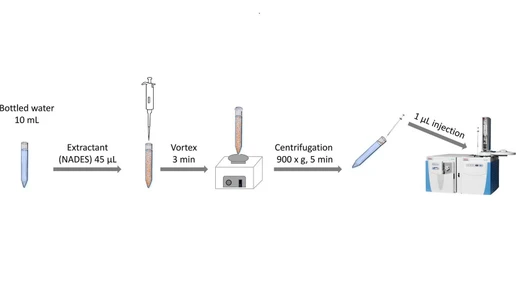
The study develops a green DLLME-GC-MS/MS method using natural deep eutectic solvents to preconcentrate and detect pesticides in drinking water with optimized conditions.
Natural deep eutectic solvent-based dispersive liquid-liquid microextraction of pesticides in drinking waters combined with GC-MS/MS detection
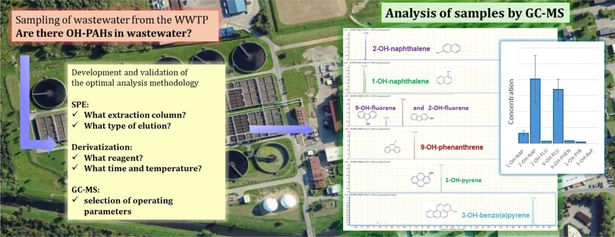
Development of GC-ITQ-MS chromatographic system for the identification of hydroxy derivatives of polycyclic aromatic hydrocarbons in wastewater
GCMSScientific article | Science and research

Development of GC-ITQ-MS chromatographic system for the identification of hydroxy derivatives of polycyclic aromatic hydrocarbons in wastewater

This study developed and validated a GC-ITQ-MS method for detecting OH-PAHs in wastewater, focusing on sample prep optimization and pollutant stability in real samples.

Development of GC-ITQ-MS chromatographic system for the identification of hydroxy derivatives of polycyclic aromatic hydrocarbons in wastewater