Fr, 13.11.2026 | Original article from: Concentrating on Chromatography
Discover how Dr. Emanuela Gionfriddo applies SPME to greener sample preparation, volatile PFAS, cosmetics analysis, biomimetic sorbents, and emerging environmental challenges.SPME, PFAS in Mascara & Biomimetic Extraction with Dr. Emanuela Gionfriddo
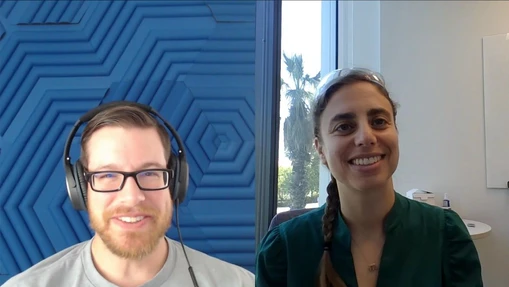
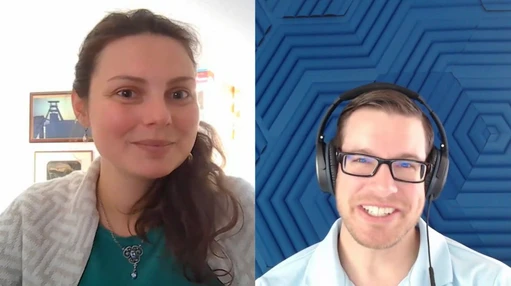
- Photo: Concentrating on Chromatography: SPME, PFAS in Mascara & Biomimetic Extraction with Dr. Emanuela Gionfriddo
- Video: Concentrating on Chromatography: SPME, PFAS in Mascara & Biomimetic Extraction with Dr. Emanuela Gionfriddo
Dr. Emanuela Gionfriddo, Associate Professor of Chemistry at the University at Buffalo (SUNY), joins host David Oliva to unpack solid phase microextraction (SPME) and her lab's cutting-edge work on green analytical chemistry, PFAS detection, and biomimetic sorbents.
Trained in Professor Janusz Pawliszyn's lab at the University of Waterloo — the birthplace of SPME — Dr. Gionfriddo shares how deep theoretical grounding in extraction science reshaped her research career from the University of Toledo to her current lab at Buffalo (Green Microextraction Analytical Solutions Laboratory).
In this episode, we cover:
- How SPME evolved from a simple fiber technique into a powerful tool for environmental and bioclinical measurement science
- Why microextraction methods align with the 12 principles of green analytical chemistry (minimal solvent use, reusable devices, streamlined workflows)
- Biomimetic SPME devices using natural biopolymers like alginic acid and chitin to study how pollutants bioaccumulate in seaweed and crustacean exoskeletons
- The analytical challenges of measuring volatile PFAS compared to legacy long-chain PFAS
- A surprising study testing mascara for PFAS contamination using SPME-LC-MS/MS and automated micro-SPE (in collaboration with CTC Analytics)
- Comparing 1D vs. GC×GC gas chromatography for volatile PFAS in complex, untargeted samples
- Mixed-mode fluorocarbon weak anion exchange sorbents and why "extraction discrimination" matters when screening PFAS panels
- Emerging work on microplastics and their interactions with organic pollutants
- Advice for researchers who care about green chemistry but haven't tried SPME yet
Video Transcription
Solid-phase microextraction (SPME) is much more than a convenient way to prepare samples. For Dr. Emanuela Gionfriddo, Associate Professor of Chemistry at the University at Buffalo, it is a versatile analytical approach that can reduce solvent consumption, improve trace-level measurements, and help researchers understand how contaminants behave in the environment. In a recent interview, she discussed the science behind SPME, the challenges of PFAS analysis, and the development of new extraction materials.
From an SPME user to an extraction scientist
Gionfriddo began her scientific career at the University of Calabria in Italy, where she earned her degrees in chemistry. During her doctoral studies, she spent time at the University of Waterloo in Canada, working with Professor Janusz Pawliszyn, who pioneered solid-phase microextraction. She subsequently returned to Waterloo for postdoctoral research before establishing an independent research group at the University of Toledo and later moving to the University at Buffalo.
Her experience in Waterloo fundamentally changed how she approached sample preparation. At first, she viewed SPME primarily as a collection of fibers with different coatings that could be tested until a suitable extraction was achieved. Studying the principles governing mass transfer and extraction equilibrium revealed a much broader range of possibilities.
SPME, she explains, should not be treated as a technique in which a fiber is simply placed into a sample and expected to produce a result. A solid understanding of the extraction process makes it possible to design methods for challenging environmental and biological measurements, including applications that are difficult to address using conventional sample preparation.
Greener analytical chemistry starts with sample preparation
Reducing the environmental impact of laboratory analysis is a central objective of Gionfriddo's research group. Miniaturized extraction methods offer several advantages over conventional approaches that rely on larger volumes of organic solvents and disposable materials.
SPME uses relatively small extraction devices, can substantially reduce solvent consumption, and often allows the extraction phase to be reused. These features can decrease the volume of chemical waste generated during routine laboratory work.
There is also a less obvious benefit: efficient preconcentration can simplify subsequent analytical steps and shorten workflows. Reducing preparation and instrument time may, in turn, lower energy consumption. For Gionfriddo, green analytical chemistry is therefore about improving the entire measurement process, not only replacing a particular solvent.
However, a greener method must still deliver reliable data. The same extraction procedure cannot automatically be transferred between blood plasma, soil, food, and other complex matrices. Differences in sample composition can strongly affect extraction efficiency and measurement accuracy.
Method optimization and validation remain essential. Even when a protocol appears to work across different sample types, its performance needs to be demonstrated rather than assumed.
Biomimetic SPME: measuring interactions with natural polymers
One of the research group's more unusual directions is biomimetic SPME, which uses naturally occurring biopolymers as extraction materials.
Conventional approaches to studying the environmental partitioning of pollutants often use synthetic materials as substitutes for natural organic matter. These materials can provide useful estimates, but they do not necessarily reproduce the interactions that occur with the actual biopolymer.
Gionfriddo's group takes a more direct approach. By immobilizing a natural biopolymer on an SPME support, the researchers can investigate how organic micropollutants partition between water and that specific biological material.
Among the materials under investigation are alginic acid, a polysaccharide associated with brown algae, and chitin, which occurs in crustacean and insect exoskeletons as well as fungi.
These interactions matter because a contaminant's environmental behavior depends on more than its concentration in water. Substances bound to natural polymers may have lower mobility in the aqueous phase while becoming concentrated in biological material. This can influence environmental transport and potential exposure through food webs.
The group is also investigating how organic UV filters used in sunscreens interact with such polymers, including possible differences between older and newer generations of UV-filter compounds. The aim is to better understand their partitioning and potential for accumulation, rather than to presume that either generation behaves in a particular way.
In the longer term, insights into pollutant–biopolymer interactions could also inform the use of natural materials for water treatment.
Volatile PFAS: the challenge is getting the analytes to the instrument
PFAS analysis is another major focus of Gionfriddo's work. Her group has studied both relatively familiar ionic PFAS and more volatile compounds that present a different set of analytical difficulties.
For volatile PFAS, the main obstacle is not always the gas chromatograph or mass spectrometer. It can be capturing the analytes, preventing their loss during sample preparation, and transferring them efficiently to the instrument.
High volatility makes collection and preconcentration especially demanding. An otherwise sensitive analytical system cannot compensate for analytes that have been lost before measurement.
The researchers have therefore developed SPME approaches designed to retain volatile PFAS during sampling and enable effective transfer to GC systems. By improving preconcentration and minimizing losses, these methods can help reach lower quantification limits.
PFAS in mascara: comparing SPME and automated micro-SPE
An especially challenging application involved the determination of PFAS in mascara. Cosmetic formulations vary considerably between products and brands, and waterproof and non-waterproof mascaras can behave very differently during sample preparation.
The research compared two extraction strategies followed by liquid chromatography–tandem mass spectrometry (LC–MS/MS):
- Solid-phase microextraction (SPME), which required more manual handling but could reduce the need for extensive sample cleanup.
- Automated micro solid-phase extraction (µSPE), implemented in collaboration with CTC Analytics, which offered a more automated workflow once the sorbent and loading and elution conditions had been optimized.
Both techniques had strengths. In the study, SPME performed somewhat better for certain shorter-chain PFAS, while automated µSPE showed advantages for some longer-chain compounds. Rather than identifying one universally superior method, the comparison demonstrated their complementary performance.
The work also highlighted the importance of matrix effects. A calibration strategy suitable for one mascara formulation may not be transferable to another without careful evaluation. Quantitative analysis must account for the composition of the specific samples being measured.
Gionfriddo was careful to distinguish analytical results from toxicological conclusions. Detecting and measuring PFAS in cosmetics does not, by itself, establish the health risk associated with using those products. That assessment requires additional toxicological and exposure research.
When is GC×GC worth the added complexity?
The choice of chromatographic separation is another practical consideration, particularly for volatile PFAS.
For a targeted method involving only a few known analytes and a relatively uncomplicated sample, conventional one-dimensional gas chromatography (1D GC) may provide sufficient selectivity and sensitivity. The crucial requirement is confidence that the signal being quantified belongs to the target compound rather than to a coeluting interference.
Comprehensive two-dimensional gas chromatography (GC×GC) becomes more valuable when samples contain numerous coextracted substances, when coelution is likely, or when the objective is to investigate compounds that have not yet been identified.
According to Gionfriddo, the additional separation capacity is especially useful for untargeted analysis of volatile compounds, where researchers cannot know in advance which substances will be present.
Sorbents designed for different PFAS chemistries
Developing suitable extraction materials is just as important as selecting the chromatographic technique. PFAS comprise compounds with different chain lengths and functional groups, and these differences can result in markedly different extraction behavior.
For ionic PFAS, mixed-mode sorbents can combine two retention mechanisms. Weak anion-exchange interactions help retain charged compounds, while hydrophobic or fluorophilic interactions can contribute to the extraction of other analytes.
The balance matters: shorter-chain PFAS may depend more strongly on ion-exchange retention, whereas longer-chain compounds can benefit more from hydrophobic or fluorophilic interactions.
By using both mechanisms, analysts can reduce extraction discrimination—the tendency of a sample preparation method to recover one group of PFAS more efficiently than another.
Gionfriddo's group has also worked with task-specific materials based on polymeric ionic liquids. Looking ahead, she is interested in switchable polymers whose physicochemical properties change in response to an external stimulus. Such materials could eventually offer new ways to control analyte retention and release.
The opportunities and limitations of field analysis
Miniaturized sampling creates opportunities to collect samples outside the laboratory, including in environmental monitoring. SPME can be particularly useful because analytes can be sampled and preconcentrated without transporting large volumes of the original matrix.
However, Gionfriddo draws a distinction between on-site sampling and on-site quantification. For PFAS, the extremely low concentrations of interest, potential contamination, sample complexity, and demanding sensitivity requirements still make reliable field quantification difficult.
Portable analytical platforms are advancing, and SPME may help bridge the gap between field collection and instrumental analysis. For now, many PFAS applications still benefit from the capabilities and controlled conditions of a laboratory.
Understanding the fundamentals remains the best starting point
For researchers considering SPME, Gionfriddo's most important recommendation is to invest time in understanding the technique before beginning method development.
Because SPME is governed by partitioning and mass-transfer processes, choices such as extraction coating, extraction time, agitation, sample conditions, and desorption procedure can fundamentally change the result. A disappointing first extraction may reflect unsuitable conditions rather than a limitation of SPME itself.
Her laboratory is also extending its environmental research to microplastics, investigating how these materials interact with small organic pollutants and how those interactions may affect contaminant transport and distribution.
Across these projects, one principle connects the work: sample preparation is not merely a preliminary step before chromatography. Carefully designed extraction methods can provide new scientific information, improve analytical reliability, and make measurements more resource-efficient.
This text has been automatically transcribed from a video presentation using AI technology. It may contain inaccuracies and is not guaranteed to be 100% correct.
Concentrating on Chromatography Podcast
Dive into the frontiers of chromatography, mass spectrometry, and sample preparation with host David Oliva. Each episode features candid conversations with leading researchers, industry innovators, and passionate scientists who are shaping the future of analytical chemistry. From decoding PFAS detection challenges to exploring the latest in AI-assisted liquid chromatography, this show uncovers practical workflows, sustainability breakthroughs, and the real-world impact of separation science. Whether you’re a chromatographer, lab professional, or researcher you'll discover inspiring content!
You can find Concentrating on Chromatography Podcast in podcast apps:
and on YouTube channel