Tu, 5.5.2026 | Original article from: Thermo Fisher Scientific / Monica Driscoll
Thermo Fisher Scientific shows how GC Orbitrap HRAM technology enables food labs to combine targeted testing with unknown discovery for comprehensive food safety insights.From Targeted Testing to Unknown Discovery: Creating Comprehensive “Food Intelligence” With GC Orbitrap Technology
- Photo: Thermo Fisher Scientific: From Targeted Testing to Unknown Discovery: Creating Comprehensive “Food Intelligence” With GC Orbitrap Technology
- Video: Chromatography & Mass Spectrometry Solutions: Thermo Scientific Orbitrap Exploris GC Mass Spectrometer
Food safety testing is evolving, regulatory requirements are tightening, contaminant lists are expanding, and laboratories are under increasing pressure to deliver on efficiency and analytical confidence. It is no longer sufficient to just measure what we know is present in our samples, we must also identify unknown compounds that could be of emerging concern.
 Thermo Fisher Scientific: From Targeted Testing to Unknown Discovery: Creating Comprehensive “Food Intelligence” With GC Orbitrap Technology
In our recent two-part webinar series, GC Orbitrap User Applications and Insights, we explored how high-resolution GC-MS technology is helping laboratories move beyond traditional targeted analysis into a new era of unknown identification.
This blog serves as a recap of the key takeaways from both sessions and why they matter for modern food safety laboratories.
Dive deeper and watch the full webinar recordings here:
- GC Orbitrap: User Applications and Insights (Session 1)
- GC Orbitrap: User Applications and Insights (Session 2)
Session 1: Supporting food safety with high-resolution GC-MS
Food matrices can be complex. Whether testing for pesticide residues, contaminants, flavor compounds, or processing byproducts, analysts must balance sensitivity, selectivity, and productivity. While triple quadrupole systems remain powerful for targeted quantitation, high-resolution accurate mass (HRAM) GC-MS adds the ability to collect full-scan data with exceptional mass accuracy.
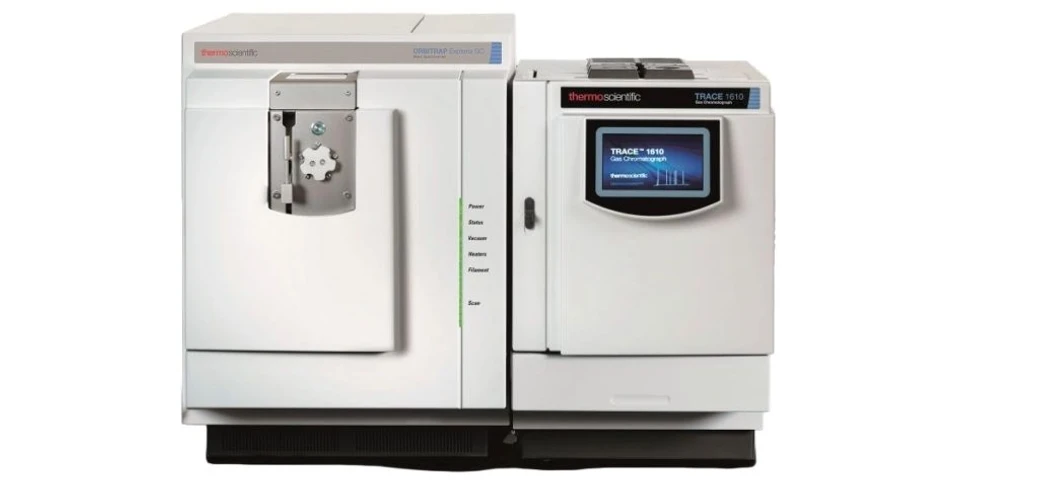
Using the Thermo Scientific Orbitrap Exploris GC Series laboratories can perform quantitative analysis while simultaneously acquiring comprehensive spectral data for confirmatory and retrospective analysis.
High resolving power improves separation of analytes from matrix interferences, strengthens identification confidence, and reduces the risk of false positives. This is critical when results directly impact regulatory compliance and public health decisions. HRAM also allows laboratories to retain long-term data value. Samples analyzed today can be re-examined tomorrow as regulations evolve or new contaminants emerge.
 Thermo Fisher Scientific: From Targeted Testing to Unknown Discovery: Creating Comprehensive “Food Intelligence” With GC Orbitrap Technology
Session 2: Searching for the unknown
While Session 1 addressed known contaminants, Session 2 focused on a growing challenge in food testing: identifying compounds that are not yet on routine target lists.
Emerging contaminants, process-induced byproducts, packaging migrants, and potential adulterants often require suspect screening or non-targeted workflows. With full-scan high-resolution data, laboratories can detect unexpected features, match against expanding compound databases, and investigate unknown peaks with greater confidence.
This capability transforms the role of GC-MS from a purely targeted tool into a discovery platform. Advanced data processing is key to making this practical in routine labs. During the webinar, we demonstrated how intelligent software tools support deconvolution, library matching, feature alignment, and statistical prioritization, turning complex datasets into clear, defensible results.
Explore Thermo Scientific Compound Discoverer software:
The ability to perform retrospective analysis without reinjecting samples is especially powerful. Laboratories can mine existing datasets when new regulatory requirements arise, reducing rework while increasing responsiveness.
Integrating targeted and non-targeted workflows
Food safety laboratories no longer operate in a world where targeted quantitation and discovery-based screening are separate workflows. Instead, they increasingly need a unified platform capable of:
- Quantifying regulated residues with precision
- Confirming results with accurate mass measurements
- Screening for unexpected or emerging compounds
- Supporting future regulatory changes
High-resolution GC-MS enables compliance-ready quantitation while preserving the flexibility to explore beyond predefined analyte lists.
Explore Thermo Fisher Scientific food safety solutions
Why this matters now
Global supply chains continue to grow in complexity. Ingredient sourcing, processing conditions, and packaging materials evolve constantly. At the same time, regulatory agencies are expanding contaminant monitoring programs and increasing expectations for defensible data.
Laboratories need analytical systems that deliver:
- High confidence in compound identification
- Operational efficiency in routine testing
- Flexibility to adapt to emerging risks
- Long-term data utility
GC Orbitrap technology paired together with advanced data analysis tools supports all these needs, helping laboratories protect public health while futureproofing their workflows.
Watch the full webinar recordings
This overview captures the key themes, but the full two-part webinar series dives deeper into real-world food safety case studies, demonstrations of HRAM workflows, practical guidance for suspect and non-target screening, and strategies for integrating targeted and discovery approaches.
Access the full webinars here:
GC Orbitrap: User Applications and Insights (Session 1)
GC Orbitrap: User Applications and Insights (Session 2)
Visit us on LinkedIn: #GCMS #ObitrapGC #FoodSafety