Girls Just Wanna Have Fun With KNAUER – A Girls' Day Full of Rainbows
KNAUER: Girls Just Wanna Have Fun With KNAUER – A Girls' Day Full of Rainbows
What do chromatography, gemstones, rainbows and even cats have in common? At KNAUER’s latest Girls’ Day in Berlin, 15 schoolgirls explored exactly that question. Through a series of hands-on activities, they discovered how HPLC instruments are developed and manufactured, learned the basics of spectroscopy and chromatography, and met women working across science, engineering, product management and company leadership.
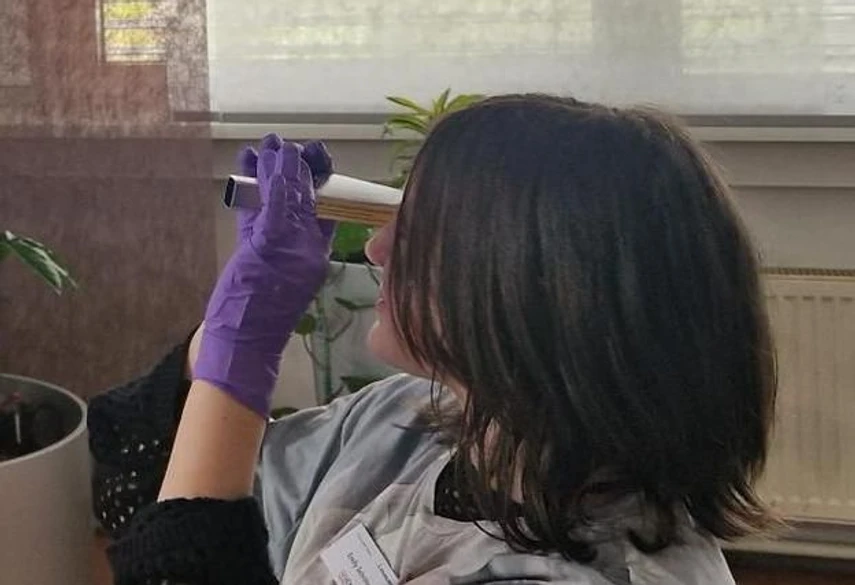 KNAUER: Figure 1 A student observes the rainbow spectrum of white light.
A Day to Explore STEM Careers
Girls’ Future Day, widely known as Girls’ Day, gives schoolgirls across Germany an opportunity to experience professions in which women are still underrepresented. Instead of learning about careers only in the classroom, participants can spend a day inside companies, laboratories and technical workplaces and see what these jobs actually involve.
KNAUER has participated in Girls’ Day for 17 years, and demand for places has become consistently high. The attraction is easy to understand: visitors do not simply listen to presentations. They can experiment, assemble components, talk directly with employees and discover how science and engineering are applied in everyday work.
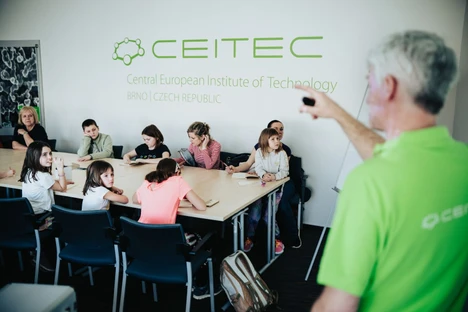
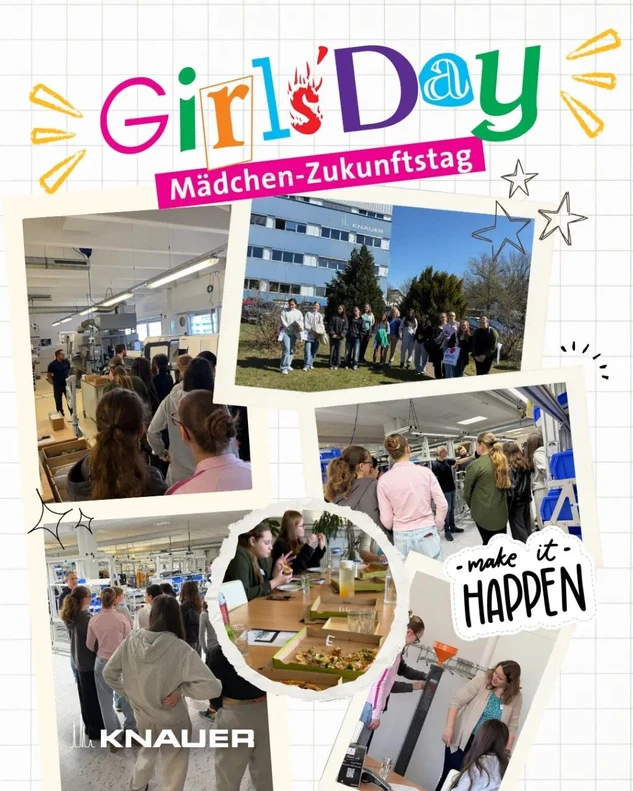 KNAUER: Figure 2 - Hands-on experience and wonder at Girls’ Day 2025: 13 interested girls assembled pump heads, learned what HPLC is, and how such equipment is developed
“That moment when the girls realize, with sparkling eyes, just how cool science can be—that’s exactly why I love Girls’ Day. It’s worth every bit of the effort!” – Dr. Kristin Folmert, chemist and product manager at KNAUER
From Laboratory Instruments to a Wide Range of Careers
At KNAUER wissenschaftliche Geräte GmbH, laboratory instrumentation is designed, developed, manufactured, tested and marketed from Berlin for customers around the world.
That requires far more than chemists alone. The company brings together people working in mechanical production, logistics, media design, mechatronics, software development, science, product management and company management.
For the participating girls, this offered a chance to meet women following very different career paths and to see that a technology company can provide opportunities across many disciplines.
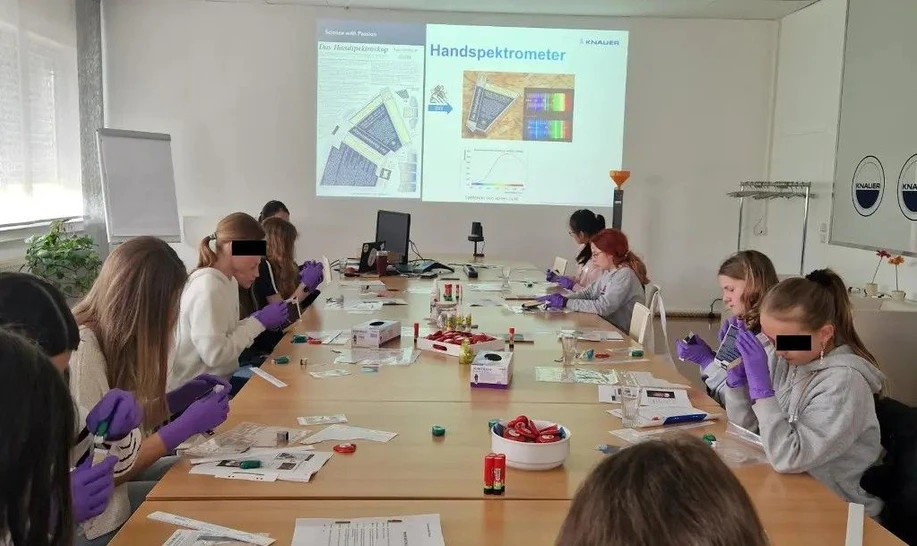 KNAUER: Figure 3 - The girls learned what chromatography and HPLC are, what they are used for, and how a UV/Vis detector works. They then built their own handheld spectroscope and experimented with white light and various color filters.
Women in Science and Technology at KNAUER
Women account for 37% of KNAUER’s workforce, with particularly strong representation in scientific and management positions. The company reports a gender pay gap of 1.84% for 2026, compared with an unadjusted German gender pay gap of 16% in 2025. Women also hold 44% of leadership positions at KNAUER, including several positions performed on a part-time basis.
The company emphasizes practical measures intended to make technical careers accessible to a wider range of employees. These include flexible work models, support for childcare and technical solutions such as indoor cranes for handling heavy components.
During Girls’ Day, these policies become less abstract. Participants meet scientists, engineers and managers who can describe how they entered their professions and how their careers developed.
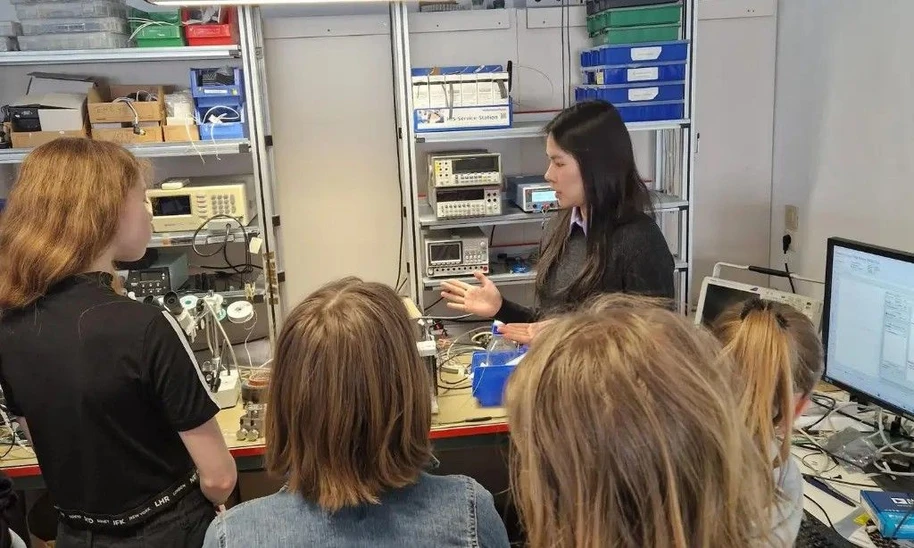 KNAUER: Figure 4 - During a visit to the equipment development department, scientist Thy Vu talks about her career at KNAUER. She wrote her bachelor’s thesis here and then worked as a student assistant in development during her master’s program. Subsequent to completing her master’s degree, she accepted a permanent position at KNAUER in the development department. Today, she is developing the pump drive of the future and tells the fascinated girls which gemstones are used in such a pump (sapphires and rubies).
Role Models and First-Hand Career Insights
Several KNAUER employees are also involved in International Women in Chromatography, a network supporting women and non-binary professionals working in chromatography.
Throughout the day, the students encountered women at different stages of their careers: from university students and young scientists to experienced product managers, developers and Managing Director Alexandra Knauer.
The message was not simply that STEM careers are available to women, but that scientific and technical work can take many forms. Networking, curiosity, willingness to ask questions and confidence in one’s own abilities were recurring themes throughout the event.
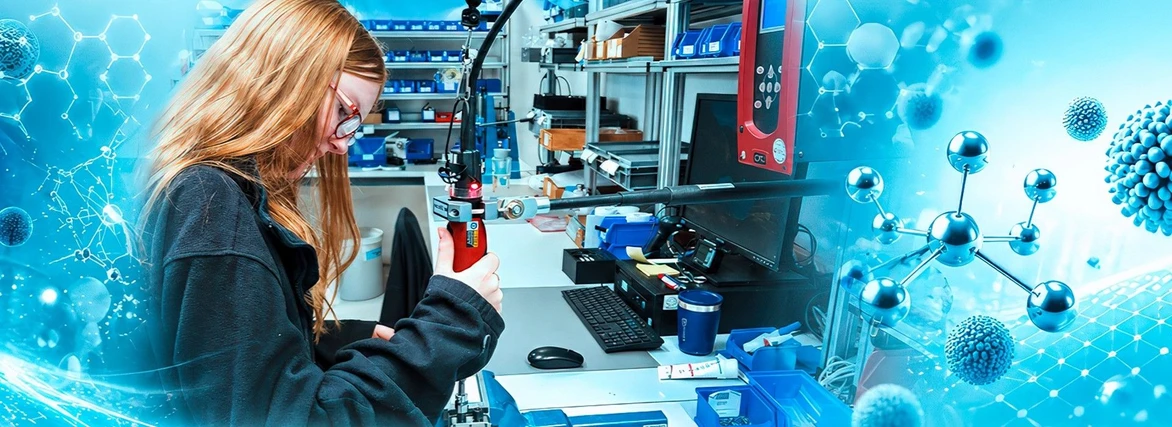
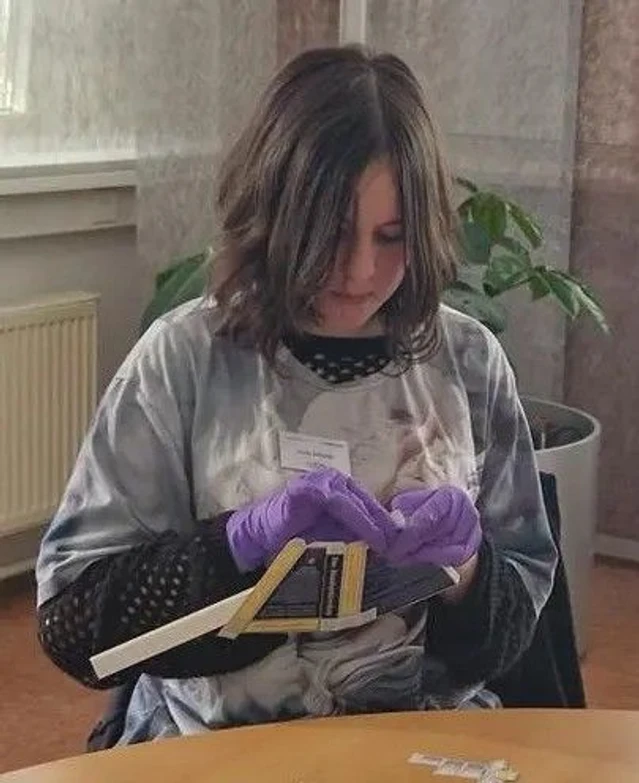 KNAUER: Figure 5 - A girl works intently and with great care on her spectroscope. None of the girls glance at their phones; they are all polite, and many feel comfortable asking questions openly. We are very excited about this generation of bright young talents.
Learning HPLC by Doing
The scientific part of the day began with the basic principles of high-performance liquid chromatography (HPLC).
To make separation easier to understand, the group first experimented with light and heavy balls inside a large glass column. From there, the discussion moved to the individual components of an HPLC system.
One analogy compared an HPLC instrument with the human body: the pump moves liquid much like the heart circulates blood, separation takes place in the column, and the detector observes the separated compounds through their interaction with light.
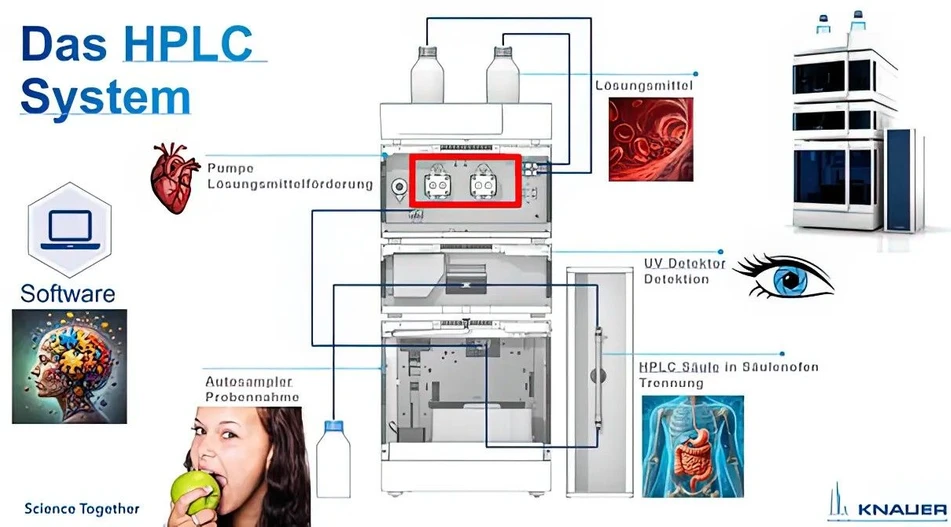 KNAUER: Figure 6 - The HPLC and its various modules, depicted as human organs.
Building a Spectroscope and Seeing Light Differently
Each participant then constructed a small handheld spectroscope.
The task required both careful reading and manual dexterity, particularly when fitting the delicate lens. Working together, the girls quickly developed better ways to complete the assembly—a small example of how real development projects evolve through cooperation and continuous improvement.
Once finished, the spectroscopes revealed the spectrum of white light as a rainbow together with visible spectral features. Colored filters placed between the light source and the spectroscope then demonstrated how absorption changes the observed spectrum.
This connected the practical activity with concepts introduced earlier in the day: visible light, wavelength, absorption and how optical signals eventually become peaks in HPLC detection.
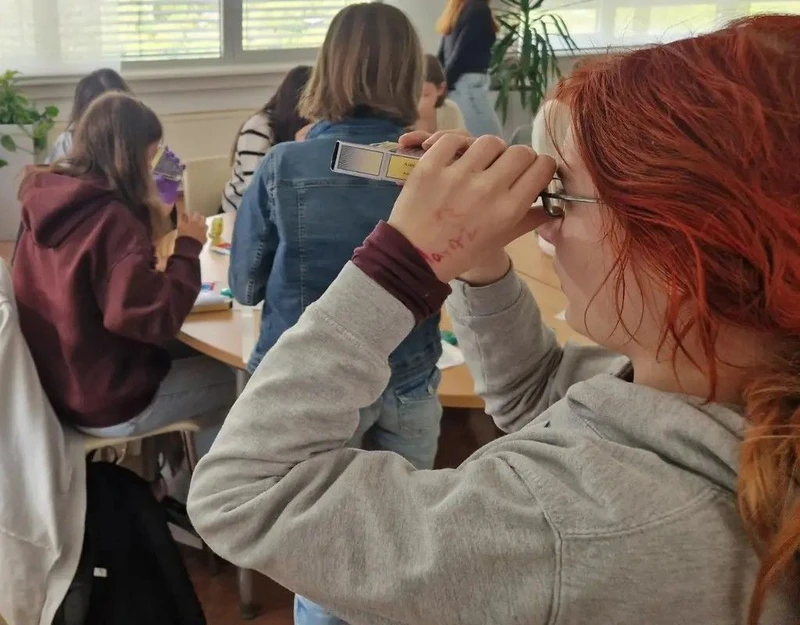 KNAUER: Figure 7 - A 11-year-old girl gazes fascinated at her rainbow and notices that while all the colors are visible, some areas are brighter while others are quite dark. “Is the spotlight not pure white, or is my spectroscope absorbing light?” Such clever questions arise when girls are encouraged to explore things for themselves.
Inside Instrument Development and Manufacturing
The program then moved from theory into KNAUER’s production environment.
In the mechanical manufacturing area, participants saw CNC machines and robotic systems producing precision components for laboratory instruments. They could watch parts of an HPLC pump head taking shape directly from metal components and learn why accurate machining is essential for reliable instrument performance.
“This is like science fiction!” – Mariko Stahr, Girls’ Day participant
In the development department, engineer Thy Vu demonstrated her work on pump-drive technology and explained how developers investigate parameters such as motor torque. The girls were also able to handle some of the materials used inside an HPLC pump.
One detail generated particular interest: components made from sapphire and ruby. This opened a discussion about material properties, crystal structures and why instrument developers benefit from understanding chemistry as well as engineering.
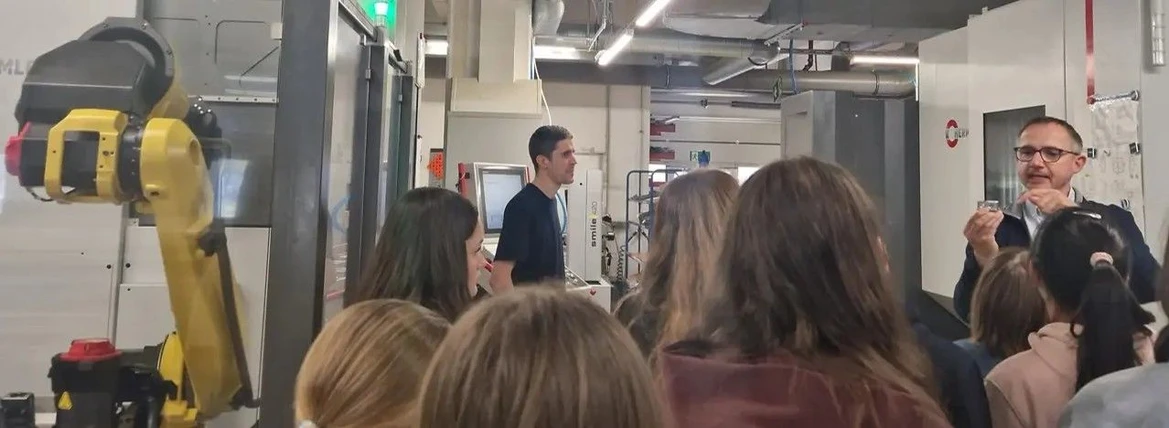 KNAUER: Figure 8 - Thomas Müller explains to the girls how CNC machines mill the housing for a pump head from a block of metal and why precision is crucial in this process. On the left is one of the robotic arms that continues working even at night, allowing employees to focus solely on daytime work and more demanding tasks.
Assembling a Real HPLC Pump Head
The final practical station brought the participants into instrument assembly.
Each girl was given the opportunity to assemble a pump head herself. The work proved more demanding than it initially appeared, requiring both hands to coordinate several components accurately.
With guidance from KNAUER training supervisor Ronald Berger, the participants completed their assemblies before each pump head underwent a final technical check to verify that the pistons moved correctly.
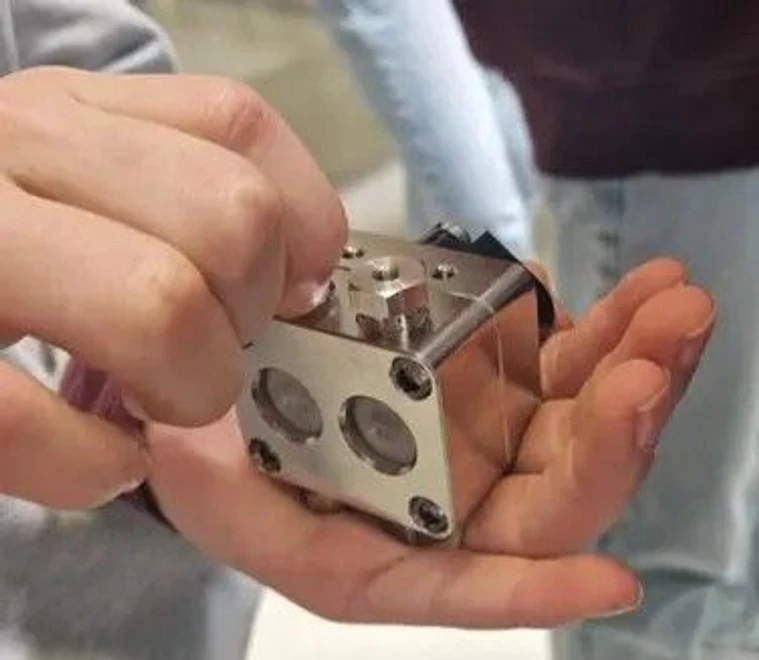 KNAUER: Figure 9 - A girl is screwing the check valve with the check valve holder into the pump head. Everything is then tightened using a torque wrench.
The day concluded with lunch and another opportunity to speak with Managing Director Alexandra Knauer, who has long supported initiatives intended to improve the visibility of women and encourage young people to consider STEM careers.
Participants received certificates and “I love HPLC” bags with small gifts before leaving KNAUER with their own impressions of what a future in science and technology could look like.
So Where Do the Cats and Rainbows Come In?
The rainbow seen through a spectroscope provides a simple demonstration of the same basic optical principle used in many analytical measurements.
When white light is dispersed, its different wavelengths become visible as a spectrum. If part of that light is absorbed by an object or substance, the resulting spectrum changes. Measuring which wavelengths are absorbed can therefore reveal information about the material interacting with the light.
The article illustrates the idea with a deliberately simple example: a cat sitting in front of a light source may absorb most of the light, but its silhouette still provides information about what is blocking the beam.
Similarly, analytical detectors can obtain information about molecules by measuring how they interact with light.
![KNAUER: Figure 10 - The cat actually absorbs all the light, but its outline still lets us know that there’s a fluffy cat sitting there. In HPLC, a[SD5.1] molecule’s light absorption also tells us a great deal about its identity.](https://labrulez.com/labrulez-bucket-strapi-h3hsga3/KNAUER_Figure_10_The_cat_actually_absorbs_all_the_light_af8452f58d_l.webp) KNAUER: Figure 10 - The cat actually absorbs all the light, but its outline still lets us know that there’s a fluffy cat sitting there. In HPLC, a[SD5.1] molecule’s light absorption also tells us a great deal about its identity.
KNAUER: Figure 10 - The cat actually absorbs all the light, but its outline still lets us know that there’s a fluffy cat sitting there. In HPLC, a[SD5.1] molecule’s light absorption also tells us a great deal about its identity.
The same principle also helps explain the colors of evening sunlight. When sunlight travels through a longer path in the atmosphere, shorter-wavelength blue light is scattered more strongly, leaving proportionally more of the longer-wavelength red and orange light reaching the observer.
For the students at KNAUER, concepts such as these transformed HPLC and spectroscopy from abstract scientific terminology into something they could build, observe and discuss themselves.
And that is ultimately the purpose of Girls’ Day: to show young people that science and technology are not distant subjects confined to textbooks, but fields full of practical questions, creative problem solving and possible future careers.