The danger of mobile phase mismatch

We, 24.9.2025 | Original article from: Phenomenex
After SPE, samples may not be ready for direct LC injection. Solvent mismatch with the mobile phase can distort peak shapes—proper solvent choice is essential.
<p><strong>Phenomenex:</strong> The danger of mobile phase mismatch</p>

Phenomenex: The danger of mobile phase mismatch

It is easy to think that once a sample elutes from Solid Phase Extraction (SPE) it is then ready to be injected onto the analytical column. While the sample is now significantly cleaner, it is not always the case that injecting it directly onto the column will result in perfect chromatography. Solvent mismatch is a known cause of poor peak shape, so care must be given to consider the solvent strength used in the elution step of any SPE being performed on samples.

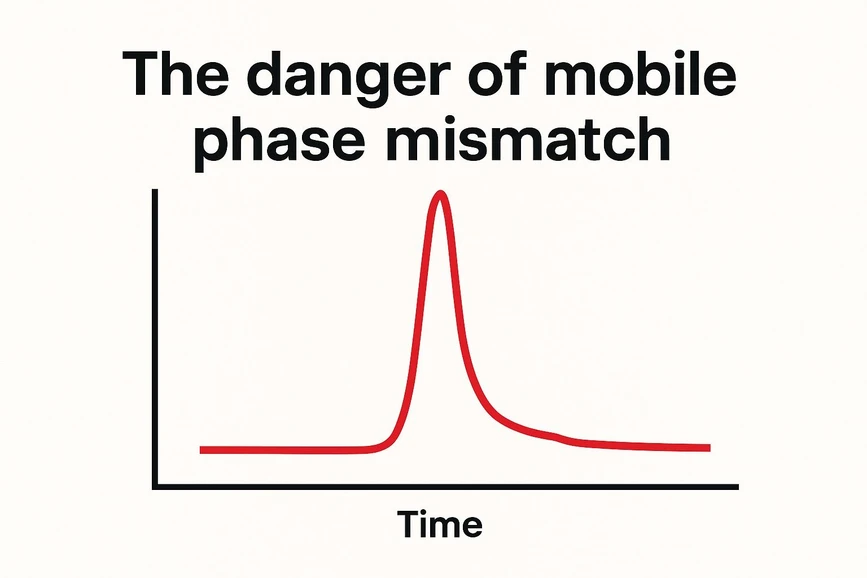
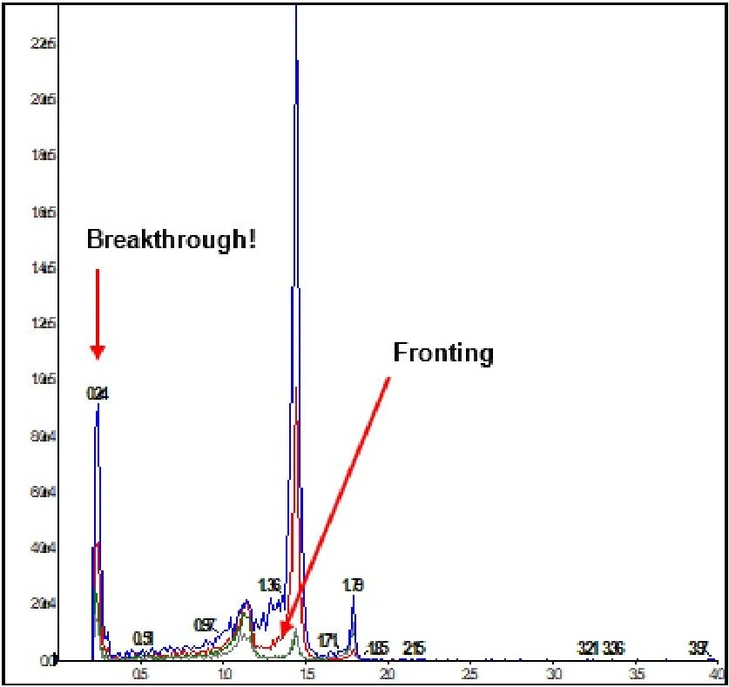
The solvent with which the sample is eluted, the overall concentration of the sample, and the mobile phase conditions of the method should be evaluated when building sample preparation protocols. An injection of 100% organic solvent when your starting Mobile Phase conditions begin with high water (90%), can cause solvent mis-match to occur within the system, as seen in Image 1 below. Ideally, a sample will be in solvent that closely matches the starting mobile phase ratio of the LC method to prevent issues in peak shape from occurring. 

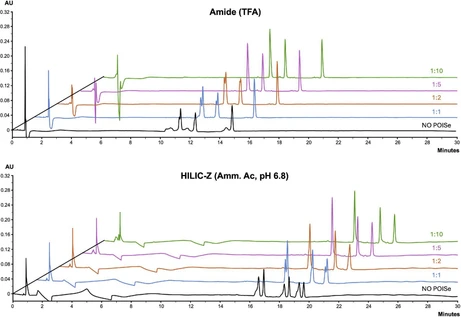
Remember that not all elution solvent ratios are troublesome to chromatography. A good example of a favourable elution solvent is when Phree™ Protein Precipitation product is used to prepare samples for analysis in HILIC (hydrophilic interaction liquid chromatography) mode. The Phree protocol calls for samples to be diluted in a 3 : 1 (Acetonitrile : Aqueous) based sample ratio for the protein precipitation step to be successful. HILIC mode starts at high concentrations of Acetonitrile, but still requires water to be present in the sample for optimal peak shape. The sample eluting from Phree is already in the ideal solvent ratio for HILIC mode and no further processing is needed, but if your analysis is looking to use Ion Exchange with Rezex™, the presence of Acetonitrile in the sample could cause issues.
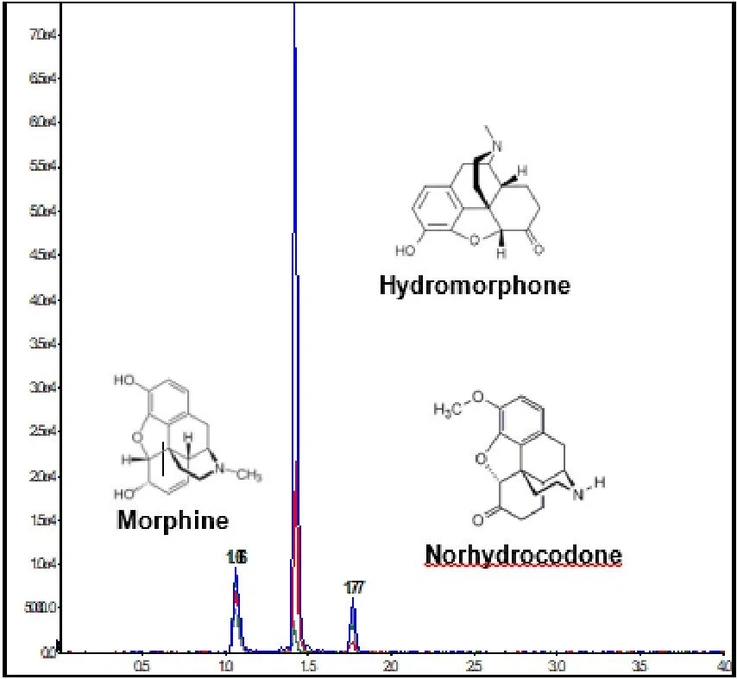
Phenomenex: The danger of mobile phase mismatch: Sample in 50% Methanol.Phenomenex: The danger of mobile phase mismatch: Sample in 50% Methanol.Phenomenex: The danger of mobile phase mismatch: Sample in 100% Methanol.Phenomenex: The danger of mobile phase mismatch: Sample in 100% Methanol.

Phenomenex
LinkedIn Logo
 

Related articles

Evaluating the potential of hydrophilic interaction liquid chromatography for collagen peptide mapping analysis
Scientific article | Science and research

Evaluating the potential of hydrophilic interaction liquid chromatography for collagen peptide mapping analysis

This study optimizes a HILIC method for collagen peptide mapping, evaluating stationary phases, injection techniques, and MS coupling to enhance peptide separation and hydroxylation analysis.
Generic SPE Method by Retention Mechanism
Article | Product

Generic SPE Method by Retention Mechanism

Explore solvent and pH conditions for Reversed Phase, Normal Phase, and Strong Ion-Exchange SPE. Guidelines cover analyte types, sample matrices, and key steps from conditioning to elution.
The Role of End-Capping in RP
Article | Academy

The Role of End-Capping in RP

New end-capping technologies can significantly improve the analysis of compounds that were once considered challenging.
News from LabRulezLCMS Library - Week 08, 2026
Article | Application

News from LabRulezLCMS Library - Week 08, 2026

This week we bring you application notes by Agilent Technologies, KNAUER, Shimadzu and Waters Corporation and presentation by MDCW / Clemson University!
 

Related articles

Evaluating the potential of hydrophilic interaction liquid chromatography for collagen peptide mapping analysis
Scientific article | Science and research

Evaluating the potential of hydrophilic interaction liquid chromatography for collagen peptide mapping analysis

This study optimizes a HILIC method for collagen peptide mapping, evaluating stationary phases, injection techniques, and MS coupling to enhance peptide separation and hydroxylation analysis.
Generic SPE Method by Retention Mechanism
Article | Product

Generic SPE Method by Retention Mechanism

Explore solvent and pH conditions for Reversed Phase, Normal Phase, and Strong Ion-Exchange SPE. Guidelines cover analyte types, sample matrices, and key steps from conditioning to elution.
The Role of End-Capping in RP
Article | Academy

The Role of End-Capping in RP

New end-capping technologies can significantly improve the analysis of compounds that were once considered challenging.
News from LabRulezLCMS Library - Week 08, 2026
Article | Application

News from LabRulezLCMS Library - Week 08, 2026

This week we bring you application notes by Agilent Technologies, KNAUER, Shimadzu and Waters Corporation and presentation by MDCW / Clemson University!
 

Related articles

Evaluating the potential of hydrophilic interaction liquid chromatography for collagen peptide mapping analysis
Scientific article | Science and research

Evaluating the potential of hydrophilic interaction liquid chromatography for collagen peptide mapping analysis

This study optimizes a HILIC method for collagen peptide mapping, evaluating stationary phases, injection techniques, and MS coupling to enhance peptide separation and hydroxylation analysis.
Generic SPE Method by Retention Mechanism
Article | Product

Generic SPE Method by Retention Mechanism

Explore solvent and pH conditions for Reversed Phase, Normal Phase, and Strong Ion-Exchange SPE. Guidelines cover analyte types, sample matrices, and key steps from conditioning to elution.
The Role of End-Capping in RP
Article | Academy

The Role of End-Capping in RP

New end-capping technologies can significantly improve the analysis of compounds that were once considered challenging.
News from LabRulezLCMS Library - Week 08, 2026
Article | Application

News from LabRulezLCMS Library - Week 08, 2026

This week we bring you application notes by Agilent Technologies, KNAUER, Shimadzu and Waters Corporation and presentation by MDCW / Clemson University!
 

Related articles

Evaluating the potential of hydrophilic interaction liquid chromatography for collagen peptide mapping analysis
Scientific article | Science and research

Evaluating the potential of hydrophilic interaction liquid chromatography for collagen peptide mapping analysis

This study optimizes a HILIC method for collagen peptide mapping, evaluating stationary phases, injection techniques, and MS coupling to enhance peptide separation and hydroxylation analysis.
Generic SPE Method by Retention Mechanism
Article | Product

Generic SPE Method by Retention Mechanism

Explore solvent and pH conditions for Reversed Phase, Normal Phase, and Strong Ion-Exchange SPE. Guidelines cover analyte types, sample matrices, and key steps from conditioning to elution.
The Role of End-Capping in RP
Article | Academy

The Role of End-Capping in RP

New end-capping technologies can significantly improve the analysis of compounds that were once considered challenging.
News from LabRulezLCMS Library - Week 08, 2026
Article | Application

News from LabRulezLCMS Library - Week 08, 2026

This week we bring you application notes by Agilent Technologies, KNAUER, Shimadzu and Waters Corporation and presentation by MDCW / Clemson University!