Generic SPE Method by Retention Mechanism

We, 4.6.2025 | Original article from: Phenomenex
Explore solvent and pH conditions for Reversed Phase, Normal Phase, and Strong Ion-Exchange SPE. Guidelines cover analyte types, sample matrices, and key steps from conditioning to elution.
  • Photo: Phenomenex: Generic SPE Method by Retention Mechanism
  • Video: Phenomenex: Solid Phase Extraction (SPE) Tutorial

Each SPE mechanism/phase has a general set of solvent conditions under which SPE may be performed. Use the solvents/pH conditions listed below, volumes as determined in Method and Sorbent Volume Selection.

Reversed Phase SPE Method

Sorbent - SDB-L, C18, C8, PH, CN, X, XL
  • Analyte Properties: Low to moderate polarity (or nonpolar) Hydrophobic Neutralized/uncharged – Pharmaceuticals, Pesticides, Herbicides
  • Sample/Matrix: Aqueous, diluted with buffer – Biological fluids, Water
  • Conditioning Step
    • Solvation – polar organic solvents – Methanol
    • Equilibration – aqueous, buffers – Water or buffer
  • Wash Step: Aqueous buffers with 5 to 50 % polar organic solvent – Methanol:Water (5:95)
  • Elution Step: Polar or non-polar organic solvent(s) with or without water, buffer and/or strong acid or base – Methanol:Acetonitrile (50:50)

Normal Phase SPE Method

Sorbent - Silica, Florisil®, NH2, CN
  • Analyte Properties: Moderate to high polarity compounds (neutralized/uncharged) – Pesticides
  • Sample/Matrix: Non-polar organic solvents or moderately polar organic solvents – Hexane, chloroform, petroleum ether, toluene or methylene chloride
  • Conditioning Step
    • Solvation – polar organic solvents (optional) – Methanol (optional)
    • Equilibration – sample/matrix solvent – Hexane or chloroform
  • Wash Step: Non-polar organic solvents with a low concentration (1 to 5 %) of moderate to low polarity organic solvents – Hexane with 1 % THF, ethyl acetate, acetone, acetonitrile or IPA
  • Elution Step: Non-polar organic solvents containing higher concentrations (5 to 50 %) of moderate to high polarity organic solvents – Hexane with 10 % THF, ethyl acetate, acetone, acetonitrile or IPA

Strong Ion-Exchange SPE Method

Sorbet: Anion exchange: Screen-A, SAX, X-A, X-AW, XL-A, XL-AW
Cation exchange: Screen-C, SCX, X-C, X-CW, XL-C, XL-CW
  • Analyte Properties: Ionized/charged compounds – Anion exchange: Acidic analytes
    Cation exchange: Basic drugs
  • Sample/Matrix: Aqueous; Low ionic strength buffers (>30 mM), pH adjusted – Biological fluids plus buffer
  • Conditioning Step
    • Conditioning – polar organic solvents – Methanol
    • Equilibration – low ionic strength buffers, pH adjusted – 25 mM Tris-OAc, pH 7
  • Wash Step: Aqueous buffers of low salt concentrations with or without organic solvent
    • Anion exchange: Buffer pH 7: Methanol (50:50)
    • Cation exchange:
      • Buffer pH 6
      • 1 M acetic acid
      • 3. Methanol
  • Elution Step:
    • Neutralize the charge on the weak anion or cation
    • Increase the ionic strength and counter ion concentration
    • Add a strong counter ion displacer
      • Anion exchange: Hexane:ethyl acetate (75:25) + 1 % glacial acetic acid
      • Cation exchange: Methanol + 5 % NH₃

NOTE: These are general starting conditions. Please contact your Phenomenex technical consultant for more assistance.


Phenomenex
LinkedIn Logo
 

Related articles

Considerations when working with solid samples and SPE
Article | Academy

Considerations when working with solid samples and SPE

Solid phase extraction enables clean-up, pre-concentration, and solvent switching. Proper solvent choice and SPE mode are key for effective solid sample preparation.
Efficient Sample Concentration for Micropollutant Surveillance Under EU Directive 2024/3019
Article | Environment

Efficient Sample Concentration for Micropollutant Surveillance Under EU Directive 2024/3019

How the EU’s revised Urban Wastewater Treatment Directive is driving demand for ultra-sensitive LC-MS/MS workflows—and why nitrogen evaporation is critical for reliable micropollutant monitoring.
SPE Troubleshooting: Why Won't My Sample Flow Through the SPE Cartridge?
Article | Academy

SPE Troubleshooting: Why Won't My Sample Flow Through the SPE Cartridge?

Learn the most common causes of SPE cartridge flow problems and how to troubleshoot them. Identify issues related to samples, solvents, manifold pressure, and precipitation.
A Liquid–Liquid Extraction Method for Measuring Ultrashort PFCAs and Longer-Chain PFAS in Water
Scientific article | Science and research

A Liquid–Liquid Extraction Method for Measuring Ultrashort PFCAs and Longer-Chain PFAS in Water

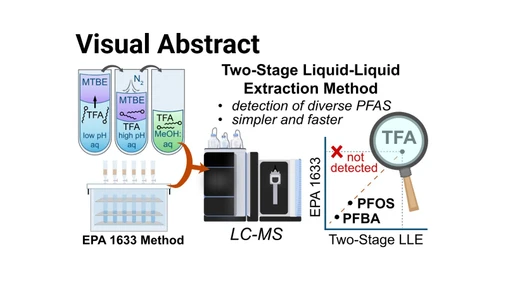
A two-stage liquid–liquid extraction method enables sensitive, reproducible analysis of ultrashort PFCAs such as TFA and longer-chain PFAS in water.
 

Related articles

Considerations when working with solid samples and SPE
Article | Academy

Considerations when working with solid samples and SPE

Solid phase extraction enables clean-up, pre-concentration, and solvent switching. Proper solvent choice and SPE mode are key for effective solid sample preparation.
Efficient Sample Concentration for Micropollutant Surveillance Under EU Directive 2024/3019
Article | Environment

Efficient Sample Concentration for Micropollutant Surveillance Under EU Directive 2024/3019

How the EU’s revised Urban Wastewater Treatment Directive is driving demand for ultra-sensitive LC-MS/MS workflows—and why nitrogen evaporation is critical for reliable micropollutant monitoring.
SPE Troubleshooting: Why Won't My Sample Flow Through the SPE Cartridge?
Article | Academy

SPE Troubleshooting: Why Won't My Sample Flow Through the SPE Cartridge?

Learn the most common causes of SPE cartridge flow problems and how to troubleshoot them. Identify issues related to samples, solvents, manifold pressure, and precipitation.
A Liquid–Liquid Extraction Method for Measuring Ultrashort PFCAs and Longer-Chain PFAS in Water
Scientific article | Science and research

A Liquid–Liquid Extraction Method for Measuring Ultrashort PFCAs and Longer-Chain PFAS in Water

A two-stage liquid–liquid extraction method enables sensitive, reproducible analysis of ultrashort PFCAs such as TFA and longer-chain PFAS in water.
 

Related articles

Considerations when working with solid samples and SPE
Article | Academy

Considerations when working with solid samples and SPE

Solid phase extraction enables clean-up, pre-concentration, and solvent switching. Proper solvent choice and SPE mode are key for effective solid sample preparation.
Efficient Sample Concentration for Micropollutant Surveillance Under EU Directive 2024/3019
Article | Environment

Efficient Sample Concentration for Micropollutant Surveillance Under EU Directive 2024/3019

How the EU’s revised Urban Wastewater Treatment Directive is driving demand for ultra-sensitive LC-MS/MS workflows—and why nitrogen evaporation is critical for reliable micropollutant monitoring.
SPE Troubleshooting: Why Won't My Sample Flow Through the SPE Cartridge?
Article | Academy

SPE Troubleshooting: Why Won't My Sample Flow Through the SPE Cartridge?

Learn the most common causes of SPE cartridge flow problems and how to troubleshoot them. Identify issues related to samples, solvents, manifold pressure, and precipitation.
A Liquid–Liquid Extraction Method for Measuring Ultrashort PFCAs and Longer-Chain PFAS in Water
Scientific article | Science and research

A Liquid–Liquid Extraction Method for Measuring Ultrashort PFCAs and Longer-Chain PFAS in Water

A two-stage liquid–liquid extraction method enables sensitive, reproducible analysis of ultrashort PFCAs such as TFA and longer-chain PFAS in water.
 

Related articles

Considerations when working with solid samples and SPE
Article | Academy

Considerations when working with solid samples and SPE

Solid phase extraction enables clean-up, pre-concentration, and solvent switching. Proper solvent choice and SPE mode are key for effective solid sample preparation.
Efficient Sample Concentration for Micropollutant Surveillance Under EU Directive 2024/3019
Article | Environment

Efficient Sample Concentration for Micropollutant Surveillance Under EU Directive 2024/3019

How the EU’s revised Urban Wastewater Treatment Directive is driving demand for ultra-sensitive LC-MS/MS workflows—and why nitrogen evaporation is critical for reliable micropollutant monitoring.
SPE Troubleshooting: Why Won't My Sample Flow Through the SPE Cartridge?
Article | Academy

SPE Troubleshooting: Why Won't My Sample Flow Through the SPE Cartridge?

Learn the most common causes of SPE cartridge flow problems and how to troubleshoot them. Identify issues related to samples, solvents, manifold pressure, and precipitation.
A Liquid–Liquid Extraction Method for Measuring Ultrashort PFCAs and Longer-Chain PFAS in Water
Scientific article | Science and research

A Liquid–Liquid Extraction Method for Measuring Ultrashort PFCAs and Longer-Chain PFAS in Water

A two-stage liquid–liquid extraction method enables sensitive, reproducible analysis of ultrashort PFCAs such as TFA and longer-chain PFAS in water.