Elucidation of high-level chemical mechanisms using GCxGC-MS (Caroline Gauchotte-Lindsay, MDCW 2023)

Tu, 6.2.2024 | Original article from: The Multidimensional Chromatography (MDC) Workshop
We aim to simplify complex data to elucidate high-level mechanisms of engineering processes using non-targeted (NT) analysis by two-dimensional gas chromatography coupled with mass spectrometry (GCxGC-MS).
  • Photo: MDCW: Elucidation of high-level chemical mechanisms using GCxGC-MS (Caroline Gauchotte-Lindsay, MDCW 2023)
  • Video: LabRulez: Caroline Gauchotte-Lindsay: Elucidation of high-level chemical mechanisms using GCxGC-MS (MDCW 2023)

🎤 Presenter: Caroline Gauchotte-Lindsay¹, Laurie Savage¹, Jeanine Lenselink¹, Ioannis Sampsonidis¹´² (¹James Watt School of Engineering, University of Glasgow, Glasgow, United Kingdom. ²Department of Nutritional Sciences, International Hellenic University, Thessaloniki, Greece)

Abstract

We aim to simplify complex data to elucidate high-level mechanisms of engineering processes using non-targeted (NT) analysis by two-dimensional gas chromatography coupled with mass spectrometry (GCxGC-MS). We present here sample and data pipelines to describe chemical transformations of by-products during the underground gasification of coal. By using NT analysis, chemical signatures and chemical markers of the reactions can be identified and related to the reaction conditions and parameters.

We focus here on the formation of semi-volatile organic compounds (SVOCs) during underground coal gasification (UCG) from two different experimental set-ups. Coal tar samples were collected from a shallow in situ UCG experiment and processed (or waste) waters from two ex situ experiments. The sample workflows include, for each type of sample, novel ultra-sound assisted exhaustive extraction and an adapted GCxGC chromatographic method. The data pipeline comprises tile-based alignment, Fisher ratio selection of features, sample normalisation and clustering of compounds rather than samples using affinity propagation. Affinity propagation is a clustering algorithm based on “message passing” between data pointspoint. The clusters grouped together compounds that have the same reaction kinetics patterns. It enabled us to better describe the coal gasification processes compared to the quantitative analysis of targeted compounds and to identify markers or exemplars of the reactions that could be used in future experiments to monitor progress and yield.

The Multidimensional Chromatography Workshop
LinkedIn Logo
 

Related articles

Fluorite ore recognition using spectral clustering and smartphone digital images calibrated with a ColorChecker: A case study at the Lújar underground mine, Spain
Scientific article | Science and research

Fluorite ore recognition using spectral clustering and smartphone digital images calibrated with a ColorChecker: A case study at the Lújar underground mine, Spain

This study aims to develop a low-cost method using smartphone images and spectral clustering to identify fluorite ore grade, enabling efficient, accessible screening for mining operations.
Exploring Domestic Discharge Patterns in Wastewater through LC-HRMS Screening and Temporal Clustering
Scientific article | Science and research

Exploring Domestic Discharge Patterns in Wastewater through LC-HRMS Screening and Temporal Clustering

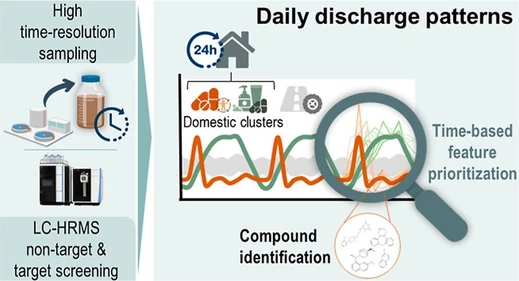
LC-HRMS screening combined with temporal clustering identified daily domestic discharge patterns in wastewater, enabling improved interpretation of population chemical exposure.
Hydrogen Production from Biomass Gasification Using Dolomite and Mechanical Mixtures of CaO–MgO–K2CO3
Scientific article | Science and research

Hydrogen Production from Biomass Gasification Using Dolomite and Mechanical Mixtures of CaO–MgO–K2CO3

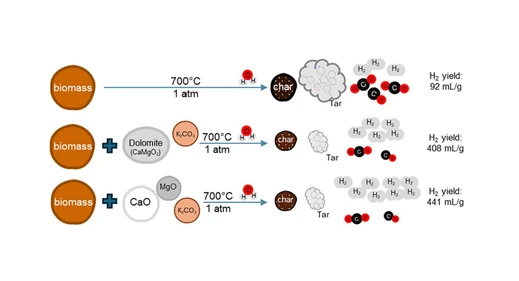
This study investigates CaO–MgO–K₂CO₃ mixtures for biomass gasification, achieving higher hydrogen yields than conventional dolomite catalysts.
From the Road to the Field: Decoding Chemical Transformation in Aging Tire and Artificial Turf Crumb Rubber
Scientific article | Science and research

From the Road to the Field: Decoding Chemical Transformation in Aging Tire and Artificial Turf Crumb Rubber

This study investigates chemical aging of tire and turf crumb rubber, identifying hundreds of transformation products and potential aging markers.
 

Related articles

Fluorite ore recognition using spectral clustering and smartphone digital images calibrated with a ColorChecker: A case study at the Lújar underground mine, Spain
Scientific article | Science and research

Fluorite ore recognition using spectral clustering and smartphone digital images calibrated with a ColorChecker: A case study at the Lújar underground mine, Spain

This study aims to develop a low-cost method using smartphone images and spectral clustering to identify fluorite ore grade, enabling efficient, accessible screening for mining operations.
Exploring Domestic Discharge Patterns in Wastewater through LC-HRMS Screening and Temporal Clustering
Scientific article | Science and research

Exploring Domestic Discharge Patterns in Wastewater through LC-HRMS Screening and Temporal Clustering

LC-HRMS screening combined with temporal clustering identified daily domestic discharge patterns in wastewater, enabling improved interpretation of population chemical exposure.
Hydrogen Production from Biomass Gasification Using Dolomite and Mechanical Mixtures of CaO–MgO–K2CO3
Scientific article | Science and research

Hydrogen Production from Biomass Gasification Using Dolomite and Mechanical Mixtures of CaO–MgO–K2CO3

This study investigates CaO–MgO–K₂CO₃ mixtures for biomass gasification, achieving higher hydrogen yields than conventional dolomite catalysts.
From the Road to the Field: Decoding Chemical Transformation in Aging Tire and Artificial Turf Crumb Rubber
Scientific article | Science and research

From the Road to the Field: Decoding Chemical Transformation in Aging Tire and Artificial Turf Crumb Rubber

This study investigates chemical aging of tire and turf crumb rubber, identifying hundreds of transformation products and potential aging markers.
 

Related articles

Fluorite ore recognition using spectral clustering and smartphone digital images calibrated with a ColorChecker: A case study at the Lújar underground mine, Spain
Scientific article | Science and research

Fluorite ore recognition using spectral clustering and smartphone digital images calibrated with a ColorChecker: A case study at the Lújar underground mine, Spain

This study aims to develop a low-cost method using smartphone images and spectral clustering to identify fluorite ore grade, enabling efficient, accessible screening for mining operations.
Exploring Domestic Discharge Patterns in Wastewater through LC-HRMS Screening and Temporal Clustering
Scientific article | Science and research

Exploring Domestic Discharge Patterns in Wastewater through LC-HRMS Screening and Temporal Clustering

LC-HRMS screening combined with temporal clustering identified daily domestic discharge patterns in wastewater, enabling improved interpretation of population chemical exposure.
Hydrogen Production from Biomass Gasification Using Dolomite and Mechanical Mixtures of CaO–MgO–K2CO3
Scientific article | Science and research

Hydrogen Production from Biomass Gasification Using Dolomite and Mechanical Mixtures of CaO–MgO–K2CO3

This study investigates CaO–MgO–K₂CO₃ mixtures for biomass gasification, achieving higher hydrogen yields than conventional dolomite catalysts.
From the Road to the Field: Decoding Chemical Transformation in Aging Tire and Artificial Turf Crumb Rubber
Scientific article | Science and research

From the Road to the Field: Decoding Chemical Transformation in Aging Tire and Artificial Turf Crumb Rubber

This study investigates chemical aging of tire and turf crumb rubber, identifying hundreds of transformation products and potential aging markers.
 

Related articles

Fluorite ore recognition using spectral clustering and smartphone digital images calibrated with a ColorChecker: A case study at the Lújar underground mine, Spain
Scientific article | Science and research

Fluorite ore recognition using spectral clustering and smartphone digital images calibrated with a ColorChecker: A case study at the Lújar underground mine, Spain

This study aims to develop a low-cost method using smartphone images and spectral clustering to identify fluorite ore grade, enabling efficient, accessible screening for mining operations.
Exploring Domestic Discharge Patterns in Wastewater through LC-HRMS Screening and Temporal Clustering
Scientific article | Science and research

Exploring Domestic Discharge Patterns in Wastewater through LC-HRMS Screening and Temporal Clustering

LC-HRMS screening combined with temporal clustering identified daily domestic discharge patterns in wastewater, enabling improved interpretation of population chemical exposure.
Hydrogen Production from Biomass Gasification Using Dolomite and Mechanical Mixtures of CaO–MgO–K2CO3
Scientific article | Science and research

Hydrogen Production from Biomass Gasification Using Dolomite and Mechanical Mixtures of CaO–MgO–K2CO3

This study investigates CaO–MgO–K₂CO₃ mixtures for biomass gasification, achieving higher hydrogen yields than conventional dolomite catalysts.
From the Road to the Field: Decoding Chemical Transformation in Aging Tire and Artificial Turf Crumb Rubber
Scientific article | Science and research

From the Road to the Field: Decoding Chemical Transformation in Aging Tire and Artificial Turf Crumb Rubber

This study investigates chemical aging of tire and turf crumb rubber, identifying hundreds of transformation products and potential aging markers.