Chromatographic fingerprint of Pistacia vera fruits: an aromatic tour around the world (Andrea Schincaglia, MDCW 2023)

Tu, 16.1.2024 | Original article from: The Multidimensional Chromatography (MDC) Workshop
In the present study, the volatile organic compounds (VOCs) of pistachio from different geographic origins, were evaluated using a high-capacity concentration (HCC) tool, named HiSorb™, was used.
  • Photo: Chromatographic fingerprint of Pistacia vera fruits: an aromatic tour around the world (Andrea Schincaglia, MDCW 2023)
  • Video: LabRulez: Andrea Schincaglia:Chromatographic fingerprint of Pistacia vera fruits: an aromatic tour around the world (MDCW 2023)
  • 🎤 Presenter: Andrea Schincaglia¹, Giorgia Purcaro², Alberto Cavazzini¹, Marco Beccaria¹ (¹Department of Chemical Pharmaceutical and Agricultural Sciences, University of Ferrara, Ferrara, Italy. ²Gembloux Agro-Bio Tech, University of Liège, Gembloux, Belgium)

Abstract

Aroma is a key organoleptic characteristic of pistachio that determines its quality and consumer acceptance. As for natural products, the aroma is highly dependent on many variables such as the cultivar, geographical origins, harvesting conditions and storage. Most of the pistachio production comes from countries with a warm, arid climate, indeed, the world’s leading producers of pistachio are Iran, the United States (USA), Italy, Greece, Tunisia, Turkey, Syria, and Spain.

Determining their characteristic aroma fingerprints is essential not only from a consumer acceptance viewpoint but also for standardizing pistachio-based product production in industries. In the present study, the volatile organic compounds (VOCs) of pistachio from different geographic origins, were evaluated. To perform this evaluation, a high-capacity concentration (HCC) tool, named HiSorb™, was used. HiSorb™ bridges the gap between solid phase micro-extraction (SPME) and stir bar sorptive extraction (SBSE); increasing sensitivity and repeatability, thanks to an automated and easy handling interface. Different HiSorb™ probes were evaluated to obtain the best results, as well as temperature and time of extraction. VOCs extracted with HiSorb™ were successively analyzed with two-dimensional comprehensive gas chromatography-mass spectrometry (GC×GC-MS), equipped with a reversed fill/flush flow modulator.

The use of multidimensional gas chromatography allows an enhancement of separation power and maximises the level of information extracted, obtaining in this way a chromatographic fingerprint of pistachio’s VOCs.

The Multidimensional Chromatography Workshop
LinkedIn Logo
 

Related articles

Two-dimensional gas chromatography for lipidomics investigations (Marco Beccaria, MDCW 2023)
Presentation | Video

Two-dimensional gas chromatography for lipidomics investigations (Marco Beccaria, MDCW 2023)

Two-dimensional gas chromatography (GC×GC) methodology, with dedicated sample preparation techniques, has been applied to investigate lipid fractions - total fatty acid profile and minor lipid components.
Exploring the cup of coffee using GC×GC-MS & Headspace extractions (Damien Eggermont, MDCW 2023)
Presentation | Video

Exploring the cup of coffee using GC×GC-MS & Headspace extractions (Damien Eggermont, MDCW 2023)

The aim of this presentation is to elucidate the potentiality of coupling HCC-HS with GC and its further development to answer food-related questions.
Identification of characteristic flavor compounds of boletus edulis from different regions based on by E-nose, HS-GC-IMS and HS-SPME-GC–MS
Article | Scientific article

Identification of characteristic flavor compounds of boletus edulis from different regions based on by E-nose, HS-GC-IMS and HS-SPME-GC–MS

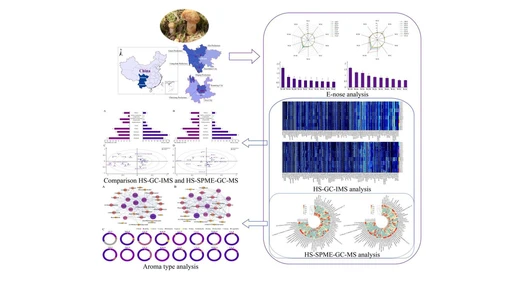
In the article published in Food Chemistry: X, the researchers utilized E-nose, HS-GC-IMS, and HS-SPME-GC–MS to analyze the flavor profiles of the pileus and stipe of Boletus edulis.
Fingerprinting of Peach During the Ripening Process Using an Analytical Platform with Spectrometric and Volatilome-Based Chromatographic Techniques
Scientific article | Science and research

Fingerprinting of Peach During the Ripening Process Using an Analytical Platform with Spectrometric and Volatilome-Based Chromatographic Techniques

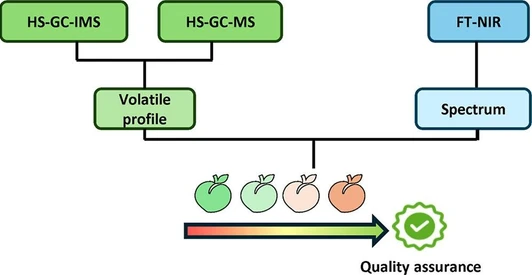
Fourier-transform NIR and volatilome-based HS-GC–IMS/MS methods fingerprint peach ripening stages, allowing PCA and PLS-DA models to differentiate ripeness and variety for optimal harvest.
 

Related articles

Two-dimensional gas chromatography for lipidomics investigations (Marco Beccaria, MDCW 2023)
Presentation | Video

Two-dimensional gas chromatography for lipidomics investigations (Marco Beccaria, MDCW 2023)

Two-dimensional gas chromatography (GC×GC) methodology, with dedicated sample preparation techniques, has been applied to investigate lipid fractions - total fatty acid profile and minor lipid components.
Exploring the cup of coffee using GC×GC-MS & Headspace extractions (Damien Eggermont, MDCW 2023)
Presentation | Video

Exploring the cup of coffee using GC×GC-MS & Headspace extractions (Damien Eggermont, MDCW 2023)

The aim of this presentation is to elucidate the potentiality of coupling HCC-HS with GC and its further development to answer food-related questions.
Identification of characteristic flavor compounds of boletus edulis from different regions based on by E-nose, HS-GC-IMS and HS-SPME-GC–MS
Article | Scientific article

Identification of characteristic flavor compounds of boletus edulis from different regions based on by E-nose, HS-GC-IMS and HS-SPME-GC–MS

In the article published in Food Chemistry: X, the researchers utilized E-nose, HS-GC-IMS, and HS-SPME-GC–MS to analyze the flavor profiles of the pileus and stipe of Boletus edulis.
Fingerprinting of Peach During the Ripening Process Using an Analytical Platform with Spectrometric and Volatilome-Based Chromatographic Techniques
Scientific article | Science and research

Fingerprinting of Peach During the Ripening Process Using an Analytical Platform with Spectrometric and Volatilome-Based Chromatographic Techniques

Fourier-transform NIR and volatilome-based HS-GC–IMS/MS methods fingerprint peach ripening stages, allowing PCA and PLS-DA models to differentiate ripeness and variety for optimal harvest.
 

Related articles

Two-dimensional gas chromatography for lipidomics investigations (Marco Beccaria, MDCW 2023)
Presentation | Video

Two-dimensional gas chromatography for lipidomics investigations (Marco Beccaria, MDCW 2023)

Two-dimensional gas chromatography (GC×GC) methodology, with dedicated sample preparation techniques, has been applied to investigate lipid fractions - total fatty acid profile and minor lipid components.
Exploring the cup of coffee using GC×GC-MS & Headspace extractions (Damien Eggermont, MDCW 2023)
Presentation | Video

Exploring the cup of coffee using GC×GC-MS & Headspace extractions (Damien Eggermont, MDCW 2023)

The aim of this presentation is to elucidate the potentiality of coupling HCC-HS with GC and its further development to answer food-related questions.
Identification of characteristic flavor compounds of boletus edulis from different regions based on by E-nose, HS-GC-IMS and HS-SPME-GC–MS
Article | Scientific article

Identification of characteristic flavor compounds of boletus edulis from different regions based on by E-nose, HS-GC-IMS and HS-SPME-GC–MS

In the article published in Food Chemistry: X, the researchers utilized E-nose, HS-GC-IMS, and HS-SPME-GC–MS to analyze the flavor profiles of the pileus and stipe of Boletus edulis.
Fingerprinting of Peach During the Ripening Process Using an Analytical Platform with Spectrometric and Volatilome-Based Chromatographic Techniques
Scientific article | Science and research

Fingerprinting of Peach During the Ripening Process Using an Analytical Platform with Spectrometric and Volatilome-Based Chromatographic Techniques

Fourier-transform NIR and volatilome-based HS-GC–IMS/MS methods fingerprint peach ripening stages, allowing PCA and PLS-DA models to differentiate ripeness and variety for optimal harvest.
 

Related articles

Two-dimensional gas chromatography for lipidomics investigations (Marco Beccaria, MDCW 2023)
Presentation | Video

Two-dimensional gas chromatography for lipidomics investigations (Marco Beccaria, MDCW 2023)

Two-dimensional gas chromatography (GC×GC) methodology, with dedicated sample preparation techniques, has been applied to investigate lipid fractions - total fatty acid profile and minor lipid components.
Exploring the cup of coffee using GC×GC-MS & Headspace extractions (Damien Eggermont, MDCW 2023)
Presentation | Video

Exploring the cup of coffee using GC×GC-MS & Headspace extractions (Damien Eggermont, MDCW 2023)

The aim of this presentation is to elucidate the potentiality of coupling HCC-HS with GC and its further development to answer food-related questions.
Identification of characteristic flavor compounds of boletus edulis from different regions based on by E-nose, HS-GC-IMS and HS-SPME-GC–MS
Article | Scientific article

Identification of characteristic flavor compounds of boletus edulis from different regions based on by E-nose, HS-GC-IMS and HS-SPME-GC–MS

In the article published in Food Chemistry: X, the researchers utilized E-nose, HS-GC-IMS, and HS-SPME-GC–MS to analyze the flavor profiles of the pileus and stipe of Boletus edulis.
Fingerprinting of Peach During the Ripening Process Using an Analytical Platform with Spectrometric and Volatilome-Based Chromatographic Techniques
Scientific article | Science and research

Fingerprinting of Peach During the Ripening Process Using an Analytical Platform with Spectrometric and Volatilome-Based Chromatographic Techniques

Fourier-transform NIR and volatilome-based HS-GC–IMS/MS methods fingerprint peach ripening stages, allowing PCA and PLS-DA models to differentiate ripeness and variety for optimal harvest.