Zaměření
Type of News
Focus
Article | Environment
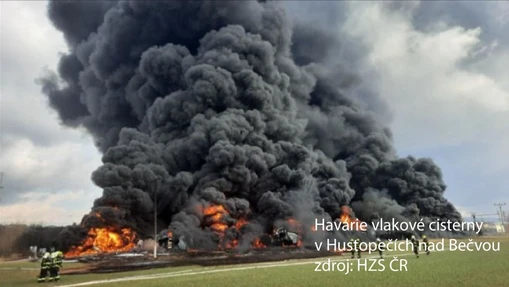
Science on the Front Lines: Cleanup of a Benzene Spill
CXI TUL researchers tested in situ chemical oxidation to remediate benzene contamination after the Hustopeče nad Bečvou train accident and identified the most suitable treatment for field use.

Article | Science and research
Beads with a nanofiber core. This is a better way to purify water.
The HYMNA project combines MBR and MBBR technologies with nanofiber biomass carriers to improve ammonia nitrogen removal and enable modular wastewater treatment.
Article | Product
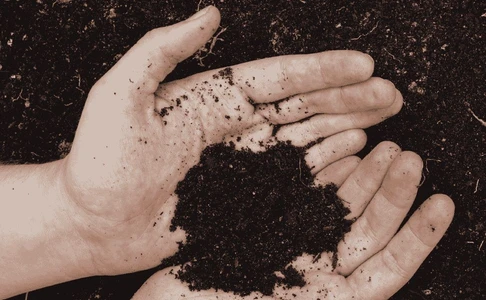
Gain Confidence in Your Total Organic Carbon (TOC) Data
Why is Total Organic Carbon (TOC) essential for soil health? Discover the challenges of TOC analysis and how LECO analyzers deliver accurate, reliable, and repeatable results.

Article | Science and research
Revolution in water purification: Membrane removes dangerous bacteria and heavy metals
Scientists from CATRIN and CEET developed a filtration membrane that removes bacteria and toxic heavy metals from water in one step, without energy or chemicals.

Interview | Video
Breaking the Forever Cycle: PFAS Destruction & EPA Methodologies with Dr. David Hanigan
Prof. David Hanigan explains why PFAS removal isn’t enough, how online FTIR reveals gas-phase products, and where EPA 1633 vs. 533/537 and OTM-45/50 fit in real-world PFAS analysis.
Article | Environment
EnviroMail™3/Europe: Proper Water Sampling Practise Prior to Metals Determination
EnviroMail gives background and technical guidance on trace metals preservation and sampling for total and dissolved metals in groundwater, surface water, leachates, and wastewaters.
Article | Environment
EnviroMail™5/Europe: Are There Health Risks Associated with Vegetables from Urban Farming?
Research shows that urban-grown vegetables can contain toxic metals from soil and dust. Washing helps but does not remove all particles. Clean soil, protection, and thorough washing are essential.
Article | Environment
EnviroMail™7/Europe: Occupational Asbestos Exposure and Methods of Monitoring
Learn about asbestos monitoring in workplaces: PCM & SEM methods, exposure risks, and new EU legislation to enhance worker safety.
Article | Environment
EnviroMail™9/Europe: Methods for Assessing the Biological Stability of Solid Waste
Assessment of solid waste stability using AT4 and GS21 tests helps evaluate biodegradability and gas potential to reduce landfill impact and support sustainable waste management.
Article | Environment
EnviroMail™12/Europe: ALS Net Zero Commitments & Roadmap in Support of our Staff, Clients, Communities & Shareholders
ALS is committed to climate action and sustainability, aiming for Net Zero by 2050. Through innovation and science, we strive to make a meaningful impact and share progress with clients.