We, 9.12.2026 16:00 CET
Nitazenes, novel orphine compounds and other synthetic opioids challenge post-mortem toxicology. Discover how HRAM-MS helps detect even previously unrecognized substances.Go to the webinar
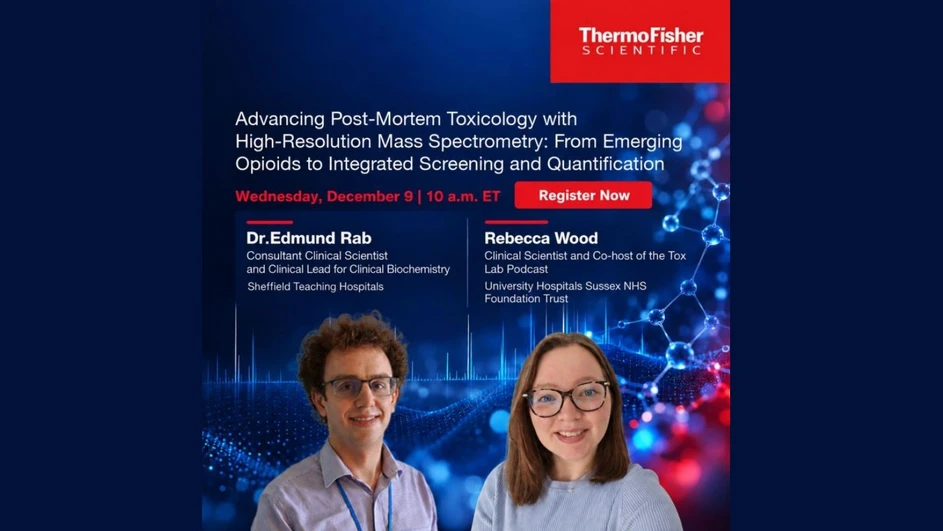
The Journal of Forensic Sciences (JFS) of the American Academy of Forensic Sciences (AAFS) invites you to join the next installment in our Forensic Lab Talks virtual seminar series designed for forensic scientists.
The number of novel drugs appearing in post-mortem investigations continues to grow, placing pressure on laboratories to detect unfamiliar compounds while maintaining fast, reliable turnaround times. How can you expand detection capabilities without adding complexity to your workflow?
Discover how high-resolution accurate mass (HRAM) spectrometry helps forensic and toxicology laboratories identify emerging synthetic opioids and improve testing efficiency. Learn how retrospective data analysis, proactive compound prediction, and combined screening-and-quantification workflows can strengthen laboratory preparedness and performance.
Toxicologists, forensic scientists, laboratory managers, and analytical scientists seeking to improve post-mortem testing, expand detection capabilities, and optimize laboratory workflows.
Join Rebecca Wood and Dr Edmund Rab to explore practical HRAM-based strategies that enhance emerging drug detection, improve laboratory readiness, and deliver more efficient post-mortem toxicology testing. Register today to gain actionable insights you can apply immediately in your laboratory.
The opinions expressed in this seminar are those of the presenter and do not reflect the opinions of the American Academy of Forensic Sciences (AAFS) or its members.
A Certificate of Attendance will be sent to participants who attend the FLT #12 virtual seminar live on December 9.
Please Note: Previous Forensic Lab Talks participants must register to attend this Virtual Seminar.
This virtual seminar has been made possible through partnership from the Journal of Forensic Sciences of the American Academy of Forensic Sciences in collaboration with Wiley.
Presenter: Rebecca Wood (Clinical Scientist and Co-host of The Tox Lab Podcast, University Hospitals Sussex NHS Foundation Trust)
Rebecca Wood, MSc, DipRCPath, is a Clinical Scientist working in toxicology across both clinical and post-mortem settings. Since beginning her career in toxicology in September 2023, she has been involved in the detection and interpretation of drugs and toxins in biological samples to support both patient care and coronial investigations.
Her professional interests include emerging and novel psychoactive substances, particularly novel synthetic opioids and the challenges they present for toxicology laboratories. As the illicit drug landscape continues to evolve, she is especially interested in understanding how new substances appear in casework and how analytical findings can contribute to improved awareness of emerging drug trends and drug-related harm.
Presenter: Dr Edmund Rab (Consultant Clinical Scientist and Clinical Lead for Clinical Biochemistry, Sheffield Teaching Hospitals)
Dr Rab studied for a Master’s degree in Biological Chemistry and a PhD in drug discovery at the University of Sheffield. Following this, he joined the Scientist Training Programme, training at Sheffield Teaching Hospitals. After completing the programme, Dr Rab worked in the Department of Specialised Clinical Chemistry and trained for a further 5 years as a Higher Specialist Scientific trainee. He developed a number of assays for toxicological and endocrinology applications using high resolution and tandem mass spectrometry. In his current role, Dr Rab heads up the Clinical Chemistry laboratory. He oversees the mass spectrometry and chromatography elements of the laboratory, is a Duty Toxicologist and writes reports and acts as an expert witness for HM Coroner.