We, 18.11.2026 18:00 CET
Measure shear and extensional viscosity in a single run! Leverage multi-stage slot dies to simulate film blowing, fiber spinning, and extrusion.Go to the webinar
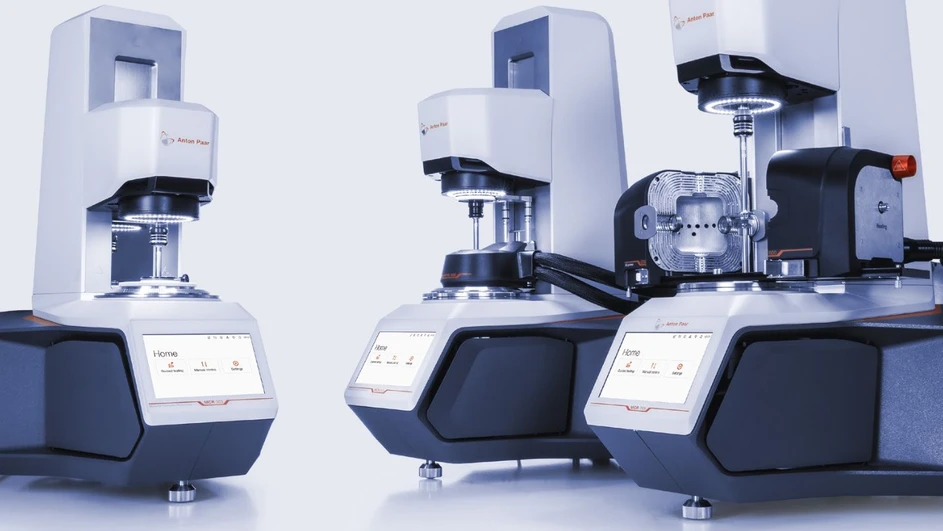
This webinar provides a comprehensive comparison of extrusion-based rheology and conventional rotational rheometry for characterizing thermoplastic polymer flows. The current ASTM D5422 standard employs round capillary die heads in extrusion systems to measure shear viscosity at processing-relevant rates. Recent adaptations incorporate slot capillary dies, enabling accurate viscosity determination at lower shear rates (down to 0.1 s⁻¹) without Bagley entrance corrections, thus simplifying data interpretation and enhancing precision for low-viscosity or shear-sensitive materials.
A new addition is the dual- or three-stage slot capillary die, which simultaneously yields shear viscosity and elongational viscosity from a single extrusion run. This innovation captures extensional flow behavior critical to processes like film blowing, fiber spinning, and blow molding—data traditionally inaccessible via standard capillary methods.
The study evaluates three thermoplastics—LDPE, flexible PVC, and rigid PVC—using an instrumented extruder with interchangeable dies. Results are benchmarked against viscosity curves obtained on an Anton Paar MCR703 rheometer. Shear rate overlap is analyzed across five decades (0.01–10,000 s⁻¹), revealing extrusion’s superiority in high-shear process simulation and rheometer’s advantage in low-shear structural insight.
Presenter: Christoph Pielen
After earning his degree from RWTH Aachen University in Germany, Christoph Pielen joined Brabender GmbH in 2012 as an Application Specialist. He later became Laboratory Manager and then President of Brabender CWB in the U.S., where he supported ASTM standard development and customer applications. Following Anton Paar's acquisition of Brabender in 2023, Christoph now serves as Lead Scientist for Texture and Extrusion at Anton Paar USA.
Outside work, Christoph enjoys traveling, skiing, and spending time with his two children, Alexander and Victoria, while pursuing his passion for aviation and space exploration.