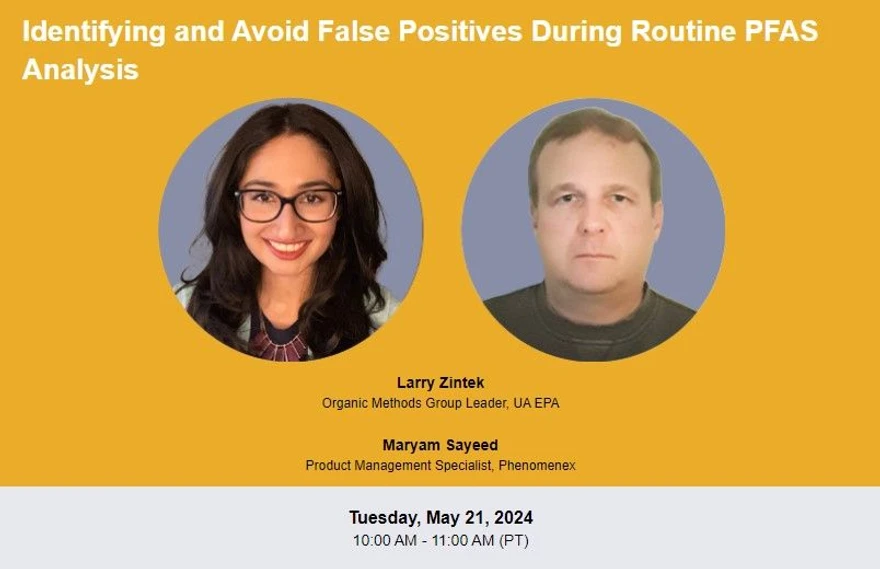
Identifying and Avoid False Positives During Routine PFAS Analysis

RECORD | Already taken place Tu, 21.5.2024
Learn how to approach analyzing for PFAS, it is not rocket science like they made it out to be.
Phenomenex: Identifying and Avoid False Positives During Routine PFAS Analysis
Overview:
  • The reporting limit of a method is also dependent upon the consistency of clean blanks and elimination of sporadic contamination.
  • Vendors of PFAS consumables need to provide certified, trace level PFAS free products.
  • PFAS are everywhere! They are widely used, vendors/suppliers when contacted don't know their processes are using them.
  • Since PFAS contamination has become an issue with PFAS analysis all field samples are taken in duplicate, not just field blanks.
  • The complete data package and replicates need to be evaluated by the user in order to make sound conclusions and identify false positives.
  • Every step there is a chance to incorporate “free-range” PFAS in your sample, minimize the preparation steps
  • How PFAS is analyzed at EPA Region 5 Laboratory
Who Should Attend:
  • Anyone lab scientists, or managers involved in PFAS Analysis
Key Learning Points:
  • Learn how to approach analyzing for PFAS, it is not rocket science like they made it out to be
  • Become aware of Sporadic PFAS Contamination
  • Understand how to identify false positives
  • Require all analysis quality control and samples to be analyzed in replicates to identify false positives.

Presenter: Larry Zintek (Organic Methods Group Leader, UA EPA)

Presenter: Maryam Sayeed (Product Management Specialist, Phenomenex)

Phenomenex
LinkedIn Logo