
Zaměření
Type of News
Focus

LC System Optimisation for UHPLC Performance on any HPLC
Discover practical tips to optimise LC systems for UHPLC performance on any HPLC. Learn how to reduce peak broadening, improve efficiency, and shorten runtimes.

Column contamination – what is happening, and how it can be avoided
Column contamination is a leading cause of shortened HPLC column lifetime, leading to high back pressure. Learn why it happens and how to prevent blocked frits with simple precautions.
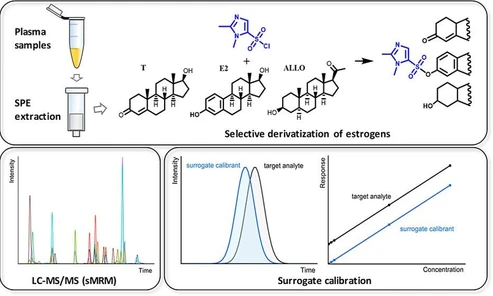
Quantification of Endogenous Steroids and Hormonal Contraceptives in Human Plasma via Surrogate Calibration and UHPLC-MS/MS
A UHPLC-MS/MS assay using surrogate calibration and DMIS derivatization quantifies endogenous steroids and contraceptives in plasma with pg/mL sensitivity and regulatory-aligned validation.
Basic analytes and the benefits of modified silica supports in reversed-phase liquid chromatography
C18 columns with residual positive charge improve peak shape of basic analytes at low pH by reducing silanol interactions and enabling 100% aqueous mobile phases.
Overcoming Peak Tailing of Basic Analytes in Silica Type A Stationary Phases in RP
Struggling with peak tailing of basic compounds in RP-LC using type A silica columns? Discover how low-pH buffers and silanol suppressors can improve peak shape—plus why type B silica is a better choice.
The Role of End-Capping in RP
New end-capping technologies can significantly improve the analysis of compounds that were once considered challenging.
How can capacity factors drive method robustness?
How can capacity factors drive method robustness?