Th, 19.11.2026 | Original article from: MUNI
Dr Michaela Kuchynka discusses how LA-ICP-TOF-MS at MUNI BioPharma Hub advances elemental imaging, micro- and nanoplastics research, and biomedical applications.INTERVIEW: Advancing Elemental Imaging Methods. The New BioPharma Hub Facilities Open Up New Opportunities, says Dr Michaela Kuchynka
MUNI: INTERVIEW: Advancing Elemental Imaging Methods. The New BioPharma Hub Facilities Open Up New Opportunities, says Dr Michaela Kuchynka
Micro- and nanoplastics in biological tissues, the synthesis of biologically active compounds, nanoparticles with potential applications in diagnostics and therapy, and the development of advanced analytical methods. A new research group is being established at the Department of Medicinal Chemistry under the leadership of Dr Michaela Kuchynka. In this interview, she discusses her research focus, current projects, and opportunities to integrate cutting-edge analytical techniques into teaching.
What are your current research activities at the Department of Medicinal Chemistry, and what is keeping you busiest at the moment?
At the Department of Medicinal Chemistry, we pursue a broad range of research activities, from the synthesis and characterisation of new biologically active compounds to the development of advanced analytical methods. My own research focuses primarily on analytical chemistry and its applications in pharmaceutical and biomedical research.
My main focus at the moment is establishing a new research facility dedicated to advanced elemental imaging of biological tissues. A substantial part of my work currently involves preparing and developing the laboratory infrastructure and instrumentation that will enable us to address research questions using analytical capabilities that have not previously been available to us.
One of the main areas of our research is the investigation of micro- and nanoplastics in biological systems. We are interested in whether and how these particles can be detected in tissues, spatially characterised, and tracked in terms of their distribution. Another important research area is the development of new theranostic approaches for ischaemic stroke, combining diagnosis and therapy. Using advanced analytical methods, we can, for example, investigate the distribution of nanoparticles in tissues and explore their potential for targeted diagnostic and therapeutic applications.
What does moving into MUNI BioPharma Hub, a state-of-the-art building, mean for you and your research?
For us, MUNI BioPharma Hub primarily creates new opportunities to connect analytical chemistry with other areas of pharmaceutical and biomedical research. Its modern infrastructure provides an environment not only for working with advanced instrumentation but also for fostering more intensive interdisciplinary collaboration.
Personally, this represents a major step forward in my career. We are establishing a new specialised facility dedicated to elemental imaging of biological tissues and the development of analytical methods for pharmaceutical research. This gives us the opportunity to build a platform for new research projects, involve students and early-career researchers, and strengthen collaboration with experts from other research institutions and departments.
Another important aspect is our collaboration with the Department of Pharmacology and Toxicology, particularly Dr Scheer and Dr Hložková. We work together to investigate the biological behaviour and effects of test materials. Combining advanced analytical techniques with pharmacological evaluation allows us to approach research questions from a more comprehensive perspective.
Your team has acquired a highly specialised instrument that is available at only a limited number of facilities across Europe. Could you tell us more about this system and the new research opportunities it offers?
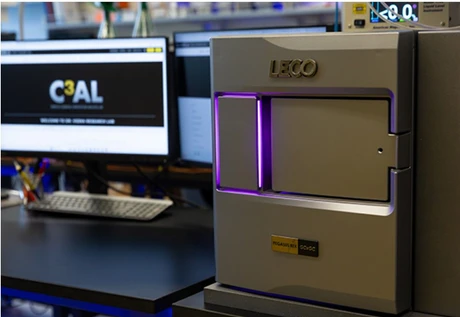
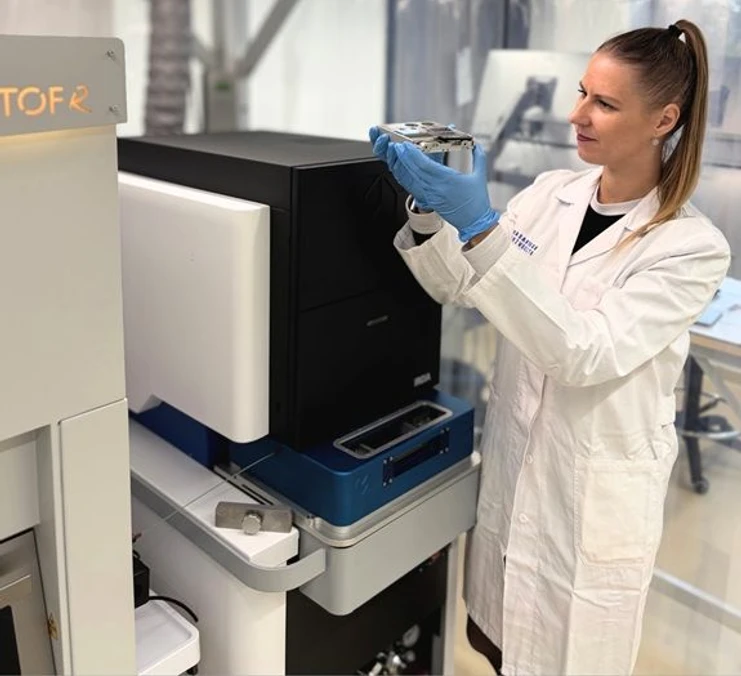
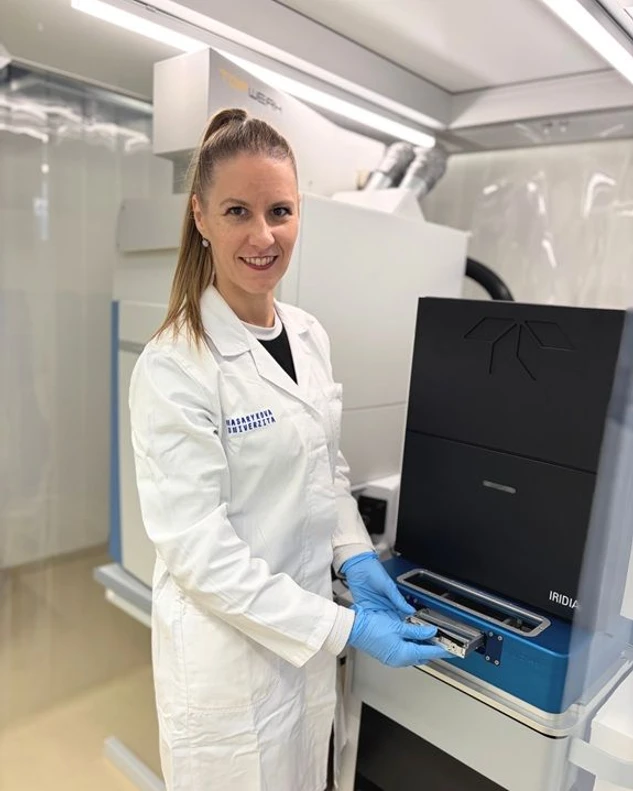
The system combines laser ablation with inductively coupled plasma mass spectrometry equipped with a time-of-flight analyser, commonly referred to as LA-ICP-TOF-MS. In simple terms, the instrument allows us to analyse the chemical composition of a sample while simultaneously generating elemental distribution maps showing where individual elements are located.
Our configuration combines a 193 nm argon fluoride excimer laser with ICP-TOF-MS, offering exciting possibilities for rapid multi-element analysis and spatial imaging.
Imagine a section of biological tissue. Conventional analysis can tell us which elements are present in the sample. With mass spectrometry imaging, however, we can also determine how these elements are spatially distributed throughout the tissue. This is particularly important, for example, when studying nanoparticle distribution in tissues or identifying locations where specific substances may accumulate.
We see considerable potential in analysing complex biological samples. We aim to develop methods for investigating micro- and nanoplastics and to use elemental imaging in research on nanoparticles intended for diagnostic and therapeutic applications. In these studies, it is important not only to establish whether the material of interest is present in a sample but also to understand its distribution in the context of the surrounding tissue.
Our instrumentation is exceptional in the Czech Republic, and its configuration represents a highly advanced technological solution in the broader European context as well. The system is housed in specialised laboratory facilities at BioPharma Hub. Its acquisition represents a significant investment in research infrastructure and gives us access to capabilities that conventional analytical techniques would not provide.
However, the instrument itself is not the ultimate goal. The key lies in developing and validating analytical methods that allow us to harness its capabilities and generate reliable analytical data for further pharmaceutical and biomedical research.
 MUNI: INTERVIEW: Advancing Elemental Imaging Methods. The New BioPharma Hub Facilities Open Up New Opportunities, says Dr Michaela Kuchynka
In addition to research, you are also involved in teaching. What do you enjoy most about working with students?
What I enjoy most about teaching is the opportunity to share knowledge with students and demonstrate how analytical chemistry can be applied in practice. I teach not only pharmacy students but also students specialising in cosmetics, an opportunity I greatly value.
Initially, teaching analytical chemistry in the context of cosmetic ingredients and formulations presented a certain challenge. I needed to adapt my explanations and examples to the specific needs of this field and show students how analytical methods can be used to assess the quality and properties of cosmetic products. However, the positive feedback I have received has made me increasingly enthusiastic about this teaching. It is rewarding to see how successfully we can connect fundamental scientific principles with students' future professional practice.
In developing my teaching, I have drawn inspiration from some of the approaches used by my colleague Associate Professor Pazourek, which I have adapted and implemented in my own courses. They have proved highly effective, and the positive responses from students motivate me to continue improving my teaching and exploring new ways to engage them actively in the learning process.
In the coming semesters, I will face another challenge as I prepare two new courses. For students enrolled in the follow-up master's programmes in Industrial Pharmacy and Pharmacy, I am developing a course titled Advanced Analytical Methods in Pharmacy and Biomedicine. Its aim is to introduce students to modern analytical approaches and demonstrate how they can be used to address current research challenges. For students in the follow-up master's programme in Cosmetology, I am preparing a course titled Chemical Methods in Quality Control of Cosmetics, focusing on methods used in their characterisation and evaluation.
I find the opportunity to develop teaching across different study programmes particularly rewarding. Each group of students brings a different perspective and raises different questions, encouraging me to consider analytical chemistry in a broader context. At the same time, I want students to see analytical methods not merely as a collection of instruments and procedures, but as tools that can help them solve practical problems in their future professional careers.
 MUNI: INTERVIEW: Advancing Elemental Imaging Methods. The New BioPharma Hub Facilities Open Up New Opportunities, says Dr Michaela Kuchynka
Where would you like to take your research over the next few years, and how will the new facilities at BioPharma Hub help you achieve these goals?
My main goal is to establish a stable, internationally recognised research group, KUCHYNKA BioTrace Group, dedicated to advancing mass spectrometry imaging and its applications in pharmaceutical and biomedical research. I would like to expand the group, involve more students and early-career researchers in our projects, and bring additional exciting research projects to the Faculty of Pharmacy. Alongside Czech research grant schemes, I intend to focus increasingly on European funding programmes and international collaboration.
One of our current research topics is the investigation of micro- and nanoplastics. We are currently seeking to become involved in the European COST network through COST Action CA23131 ICPLASTIC, which focuses on developing standardised, efficient, and reproducible protocols for detecting these particles using machine learning. Participation in this initiative would allow us to exchange expertise with international researchers, contribute to the advancement of analytical methods, and further strengthen international collaboration in this rapidly developing field.
I also see considerable opportunities in combining advanced analytical imaging with machine learning. We are beginning to focus intensively on methods that will help us process large volumes of analytical data more efficiently, identify correlations between individual signals and spatial characteristics, and automate image segmentation.
Our aim is to extract more information from complex measurements, improve data interpretation, and develop new approaches to assessing the distribution of particles and elements in biological tissues.
Beyond research, I would also like to gradually expand the laboratory's translational and industrial applications. My long-term goal is to make these unique analytical capabilities available to the pharmaceutical and biomedical industries through contract research services. The state-of-the-art facilities at BioPharma Hub are a major asset in this respect, providing an ideal springboard for further development and opening doors to collaboration with experts and commercial partners from abroad.