Pharmaceuticals can remain in wastewater even after the most effective treatment, study shows
Th, 12.11.2026 | Original article from: RECETOX
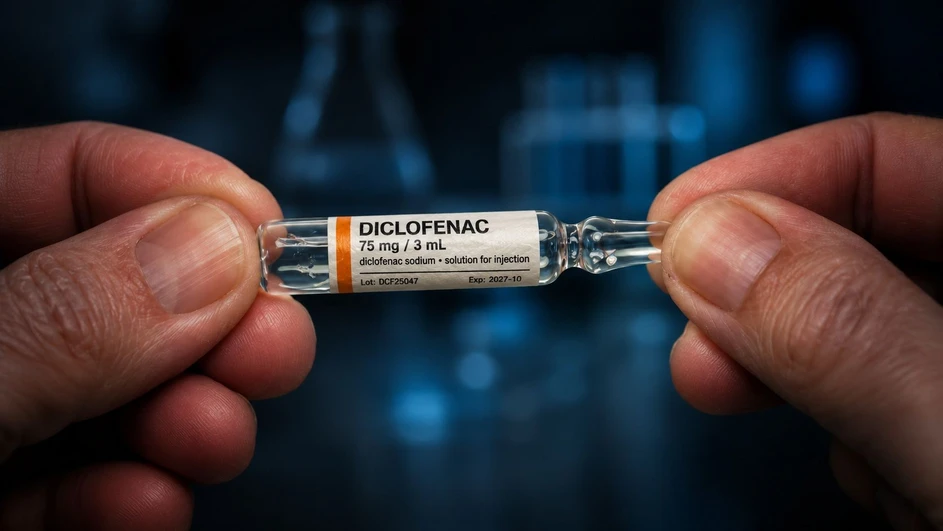
RECETOX researchers tested advanced wastewater treatment technologies. Even after the most effective treatments, diclofenac remained in the water, posing a potential risk to aquatic ecosystems.
<p><strong>LabRulez/AI:</strong> Pharmaceuticals can remain in wastewater even after the most effective treatment, study shows</p>

LabRulez/AI: Pharmaceuticals can remain in wastewater even after the most effective treatment, study shows

RECETOX researchers tested technologies used for advanced wastewater treatment to make it safe for aquatic ecosystems. But even after the most efficient treatment, the analysis still showed diclofenac in the water.

More and more areas in the world are facing severe drought. Recycled wastewater can be the solution. Although drinking sewage water doesn't sound very appealing, there are technologies that can make it safe not only for aquatic ecosystems but also to be used for potable water production. However, a new study conducted by scientists from the Mechanistic environmental toxicology research group at RECETOX shows that these technologies have limitations.

The research team cooperated with experts from ASIO TECH and AQUA PROCON, who built the technologies for quaternary water treatment. Scientists used samples of secondary-treated wastewater, which is rid of biodegradable organic materials, along with corresponding samples treated with quaternary treatment technologies that should eliminate micropollutants. Comparing concentrations between these samples showed the removal efficiencies of the technologies.

“To analyze the environmental risk of pharmaceuticals present in the wastewater, we constructed Environmental Exposure Distribution graphs from all the results and performed a Probabilistic Environmental Hazard Assessment. This type of data processing is pretty innovative, and I learned it from Prof. Bryan W. Brooks at Baylor University, where I was on a Fulbright-Masaryk scholarship,” explains one of the study authors, Michal Bittner.

As expected, the analysis proved that there are powerful technologies for advanced wastewater treatment. However, it also showed that even after using the most effective and expensive ones, such as reverse osmosis or ozone, the water still contained diclofenac. This proved to be even more problematic in the cold season of the year.

"Finding the diclofenac even in the most efficiently cleaned wastewater was disturbing. In theory, reverse osmosis should remove all the compounds, and only the water molecules should pass the membrane. But we have found diclofenac in significant concentrations in several treated samples, which resulted in a 77% probability of exceeding the safe level for aquatic ecosystems," elaborates Bittner.

According to the authors, this shows the limits of the advanced technologies and suggests that it is necessary to add additional treatment with activated charcoal, or find the solution elsewhere, e.g., to decrease the consumption of problematic drugs such as diclofenac.

Another interesting finding was the increase in the concentration of acetaminophen (paracetamol) in the wastewater after UV irradiation. This finding was further elaborated in another paper recently published by Lucie Blahova and others. However, this increase in concentration was only minor and doesn’t pose any significant ecotoxicological risk.

Article

Comparative Reduction of Pharmaceutical Hazards in Wastewater among Pilot-Scale Quaternary Treatment Technologies across Seasons

Michal Bittner, Lucie Báborská, Kateřina Bočková, Anna Ireinová, Marek Holba, Jaroslav Lev, Daniel Polášek, Lucie Bláhová, Bryan W. Brooks, Luděk Bláha

ACS Environ. Au (2026) 6 (5): 864–878.

https://doi.org/10.1021/acsenvironau.6c00068

Licensed under CC BY 4.0

This research was supported by the Czech Ministry of Industry and Trade project No. CZ.01.1.02/0.0/0.0/19_262/0020109, and the Fulbright Commission. RECETOX Research Infrastructure (No. LM2023069), funded by the Ministry of Education, Youth and Sports. This research was also supported by the European Union’s Horizon 2020 under Grant Agreement No. 857560. The Fulbright-Masaryk Scholar program provided additional support to Michal Bittner.


RECETOX - Centrum pro výzkum toxických látek v prostředí
LinkedIn Logo
 

Related articles

Occurrence of Pharmaceuticals and Other Anthropogenic Compounds in the Wastewater Effluent of Arctic Expedition Cruise Ships
Scientific article | Science and research

Occurrence of Pharmaceuticals and Other Anthropogenic Compounds in the Wastewater Effluent of Arctic Expedition Cruise Ships

The study examines treated wastewater from Arctic cruise ships to identify pharmaceuticals and other contaminants, highlighting potential risks to sensitive polar marine environments.
Efficient Sample Concentration for Micropollutant Surveillance Under EU Directive 2024/3019
Article | Environment

Efficient Sample Concentration for Micropollutant Surveillance Under EU Directive 2024/3019

How the EU’s revised Urban Wastewater Treatment Directive is driving demand for ultra-sensitive LC-MS/MS workflows—and why nitrogen evaporation is critical for reliable micropollutant monitoring.
Selective Separations: What Membrane Science Can Teach Chromatographers
Interview | Video

Selective Separations: What Membrane Science Can Teach Chromatographers

Explore how membrane science supports water treatment, selective separations, and analytical workflows, with insights into RO, PFAS removal, scale-up challenges, and sustainable membrane design.
PFAS in Water: Why We’re Missing 96% of the Problem
Interview | Video

PFAS in Water: Why We’re Missing 96% of the Problem

Dr. Terry discusses PFAS contamination, analytical challenges, fluorine mass balance, treatment technologies, and future directions for monitoring and protecting drinking water quality.