Tu, 10.11.2026 | Original article from: LECO
Accurate sulfur determination is essential for petroleum product quality control. Explore how the LECO SC832 uses high-temperature combustion and NDIR detection following ASTM D1552.Quantifying Sulfur During Hydrocarbon Processing: Why It Matters
LECO: Quantifying Sulfur During Hydrocarbon Processing: Why It Matters
Accurate sulfur determination when analyzing hydrocarbons is a critical part of quality control and process optimization in the petroleum and petrochemical industries. Depending on its concentration, sulfur can significantly affect product performance, processing requirements, equipment longevity, and regulatory compliance. As environmental regulations become increasingly stringent and product specifications tighten, laboratories must possess reliable analytical methods and instruments that can accurately quantify sulfur across a variety of hydrocarbon matrices, such as residual fuel oil, crude oil, and #2 diesel fuel.
What Does Sulfur Content in Hydrocarbons Reveal?
The impact of sulfur in hydrocarbons depends on the material and its intended application. In many fuels and petroleum products, sulfur negatively influences processing characteristics, handling properties, and overall product performance. For example, when hydrocarbons are intended for fuel applications, excessive levels of sulfur can cause corrosion and dangerous air pollution. Therefore, sulfur content in fuels is highly regulated.
Because sulfur concentrations can vary significantly between hydrocarbons, laboratories require robust analytical methods capable of delivering dependable results regardless of sample type. Using analysis methods like combustion, analyzing the hydrocarbons reveals if the sulfur content meets regulatory requirements. Sulfur analysis is also useful for evaluating overall fuel quality, verifying product specifications, and monitoring consistency across production batches.
ASTM D1552: An Established Standard for Sulfur Analysis
One of the most widely recognized methods for determining sulfur in petroleum products is ASTM D1552. This test method is used for measuring total sulfur in petroleum products, lubricating oils, and petroleum coke, and is applicable to samples with a boiling point above 177°C (350°F).
ASTM D1552 continues to serve as a trusted analytical approach because it provides a robust framework for sulfur determination across diverse hydrocarbon materials. The method consists of utilizing high-temperature furnace combustion followed by infrared (IR) or thermal conductivity detection (TCD). Laboratories that follow the method can achieve consistent, repeatable measurements that support quality assurance initiatives and compliance efforts.
Challenges in Hydrocarbon Processing and Sulfur Analysis
Hydrocarbons can be difficult to process because they span a variety of different fuel and petroleum products, which may vary considerably in composition, viscosity, density, and sulfur concentration. A method that performs well with one sample type may not deliver the same level of reliability with another.
Unfortunately, there is no one simple trick to fix this problem. To accurately assess hydrocarbons with confidence and ease, laboratories need analytical instrumentation that offers them all of the following capabilities:
- Rapid analysis times
- Minimal sample preparation
- Reliable performance across multiple hydrocarbon matrices
- Robust calibration capabilities
- Automated operation for increased laboratory efficiency
These characteristics help reduce operator workload while improving confidence in sulfur measurement data. While there is no one simple trick, there is one instrument that can meet all the requirements needed to reliably process hydrocarbons.
 LECO: Quantifying Sulfur During Hydrocarbon Processing: Why It Matters
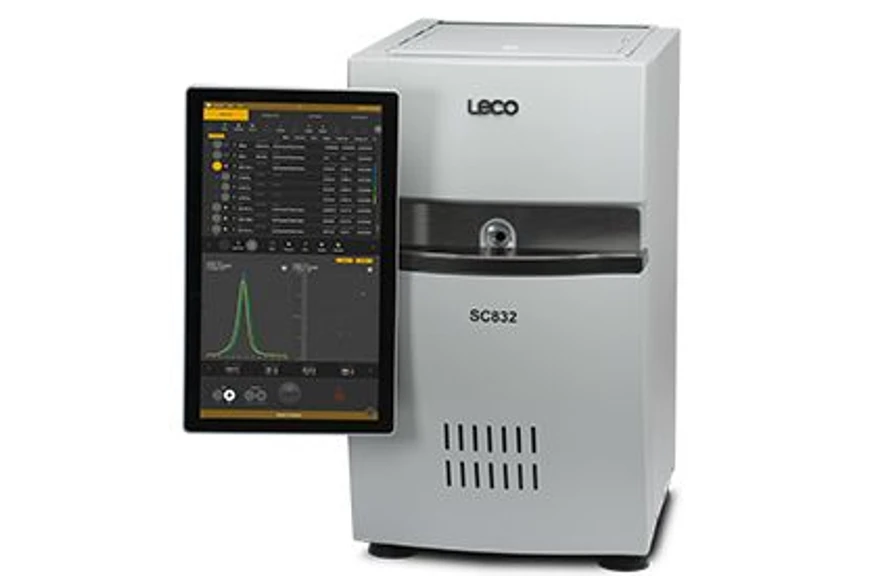
Sulfur Determination with the LECO SC832
The LECO SC832 provides an effective solution for sulfur analysis in hydrocarbons following ASTM D1552 methodology. It combines combustion-based sulfur analysis with automation features to streamline laboratory workflows. Using non-dispersive infrared (NDIR) detection and a high-efficiency combustion furnace, both low- and high-level analyses are supported.
Proven Performance Across Hydrocarbon Types
The SC832 has successfully performed sulfur analysis across several representative hydrocarbon materials, including residual fuel oil, heavy sweet crude oil, and #2 diesel fuel. The results demonstrated excellent agreement with expected sulfur concentrations and strong repeatability across replicate analyses. To see actual results and methodology, read our application note, “Sulfur in Hydrocarbons”.
Supporting Modern Hydrocarbon Processing
As the petrochemical industry continues to balance performance requirements, environmental considerations, and process efficiency, sulfur analysis remains and will continue to remain an essential tool for informed decision-making and quality assurance.
For laboratories analyzing sulfur in diesel fuel, residual fuel oil, crude oil, or other hydrocarbon products, selecting the right analytical solution is the key to precise, reliable results. LECO’s 832 Series helps labs generate the results they’re looking for while simplifying day-to-day analytical workflows.