Fr, 30.10.2026 | Original article from: Concentrating on Chromatography
Matthew Lewis discusses hybrid metabolomics, combining targeted quantitation and untargeted discovery with standardized workflows, TIMS, CCS, and 4D data.Hybrid Metabolomics Explained: Bridging Targeted & Untargeted MS with Bruker's Matthew Lewis
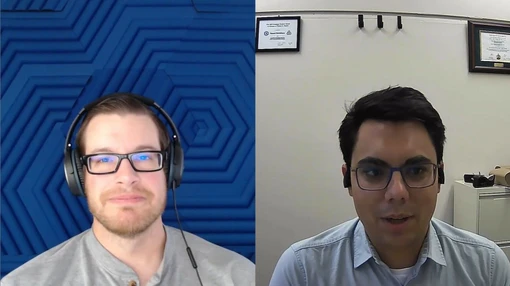
- Photo: Concentrating on Chromatography: Hybrid Metabolomics Explained: Bridging Targeted & Untargeted MS with Bruker's Matthew Lewis
- Video: Concentrating on Chromatography: Hybrid Metabolomics Explained: Bridging Targeted & Untargeted MS with Bruker's Matthew Lewis
On this episode of Concentrating on Chromatography, hosts David Oliva and Candice Gokey are joined by Matthew Lewis from Bruker to unpack the new hybrid metabolomics workflow born from Bruker's acquisition of biocrates.
For 20 years, mass spectrometrists have had to choose between targeted quantitation and untargeted discovery. Matthew explains how chemical derivatization, high-resolution mass spec, and Biocrates' 1,000+ metabolite kits now let researchers get both — without running samples twice.
Topics covered:
- Why "there's no such thing as an untargeted platform, just an uninformed one"
- How the Biocrates MX Quant Kits standardize sample prep and derivatization
- NMR vs. mass spectrometry for metabolomics — and why electrospray ionization is metabolomics' "biggest Achilles heel"
- Data-dependent (DDA) vs. data-independent (DIA) acquisition, explained simply
- Trapped Ion Mobility Spectrometry (TIMS) and collisional cross-section (CCS) as a "gas-phase chromatography" tool for resolving isomers and interferences
- In silico derivatization software for annotating derivatized metabolites
The "digital metabolome archive": building future-proof, reanalysis-ready 4D data (MS1 + retention time + CCS + MS/MS) for AI-ready datasets - Why standardization — not just new features — is what will move the metabolomics field forward
Matthew also shares insights from Bruker's collaboration with Dr. Michael Witting at the Helmholtz Institute, and discusses the real-world sample constraints (biobanks, field research, precious cohorts) driving demand for do-more-with-less workflows.
Video Transcription
The conversation explores the differences between targeted and untargeted metabolomics, the complementary roles of mass spectrometry and NMR, the importance of standardized sample preparation, the use of biocrates kits, data-dependent and data-independent acquisition, trapped ion mobility spectrometry (TIMS), collision cross section (CCS), and the concept of creating future-proof digital metabolome archives.
Bringing Targeted and Untargeted Metabolomics Together
David: Matthew, thank you for joining us. I recently attended my first metabolomics conference in Buenos Aires and had the opportunity to see a presentation on the new hybrid workflow. Could you explain the collaboration and the main problem you are trying to solve with this platform?
Matthew Lewis: We are very pleased with our collaboration with the Helmholtz Institute and researchers working in this area. When we started developing a new generation of platforms for small-molecule research, it was natural to work with people who had deep expertise in metabolomics.
For roughly the past 20 years, mass spectrometry users have generally had to make a choice between a targeted and an untargeted strategy.
Both approaches have advantages and limitations. Quantitation is typically associated with targeted analysis, while untargeted analysis is more commonly associated with discovery.
That distinction has become increasingly blurred. Companies such as biocrates have developed very large targeted metabolite panels. When a targeted panel covers more than a thousand metabolites, its guaranteed coverage can actually exceed that of many untargeted platforms.
Nevertheless, the two underlying philosophies remain: one approach focuses on measuring what you already know, while the other aims to discover what you do not yet know.
What we want to do is remove that choice. We want researchers to obtain the benefits of both approaches without having to sacrifice one for the other.
Is There Really Such a Thing as an Untargeted Method?
Candi: In some of my own work, we have combined optimized extraction procedures with broad-spectrum library analysis. How much did optimized wet-lab workflows contribute to the development of this new platform?
Matthew Lewis: That raises an important point. I increasingly believe there is no such thing as a truly untargeted platform. There are really just platforms where the targeting is less obvious.
Bias is introduced at many stages: how samples are collected, how they are stored, how they are prepared, and how they are ultimately processed for analysis. By the time the sample reaches the instrument, the experiment is already targeted to some degree, whether we acknowledge it or not.
One important element of the biocrates workflow is chemical derivatization. That helps achieve broad metabolome coverage while keeping the number of analytical runs relatively small.
Otherwise, comprehensive metabolomics often requires several complementary methods. We know that combining NMR, GC-MS, LC-MS, reversed-phase chromatography, HILIC, and other techniques can increase metabolome coverage.
The problem is that this quickly becomes economically unsustainable. Each additional analysis adds cost and sample consumption, while providing progressively smaller gains in coverage.
Chemical derivatization offers a way to bring a broader portion of the metabolome into a smaller number of robust chromatographic analyses.
And while derivatization may initially sound like an additional source of variability, the important point is that the workflow is validated. That is one of the major strengths of standardized targeted quantitative workflows.
Targeted vs. Untargeted Metabolomics
David: Many chemists are still not completely familiar with the difference between targeted and untargeted metabolomics. How would you define them?
Matthew Lewis: In conventional mass spectrometry terms, a targeted approach means that you know which compounds you are looking for. You can configure the analytical system specifically to detect those compounds.
An untargeted approach makes fewer assumptions and does not require the same level of prior knowledge about the compounds present.
Historically, targeted experiments have often been associated with unit-resolution instruments such as triple quadrupoles, whereas untargeted studies have typically used high-resolution systems such as TOF or Orbitrap instruments.
That is not an absolute rule. Triple quadrupoles can scan, and high-resolution instruments can certainly perform targeted analyses.
The great advantage of targeted analysis is that when you know what you want to measure, you can optimize the entire experiment around those analytes. You know where they elute, you understand potential interferences, you can validate the method, and most importantly, you can generate calibration curves and perform absolute quantitation.
In untargeted studies, you are more often comparing relative responses. You may observe that one peak area is twice that of another sample, but that does not automatically tell you the absolute concentration.
What we are trying to do is occupy the space between those traditional categories.
There is no fundamental reason why high-resolution mass spectrometry cannot provide targeted quantitative information while simultaneously collecting much broader discovery data.
There are technical challenges involving sensitivity and acquisition speed, but closing that performance gap between high-resolution MS and triple quadrupoles is exactly what we are working toward.
Why Standardization Matters
Candi: One challenge in untargeted metabolomics is comparing data generated on different instruments and platforms. Can this hybrid approach help with that?
Matthew Lewis: Differences among instrument technologies are important, and differentiation drives innovation. But one thing that has held metabolomics back is the lack of standardization.
Bruker has a strong heritage in standardized metabolomics through NMR.
Think about NMR for a moment. You can insert a sample, perform a highly standardized measurement, remove the sample, and the system itself remains largely unchanged.
That makes reproducible protocols comparatively straightforward.
Bruker already has standardized NMR solutions for applications such as lipoprotein analysis and quantitative measurement of small molecules in biological fluids. These workflows can be performed routinely year after year with absolute quantitation.
With the acquisition of biocrates, we can now bring a similar philosophy of standardization to mass spectrometry.
Mass spectrometry allows us to investigate the metabolome more deeply, while standardized workflows provide some of the reproducibility already established in NMR.
This is especially important for clinical research and large cohort studies.
We are moving beyond small isolated studies. Researchers increasingly want to compare individual patients with reference populations, study large cohorts in cardiovascular or neurodegenerative disease, or investigate the exposome.
To do that effectively, highly standardized analytical platforms are essential.
NMR and Mass Spectrometry: Complementary Technologies
Candi: What are the key differences between using NMR and mass spectrometry for metabolomics?
Matthew Lewis: Fundamentally, the physics are completely different. That is exactly what makes them so powerful together.
When two orthogonal technologies give you the same biological answer, that provides extremely strong validation.
NMR has several important advantages. It is intrinsically quantitative and extremely stable because the sample does not physically interact with the analytical hardware in the same way it does in chromatography coupled to mass spectrometry.
NMR-based metabolomics was pioneered decades ago and, retrospectively, it is easy to understand why NMR is such an attractive technology for complex biological samples.
Its main limitation is depth. Mass spectrometry can reach much deeper into the metabolome.
But mass spectrometry has its own Achilles heel, especially when using electrospray ionization.
Different metabolites have very different ionization efficiencies. If you observe a very large peak, is that because the compound is present at a high concentration, or simply because it ionizes extremely efficiently?
You do not know without standards and calibration curves.
NMR does not suffer from that problem in the same way.
That is why multimodal analysis is so attractive. You can combine the strengths of NMR with the greater analytical depth of mass spectrometry.
The hybrid workflow extends this philosophy further by providing quantitative targeted measurements while still generating broader metabolic profiles.
Researchers generally do not want to give up the possibility of discovering something unexpected—whether that is an environmental exposure, an endogenous metabolite that was previously overlooked, or another biologically important signal.
The goal is therefore to provide both within a standardized framework.
The Role of biocrates Kits
David: Where do the biocrates kits fit within the hybrid workflow? Are they primarily the quantitative backbone, or do they have a wider function?
Matthew Lewis: They have always played a broader role.
First, they provide a convenient 96-well plate format containing the reference standards required for targeted quantitation.
Second, they serve as a standardization tool because calibration curves and internal standards are already incorporated. The user adds the samples and follows the validated workflow.
Third, the kits perform the necessary derivatization.
That transformation allows a broader chemical space to become compatible with a relatively limited set of analytical methods. Consequently, you can consume less sample and perform fewer analyses while still obtaining extensive metabolite coverage.
The kits also include software.
In conventional targeted workflows running on triple quadrupoles, that software provides an end-to-end route from extraction of known analytes through to interpretation and presentation of quantitative results.
When we combine this with untargeted analysis, we effectively create two data streams from the same raw data.
At present, the data are processed once to obtain targeted quantitative values and then processed separately to obtain the untargeted profile.
You can think of it as a zipper.
Historically, you needed two sample preparations and two acquisitions. Now you need only one preparation and one acquisition, although two processing pathways still remain.
Computing the same dataset twice is much easier than repeating the physical experiment twice.
That represents real progress.
Making the Most of Precious Samples
Candi: That could be particularly important for irreplaceable samples. Some of the environmental samples I work with come from locations where collecting them again would be extremely difficult.
Matthew Lewis: Absolutely.
But the same is also true for apparently abundant biological fluids.
Blood and urine are easy to collect in principle, but once they become historical samples stored in a biobank and associated with a carefully characterized cohort, they become extremely valuable.
Biobank managers often want to release the smallest possible volume of these samples.
Therefore, reducing sample consumption while maximizing the amount of information generated from each aliquot will continue to be extremely important.
Removing Sample-Preparation Barriers
David: Where do you currently see the largest bottlenecks in sample preparation for hybrid metabolomics?
Matthew Lewis: I think the work biocrates has done with standardized kits has already improved sample preparation dramatically.
Everything is contained on one plate. Users do not have to purchase hundreds of reference standards, weigh them individually, prepare them, and validate every component themselves.
That work has already been completed to a high quality standard.
Fundamentally, that is why kits exist: to reduce the complexity and activation energy required to establish a robust analytical workflow.
Creating a Digital Metabolome Archive
David: You have also talked about creating future-proof digital archives from hybrid metabolomics experiments. What does that mean practically for a laboratory that may want to revisit its data five or ten years later?
Matthew Lewis: To understand that, we should first consider what metabolomics researchers are trying to achieve.
They generally want to do two things.
First, they want to measure as many metabolites as possible.
Second, they want to know what those compounds actually are. In other words, they want to annotate them.
Those two objectives do not necessarily have to happen at the same time.
Historically, we might first quantify signals across a hundred samples. After statistical analysis, we would identify the interesting features and then return weeks or months later to selected samples to collect MS/MS spectra for characterization.
Now the quantitative data and structural information are scattered across different files generated at different times.
Chromatography may have changed. Instrument performance may have changed. Spectral fidelity may have changed.
That is not ideal.
Modern instruments are fast enough to collect much more MS1 and MS/MS information during the same analytical run.
Our ideal is what we call a digital metabolome archive.
For every sample, the same file would contain quantitative information, MS1 data, MS/MS characterization, and ideally fragmentation information for as much of the metabolome as possible.
With Bruker TIMS technology, it can additionally contain collisional cross section (CCS) measurements.
Fragments can then be related back to precursor ions using CCS information together with mass isolation.
Calibration information is also stored alongside the experimental data.
The idea is that everything needed to understand that sample is contained in one self-contained dataset.
Ten years later, someone performing a reanalysis or meta-analysis should be able to retrieve that dataset without reconstructing which MS/MS experiment was performed three weeks after the original quantitation.
Quantitative and structural information should remain connected permanently.
That is what we mean by a digital metabolome archive.
DDA vs. DIA
Candi: Could you explain the difference between data-dependent acquisition and data-independent acquisition?
Matthew Lewis: Data-dependent acquisition, or DDA, makes decisions in near real time based on what the instrument observes.
The system records an MS1 spectrum and identifies signals that it wants to investigate further. Software then instructs the quadrupole to isolate individual precursor ions for fragmentation.
So the acquisition depends on the data being observed—hence data-dependent acquisition.
With data-independent acquisition, or DIA, the system follows a predefined acquisition strategy regardless of which signals happen to be present.
For example, the quadrupole may systematically move through defined mass windows and fragment everything within those windows.
Both strategies have strengths and weaknesses.
If only three compounds are coeluting and a DDA method can identify all three effectively, then the instrument can spend most of its duty cycle collecting useful information on those three compounds.
A DIA workflow may spend some of that time interrogating regions where little or nothing is present.
But DIA has the advantage of being more agnostic, which is attractive for discovery workflows.
There are also different ways to perform DIA. Broadband CID is another example where there is no precursor selection by the quadrupole and everything is fragmented together.
There is no single universally correct approach. Our responsibility as technology developers is to continue improving all of these tools so researchers can select the strategy best suited to their application.
Lowering the Barrier to Metabolomics
David: How accessible is hybrid metabolomics becoming for core facilities or clinical research laboratories that do not have a dedicated method-development specialist?
Matthew Lewis: There are two answers.
First, metabolomics has been developing for long enough that there are now many established chromatographic methods in the scientific literature and in vendor application notes.
Researchers do not necessarily need to reinvent everything from scratch.
Second, standardized kits exist specifically to remove that method-development barrier.
A laboratory may already perform proteomics or transcriptomics and want metabolomics data without spending years developing its own metabolomics platform.
That is exactly where a kit can provide a fast route to high-quality standardized metabolomics or lipidomics data.
Years ago, I would often choose to develop my own methods instead of using kits. Part of that was ambition, and part of it was because the available kits simply did not provide enough coverage.
If a kit measured 150 compounds, it was reasonably easy to imagine developing a more application-specific method.
Today, the question is very different.
Can an individual laboratory easily develop a standardized method from scratch covering more than a thousand metabolites?
That is a much greater challenge.
The development of these large standardized panels over the past five to ten years has therefore significantly lowered the barrier to entry.
That is important because metabolomics needs participation from genomics researchers, environmental scientists, epidemiologists, proteomics groups, and many other disciplines.
Metabolomics is an essential part of systems biology, and making it accessible through standardized workflows is an important step forward.
Stop Reinventing the Wheel
Candi: Standardized kits may also allow researchers to spend less time on wet-lab method development and more time dealing with the data and integrating metabolomics with other omics technologies.
Matthew Lewis: Exactly.
The more you zoom out, the less important small differences between individual analytical methods become.
If metabolomics is your entire world, you may spend a tremendous amount of effort modifying a reversed-phase method to capture another ten metabolites.
We have all done that.
But once you view metabolomics and lipidomics as components of a larger systems-biology strategy, standardization becomes much more important.
Across the field, individual laboratories repeatedly purchase the same hundreds or thousands of reference standards and build essentially the same spectral libraries independently.
That is an enormous amount of duplicated effort.
Standardization allows us to spend more time on multidisciplinary science rather than repeatedly rebuilding the same analytical infrastructure.
Hybrid Metabolomics and Personalized Health
David: Several talks at the metabolomics conference described metabolomics as a cornerstone of molecular phenotyping and personalized health. Why is hybrid metabolomics relevant to long-term disease monitoring and prevention?
Matthew Lewis: Not every monitoring problem requires a hybrid workflow.
If you are monitoring drug therapy and you already know the one, two, or ten molecules that need to be measured to personalize dosage, a straightforward targeted assay may be perfectly adequate.
But biology and real life are complicated.
The exposome can influence metabolism rapidly and in unexpected ways.
That means there is value in remaining open to chemical information that you were not specifically looking for.
You may think you understand all the relevant variables, but then an environmental contaminant, toxin, food-derived compound, or another exposure appears and changes drug efficacy or metabolism.
A familiar example is the interaction between grapefruit and certain medications.
The existence of interactions like that makes a strong argument for maintaining some level of open, discovery-oriented acquisition rather than restricting every experiment to predefined targets.
Hybrid workflows provide quantitative certainty for known compounds while retaining the opportunity to observe unexpected chemistry.
The Challenge of Derivatized Metabolites
David: What are some of the major open questions for early adopters of the timsMetabo hybrid workflow?
Matthew Lewis: The basic concept combines the appropriate kits, hardware, and software.
Derivatization allows us to represent a large portion of the metabolome within a relatively small amount of analytical space.
But derivatization also creates a challenge for untargeted annotation.
When you derivatize a compound, you chemically modify it. Its molecular mass changes, its structure changes, and many of the properties normally used for identification change as well.
That means conventional databases of underivatized metabolites may no longer apply directly.
This is straightforward for known targets because the workflow can be validated against standards.
The harder question is how to interpret unknown derivatized compounds.
We anticipated this challenge and developed software capable of performing in silico derivatization.
We can take libraries containing molecular formulas and chemical structures, computationally derivatize those compounds, and then predict additional properties.
One particularly useful property is collision cross section.
Because CCS can be predicted comparatively accurately, we can generate predicted CCS values for derivatized compounds and compare those predictions with experimental observations.
So this workflow is not simply a matter of combining high-resolution mass spectrometry with biocrates kits.
The software and data-processing layer connecting those components is equally important.
What is Collision Cross Section?
Candi: CCS seems particularly important for structural characterization. Could you explain what CCS is and how it contributes to these workflows?
Matthew Lewis: Bruker uses a specific form of ion mobility spectrometry called trapped ion mobility spectrometry, or TIMS.
That means the instrument is not simply a mass spectrometer. It also performs an additional gas-phase ion separation.
TIMS separates ions according to properties related to their charge, size, and shape.
You can think of it as a separation based partly on three-dimensional molecular structure.
In a TIMS device, gas flow pushes ions in one direction while an electric field opposes that movement.
By balancing those forces, ions can be trapped. By gradually changing the electric field, the trapped ions can then be released sequentially.
For chromatographers, one useful analogy is to think of TIMS as a type of gas-phase chromatography.
A rapid electric-field ramp provides faster separation at lower resolution. A slower ramp provides greater resolving power.
The concept is therefore very familiar: changing the separation conditions changes resolution and analysis time.
TIMS adds an additional dimension of separation orthogonal to both chromatography and mass spectrometry.
It can separate certain isomers, isobars, and interfering species even when they cannot be sufficiently resolved by LC or by mass analysis alone.
It also measures collision cross section, which is a characteristic property of the ion.
Why CCS is Valuable for Metabolite Identification
Another important advantage is that CCS can be predicted quite accurately.
Predicting an MS/MS spectrum from structure remains difficult. There are useful prediction algorithms, but spectral prediction is still challenging.
CCS, by contrast, can often be predicted within only a few percent error.
That makes it a valuable additional descriptor during compound identification.
It becomes particularly useful for derivatized molecules because derivatization can sometimes reduce the diagnostic value of MS/MS fragmentation.
Depending on the derivatizing reagent, an MS/MS spectrum may be dominated by loss of the derivative.
When MS/MS becomes less structurally informative, CCS becomes proportionally more valuable.
That is one reason why combining in silico derivatization with predicted and experimentally measured CCS is so powerful for hybrid metabolomics.
4D Metabolomics and AI-Ready Data
Candi: This kind of information could be particularly useful when distinguishing biological changes from artifacts, contamination, in-source fragmentation, or coeluting compounds.
Matthew Lewis: Exactly.
And this becomes even more relevant as people talk about AI-ready data.
There is a lot of discussion about artificial intelligence solving future data-analysis problems, but AI ultimately depends on the quality and richness of the information it receives.
With TIMS, we add another orthogonal separation and another descriptor to the information collected across the metabolome.
We describe the combination of retention time, m/z, ion mobility/CCS information, and intensity as 4D data.
For us, 4D metabolomics data are a fundamental part of the digital metabolome archive.
If the future depends on extracting greater value from large datasets, having standardized, information-rich, multidimensional data should provide a strong foundation for future computational and AI-based analysis.
Let the Research Question Drive the Technology
David: We have covered a lot of ground. Is there anything else you would like researchers to understand about this hybrid platform?
Matthew Lewis: The main message is: do not feel constrained.
The purpose of instrument and technology companies should be to enable research.
Researchers should explore how these tools can take their science further, and they should communicate openly with technology providers about unmet needs.
Those needs are what drive development across the industry.
For years, I participated in discussions with biobanks where one group would argue that targeted analysis was essential because quantitative data were required, while another group would argue that they could not give up the possibility of discovering unknown compounds.
The discussion would go back and forth because there was no satisfactory answer.
That debate has stayed with me.
Hybrid metabolomics is our attempt to resolve it.
Instead of forcing researchers to choose between quantitative targeted data and broader discovery, we want to provide both from the same sample and the same acquisition.
Ultimately, researchers remain in control. Technology providers should listen to their challenges, combine the appropriate technologies, and build solutions around the scientific questions that need to be answered.
That collaboration between researchers and technology developers is what will move the field forward.
This text has been automatically transcribed from a video presentation using AI technology. It may contain inaccuracies and is not guaranteed to be 100% correct.
Concentrating on Chromatography Podcast
Dive into the frontiers of chromatography, mass spectrometry, and sample preparation with host David Oliva. Each episode features candid conversations with leading researchers, industry innovators, and passionate scientists who are shaping the future of analytical chemistry. From decoding PFAS detection challenges to exploring the latest in AI-assisted liquid chromatography, this show uncovers practical workflows, sustainability breakthroughs, and the real-world impact of separation science. Whether you’re a chromatographer, lab professional, or researcher you'll discover inspiring content!
You can find Concentrating on Chromatography Podcast in podcast apps:
and on YouTube channel