Leukaemia Cells Respond to Treatment by Turning Themselves into a Target
Th, 29.10.2026 | Original article from: CEITEC / Mgr. Halina Jílková
Researchers at CEITEC MUNI found that CLL treatment increases CXCR4 receptor levels on leukaemia cells, creating a new target for antibody therapy and potentially more effective treatment combinations.
<p><strong>CEITEC:</strong> Marek Mráz Lab</p>

CEITEC: Marek Mráz Lab

Cancer treatment not only damages tumour cells but also changes them. And some of these changes could be used to target treatment more effectively. Scientists from CEITEC Masaryk University and University Hospital Brno have found that during treatment for chronic lymphocytic leukaemia, a receptor becomes more abundant on the surface of cancer cells, making it possible to target them with an antibody. In laboratory experiments, the researchers therefore combined a commonly used drug with an antibody targeting this receptor. The combination killed leukaemia cells significantly more effectively than the drugs alone. The research is still at the preclinical stage, but points to a possible way towards more effective combination cancer therapies.

Chronic lymphocytic leukaemia (CLL) is the most common leukaemia in older adults in the Western world. It affects white blood cells called B lymphocytes, which begin to multiply uncontrollably and accumulate in the blood, bone marrow and lymph nodes. CLL treatment has changed significantly in recent years. Modern targeted drugs can block signals that cancer cells need to survive and multiply.

The researchers focused on what happens to leukaemia cells during such treatment. They analysed patient samples collected before and during treatment with BCR inhibitors, drugs commonly used to treat CLL. They studied patients receiving two different targeted BCR inhibitors. Although the two drugs affect cancer cells differently, the cells responded to both with surprisingly similar changes.
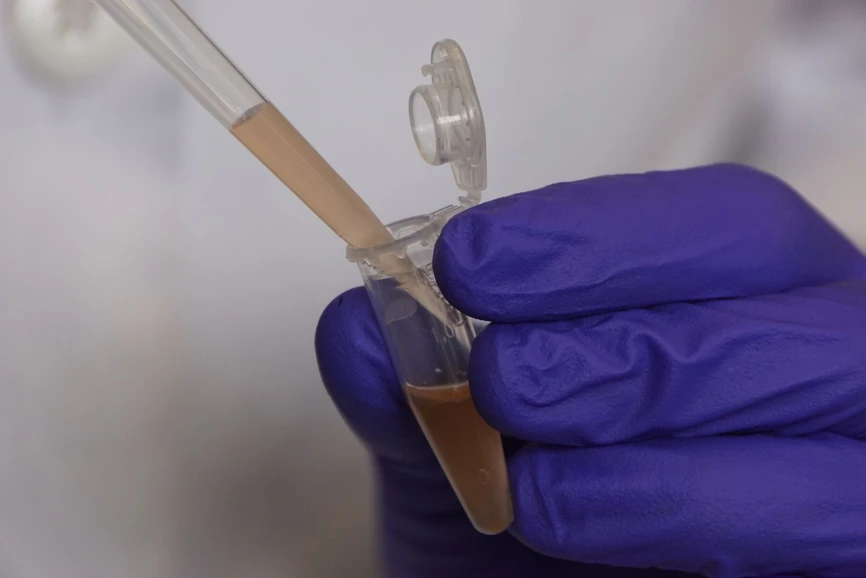
CEITEC/Miroslav Boudný: Leukaemia Cells Respond to Treatment by Turning Themselves into a Target: Preparation of cells for experiments.CEITEC/Miroslav Boudný: Leukaemia Cells Respond to Treatment by Turning Themselves into a Target: Preparation of cells for experiments.

“Cancer cells are not passive. They respond and adapt to treatment. We wanted to know whether, among the changes triggered by treatment, we could find something that could be used against them. That is what led us to the CXCR4 receptor,” explains Veronika Šandová, a researcher from Marek Mraz’s laboratory at CEITEC Masaryk University and University Hospital Brno.

CXCR4 is a receptor on the cell surface that, among other functions, helps leukaemia cells move to environments that provide favourable conditions for their survival. The researchers found that once treatment begins, CXCR4 levels on the surface of cancer cells increase significantly. The way cancer cells respond to treatment could therefore also become a weakness. Molecules on the cell surface are readily accessible to targeted treatment using specific antibodies.

In laboratory experiments, the researchers therefore added ulocuplumab, an antibody that binds to the CXCR4 receptor, to the drugs already being used. The effect was substantial. While around seven out of ten leukaemia cells survived treatment with the drugs alone, only around three to four out of ten survived when the drugs were combined with the antibody. “It is a little like a cancer cell adapting against the first attack and, in doing so, marking itself as a target for a second one. The treatment increases the amount of a particular molecule on its surface, which we can then target,” Veronika Šandová explains.
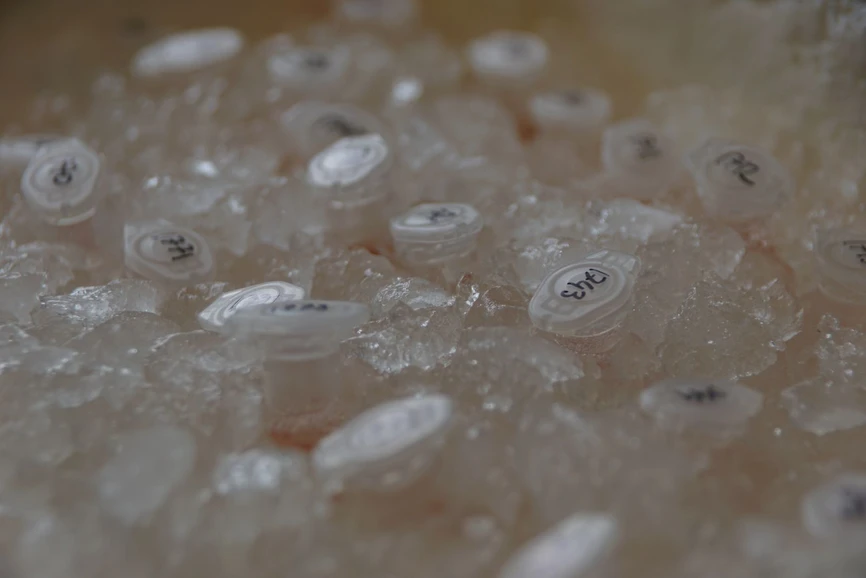
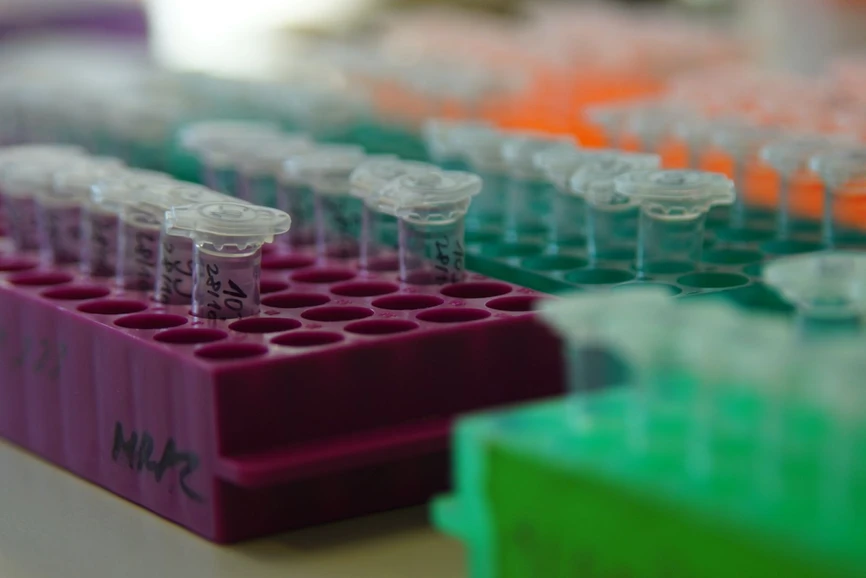
CEITEC/Miroslav Boudný: Leukaemia Cells Respond to Treatment by Turning Themselves into a Target: Cooling the cells after the experiment prevents degradation of protein and other molecules.CEITEC/Miroslav Boudný: Leukaemia Cells Respond to Treatment by Turning Themselves into a Target: Cooling the cells after the experiment prevents degradation of protein and other molecules.

The researchers went on to verify the results in a mouse model using leukaemia cells from patients. Here, too, the antibody targeting CXCR4 was highly effective at eliminating the cancer cells.

The research is still at the preclinical stage, so this is not a new treatment that can yet be offered to patients. However, it suggests a possible way to identify more effective combinations of cancer drugs. “With cancer, targeting a single mechanism is often not enough because cancer cells can respond to treatment and find other ways to escape and survive. Our results show that we can use these changes to our advantage and target them with additional treatment,” says Marek Mráz, head of the research laboratory where the study was conducted.

The study therefore offers another perspective on the search for new combinations of cancer treatments: looking not only at whether a drug kills a cancer cell, but also at how it changes the cell – and whether any of these changes could provide a new target for further treatment.

The study was conducted in collaboration among scientists from CEITEC Masaryk University, University Hospital Brno, the Faculty of Medicine at Masaryk University, and the Dana-Farber Cancer Institute in Boston.

The results were published in the scientific journal HemaSphere.

The original article

Gene expression analysis after BTK and PI3Kδ inhibitor treatment in chronic lymphocytic leukemia identifies cell-surface CXCR4 as a synergistic target for combinatorial therapy

Gabriela Mladonicka Pavlasova, Veronika Sandova, Laura Ondrisova, Vaclav Seda, Petra Pavelkova, Daniel Filip, Krystof Hlavac, Josef Vecera, Sarka Pospisilova, Anna Panovska, Stacey M. Fernandes, Michael Doubek, Jennifer R. Brown, Marek Mraz

HemaSphere (2026) 10 (9): e70481

https://doi.org/10.1002/hem3.70481

licensed under CC-BY 4.0

Marek Mráz’s research group is part of the National Institute for Cancer Research (NICR).

CEITEC
LinkedIn Logo
 

Related articles

How can we fight blood cancer more effectively?
Article | Scientific article

How can we fight blood cancer more effectively?

Despite approved treatments being available, multiple myeloma remains incurable. But researchers at ETH Zurich and University Hospital Zurich set out to improve treatment outcomes.
Sequential versus Simultaneous Quantitative Analysis of Biomarkers in Individual Cells by ICP-MS and Mass Cytometry: A Focus on Immunotherapy
Scientific article | Science and research

Sequential versus Simultaneous Quantitative Analysis of Biomarkers in Individual Cells by ICP-MS and Mass Cytometry: A Focus on Immunotherapy

Sequential and simultaneous single-cell analysis by ICP-MS and mass cytometry provided comparable biomarker quantification, supporting their use in immunotherapy-related studies.
Development of potent inhibitors to boost the immune system's ability to fight cancer
Article | Science and research

Development of potent inhibitors to boost the immune system's ability to fight cancer

IOCB Prague researchers developed potent CD73 inhibitors that restore T cell activity and reduce adenosine, opening new paths for cancer immunotherapy.
 Scientists Uncover a Tipping Point in Cells. This Is How Cancer May Begin
Article | Science and research

Scientists Uncover a Tipping Point in Cells. This Is How Cancer May Begin

Scientists from CEITEC and Masaryk University uncovered a molecular switch in the Wnt signalling pathway that controls cellular decision-making and may help explain how cancer begins.