We, 21.10.2026 | Original article from: Organomation / David Oliva
Persistent organic pollutants (POPs) threaten human health and ecosystems. Explore their environmental impact, detection methods, and analytical techniques, including GC-MS, GC-HRMS, and LC-MS/MS.The Importance of Detecting Persistent Organic Pollutants (POPs)
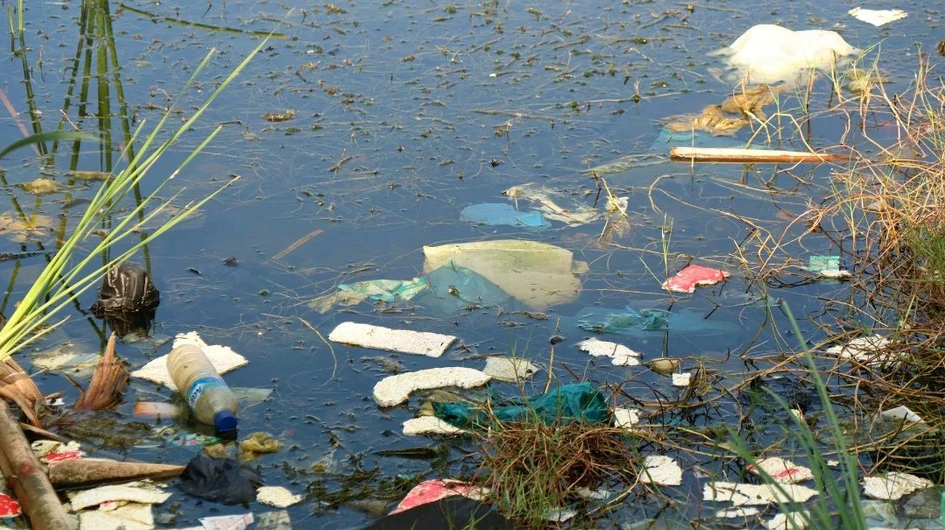
Organomation: The Importance of Detecting Persistent Organic Pollutants (POPs)
Persistent Organic Pollutants (POPs) are toxic chemicals that pose serious risks to ecosystems and human health worldwide. These hazardous substances remain intact for extended periods, are widely distributed throughout the environment, and accumulate in the fatty tissue of living organisms through the food chain [1]. Understanding their detection and monitoring is crucial for environmental protection and public health.
What Are POPs?
POPs are typically halogenated organic compounds that exhibit high lipid solubility, allowing them to bioaccumulate in fatty tissues [13]. They resist degradation through chemical, biological, and photolytic processes, which contributes to their persistence in the environment [12]. Common examples include:
- Polychlorinated Biphenyls (PCBs)
- Chlorinated Dioxins and Furans
- Pesticides like DDT, aldrin, and chlordane
- Per- and Polyfluoroalkyl Substances (PFAS)
- Polycyclic Aromatic Hydrocarbons (PAHs)
The high toxicity of dioxins, one category of POPs, can result in cancer, reproductive and developmental problems, immune system damage, and hormone disruption [5].
Why Detection Matters
Health Implications
Exposure to POPs, even at low levels, can lead to numerous adverse health effects including:
- Cancer development
- Reproductive disorders
- Damage to central and peripheral nervous system
- Immune system disruption
- Endocrine disruption
- Birth defects and developmental changes [5] [7]
Studies have also suggested links between increased POP levels in human blood serum and diabetes [5].
Environmental Impact
POPs affect wildlife and ecosystems in profound ways:
- Changes in coral reef community
- Damage to seagrass beds and aquatic vegetation [7]
- Declines, diseases, or abnormalities in a plethora of wildlife species, but found them to be most prevalent in certain types of fish, birds, and mammals
Wildlife often serves as a marker for human health, with abnormalities in animal populations potentially signaling dangers to people [7].
Global Reach of POPs
What makes POPs particularly concerning is their ability to travel far from their source through:
- Long-range transport: POPs enter the gas phase under certain environmental temperatures and can travel through the atmosphere to regions thousands of kilometers away before being redeposited [1] [2].
- Biomagnification: POPs concentrate in living organisms and move up the food chain, resulting in the highest concentrations in organisms at the top, including humans [1] [10].
This means POPs can be found in remote locations like the Arctic and Antarctic, where they have never been used or produced [2].
EPA Method 1613: Gold Standard for Dioxin Analysis
EPA Method 1613 was developed by the United States Environmental Protection Agency for the isomer-specific determination of tetra- through octa-chlorinated dibenzo-p-dioxins (CDDs) and dibenzofurans (CDFs) in various matrices. This method has long been considered the gold standard for dioxin analysis [3].
Key Features of EPA Method 1613
EPA Method 1613 is a high-resolution capillary column gas chromatography (HRGC)/high-resolution mass spectrometry (HRMS) method that uses isotope dilution techniques. It provides:
- Specificity for determination of 2,3,7,8-substituted isomers of tetrachlorodibenzo-p-dioxin (2,3,7,8-TCDD) and tetrachlorodibenzofuran (2,3,7,8-TCDF)
- Capability to analyze samples from water, soil, sediment, sludge, tissue, and other matrices
- Support for EPA's data gathering and monitoring programs associated with the Clean Water Act, Resource Conservation and Recovery Act, Comprehensive Environmental Response, Compensation and Liability Act, and Safe Drinking Water Act [14].
- The method includes comprehensive quality control procedures, including method blanks, surrogate spikes, and cleanup standards, ensuring reliable and accurate results [3].
Detection Technologies
Several analytical techniques are employed to detect and monitor POPs:
Gas Chromatography-Mass Spectrometry (GC-MS)
This is the gold standard method for POPs analysis, offering high sensitivity and specificity for detecting targeted compounds. The most powerful implementation is gas chromatography coupled with sector high-resolution mass spectrometry (GC-HRMS) in selected ion monitoring mode. While highly effective, it has limitations in identifying new or emergent POPs as it only analyzes targeted compounds of interest [4] [6].
High-Resolution Gas Chromatography Mass Spectrometry (HRGC-MS)
Used primarily for identifying dioxins and furans at ultra-trace levels, this technique is preferred for regulatory testing and academic research [4].
Liquid Chromatography-Tandem Mass Spectrometry (LC-MS/MS)
Suitable for analyzing water-soluble POPs, including PFAS, this method provides rapid and precise analysis [10].
Metal-Organic Frameworks (MOFs)
Metal-organic frameworks are considered effective in detecting POPs. These materials consist of ligands linked to metal ions or clusters creating three-dimensional structures with well-defined crystalline structures and high porosity, reaching surface areas of up to 7,000 m²/g in some cases [8].
Sample Preparation and Cleanup Methods
Effective POPs analysis requires thorough sample preparation and cleanup procedures, which may include:
- Gel permeation chromatography (GPC)
- Silica gel cleanup
- Alumina cleanup
- High-performance liquid chromatography (HPLC) [4]
These procedures help remove interferences and ensure accurate detection of target compounds, particularly when dealing with complex environmental matrices.
International Response
The 2001 Stockholm Convention on Persistent Organic Pollutants was established to protect human health and the environment from POPs. The convention includes:
- The Global Monitoring Plan, which measures POP concentrations worldwide in air, human milk, and water
- Frameworks for collecting comparable data to identify changes in concentrations over time
- Information on regional and global environmental transport of POPs [7]
Conclusion
Detecting and monitoring POPs is essential for ensuring food safety, protecting public health, and preserving ecosystems. As these chemicals continue to persist in our environment and new variants emerge, advanced detection methods become increasingly important.
While established methods like EPA Method 1613 continue to serve as regulatory standards, emerging technologies like TIMS-TOF and GC-MS/MS are expanding our capabilities to detect both known POPs and new contaminants of concern [4] [6]. Through continued research, international cooperation, and improved analytical techniques, we can better understand, regulate, and ultimately reduce the impact of these dangerous pollutants on our planet and its inhabitants.
Be sure to check out our other installments of our Environmental Contaminant Series covering Polycyclic Aromatic Hydrocarbons (PAHs), Semi-Volatile Organic Compounds (SVOCs), Polychlorinated Biphenyls (PCBs), and Per- and Polyfluoroalkyl Substances (PFAS).
Resources
- Stockholm Convention on Persistent Organic Pollutants (POPs)
- Levels of persistent organic pollutants (POPs) in the Antarctic atmosphere over time (1980 to 2021)
- https://nepis.epa.gov/Exe/ZyPURL.cgi?Dockey=9100E9BU.TXT
- Applying Comprehensive Analysis to EPA Method 1613B Samples
- https://www.unep.org/cep/persistent-organic-pollutants-pops-and-pesticides
- Improved Persistent Organic Pollutants Analysis for a Safer Global Environment
- https://www.epa.gov/international-cooperation/persistent-organic-pollutants-global-issue-global-response
- Research progress of persistent organic pollutants in water
- Studying the Impact of Persistent Organic Pollutants Exposure on Human Health by Proteomic Analysis: A Systematic Review
- Persistent Organic Pollutants in Food: Contamination Sources, Health Effects and Detection Methods
- Persistent organic pollutants: impact on child health
- Evaluation of the Association between Persistent Organic Pollutants (POPs) and Diabetes in Epidemiological Studies
- Persistent Organic Pollutant - an overview | ScienceDirect Topics
- Tetra- through Octa-chlorinated Dioxins and Furans Analysis in Water by Isotope Dilution GC/MS/MS