Technology Inspired by Cotton Candy Could Help Treat Acne

Th, 24.9.2026 | Original article from: CEITEC BUT / Ing. Martina Říhová, Ph.D.
Researchers at CEITEC BUT developed cellulose acetate microfibres with zinc oxide that, after oxygen plasma treatment, show antibacterial activity against bacteria associated with acne.
<p><strong>CEITEC BUT/Jakub Rozboud:</strong> Martina Říhová at CEITEC BUT develops face masks inspired by cotton candy</p>

CEITEC BUT/Jakub Rozboud: Martina Říhová at CEITEC BUT develops face masks inspired by cotton candy

Acne is one of the most common skin conditions. It affects up to 85% of people during adolescence and, for many, persists into adulthood. Beyond its physical symptoms, it can also significantly affect self-confidence. Treatment often takes time, and some commonly used products can dry out or irritate the skin. Researchers at CEITEC Brno University of Technology (BUT) have developed specially modified cellulose microfibres that effectively inhibited acne-causing bacteria in laboratory tests. The fibres can be used in face masks. These findings could pave the way for new approaches to treating acne-prone skin.

The material consists of cellulose acetate microfibres enriched with zinc oxide and subsequently treated with oxygen plasma. The zinc oxide is then gradually released into the skin, where its antibacterial action limits the growth of bacteria associated with acne. Unlike conventional products, the active ingredient is incorporated directly into the fibres and released gradually, allowing for a longer-lasting effect.

“The fibres retain high efficacy without any of the additives commonly found in commercial products. The material contains exactly what is needed to combat acne effectively, with no unnecessary ingredients. Our research showed that the fibres retain their antibacterial effect for at least a year after treatment,” says Martina Říhová of the Advanced Low-Dimensional Nanomaterials research group at CEITEC BUT, who led the research. This demonstrated long-term effect opens the door to commercial applications.

In the future, the same principle could also be used to treat other skin conditions complicated by bacterial infections, such as atopic dermatitis. The fibres could be incorporated not only into face masks for acne treatment but also into patches for smaller affected areas or dressings suitable for larger areas.

CEITEC BUT/Jakub Rozboud: Technology Inspired by Cotton Candy Could Help Treat Acne: Martina Říhová from CEITEC BUT during face skin analysis.CEITEC BUT/Jakub Rozboud: Technology Inspired by Cotton Candy Could Help Treat Acne: Martina Říhová from CEITEC BUT during face skin analysis.

Fibres Made Much Like Cotton Candy

The researchers produced the microscopic fibres using centrifugal spinning. The same physical principle is used to make cotton candy, but in this case, fine polymer fibres are formed instead of sugar strands.

The breakthrough came from combining a method called Vapour Phase Infiltration, which enriched the fibres with zinc oxide, with subsequent oxygen plasma treatment. This treatment slightly disrupts the surface of the fibres, allowing the active substances to be released upon contact with water.

“We were the first in the world to demonstrate this procedure using cellulose acetate fibres,” notes Martina, who has been researching acne and its treatment for seven years. She and her colleagues published their findings in Small, one of the world’s leading scientific journals focusing on nanomaterials and nanotechnology.

Researchers from Brno and Spain Joined Forces

Several research teams from different institutions contributed to the material’s development. “Our team, led by Jan Macák, was responsible for preparing the fibres. We then took them to San Sebastián in Spain, to Mato Knez’s team at nanoGUNE, where they carried out the vapour phase infiltration. Next, Lenka Zajíčková’s team at CEITEC BUT treated the fibres with oxygen plasma. Finally, Zbyněk Heger’s team at the Department of Chemistry and Biochemistry at Mendel University conducted the antibacterial testing,” says Martina Říhová, describing the collaboration.

The research took more than a year. Before the new material can enter routine use, it will need to undergo further biological testing, followed by clinical trials to verify its safety and effectiveness in treating patients.
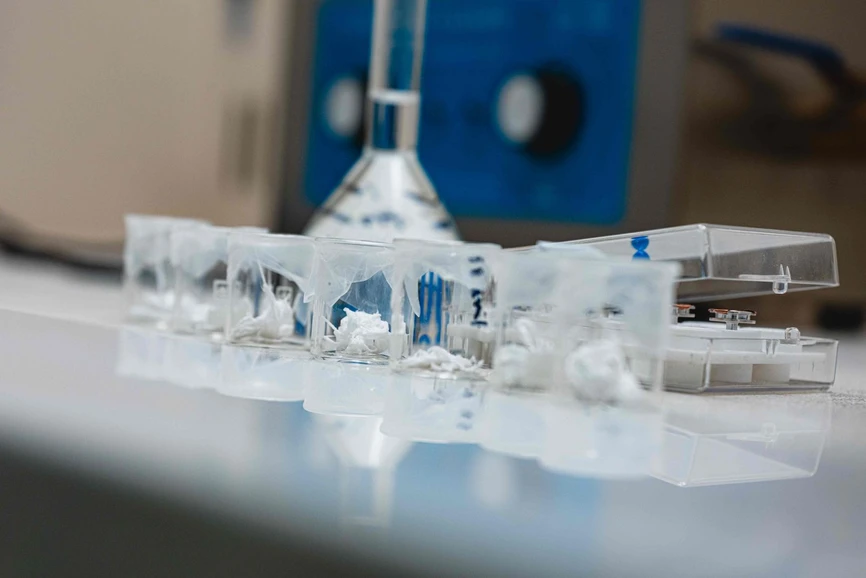
CEITEC BUT/Jakub Rozboud: Technology Inspired by Cotton Candy Could Help Treat Acne: Martina Říhová's microfibres developped for acne treatment.CEITEC BUT/Jakub Rozboud: Technology Inspired by Cotton Candy Could Help Treat Acne: Martina Říhová's microfibres developped for acne treatment.

The original article

Cellulose Acetate Fibers With Infiltrated ZnO Nanocrystals: Activation of Antibacterial Properties Against Acne vulgaris by Oxygen Plasma Treatment

Martina Rihova, Denisa Fenclova, Pavan Kumar Chennam, Aniket Mukherjee, David Pavlinak, Susan Azpeitia, Kristyna Cihalova, Miloslav Pouzar, Kaushik Baishya, Lenka Zajíčková, Zbynek Heger, Mato Knez, Jan M. Macak

Small, 2026, 22, e13286

10.1002/smll.202513286

licenced under CC-BY 4.0

Abstract

In this work, we developed biodegradable cellulose acetate (CA) fibers infiltrated with ZnO nanocrystals for the Acne vulgaris (AV) treatment. The antibacterial effect (through Zn²⁺ release) was activated upon oxygen plasma treatment. CA fibers (fiber diameter ≈ 2 µm) were produced via centrifugal spinning, followed by ZnO infiltration (up to 8 wt% of Zn content) using Vapor Phase Infiltration (VPI) with varying deposition cycles. As CA fibers are naturally hydrophobic, oxygen plasma treatment was applied to turn them hydrophilic and to improve skin wetting. The combination of these steps is presented for the first time.

Plasma treatment introduced oxygen‐containing functional groups on the CA surface, significantly improving wettability. Scanning electron microscopy analyses of treated fibers showed no morphological damage. Detailed characterization (using X‐ray photoelectron spectroscopy, Raman spectroscopy, energy dispersive X‐ray fluorescence, X‐ray diffraction, tranmission electron microscopy) focused on fibers with 32 and 128 VPI cycles, revealed that plasma partially oxidized and etched the surface, affecting the ZnO distribution.

Plasma‐modified fibers, unlike untreated ones, exhibited antibacterial activity against AV‐causing bacteria (Cutibacterium acnes and Staphylococcus epidermidis), creating significant inhibition zones (up to 5 mm), demonstrating their potential as promising therapeutic modality. Overall, plasma treatment enabled effective surface functionalization, producing antibacterial fibers with enhanced surface properties suitable for application in AV management.


CEITEC
LinkedIn Logo
 

Related articles

Atomic Antibiotics Developed by Czech Scientists Counter Bacterial Resistance
Article | Video

Atomic Antibiotics Developed by Czech Scientists Counter Bacterial Resistance

Scientists from Palacký University Olomouc and the Technical University of Ostrava, in collaboration with colleagues from China, have discovered a method for developing a new generation of antibiotics.
Enhancing Paper’s Mechanical Strength and Antibacterial Properties through a Biopolymer-Based Coating
Scientific article | Science and research

Enhancing Paper’s Mechanical Strength and Antibacterial Properties through a Biopolymer-Based Coating

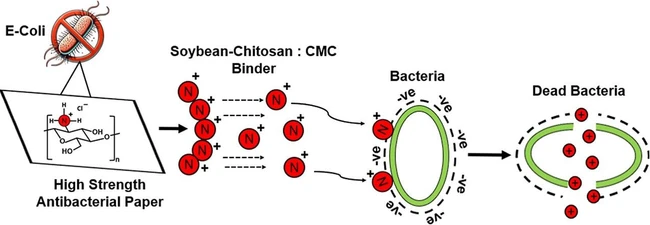
Soybean flour–CMC biopolymer coating enhanced paper strength by 61.8% and showed up to 89% antibacterial reduction against E. coli, offering promise for sustainable packaging.
Coffee Silver Skin: A Useful Adsorbent Substrate for Norfloxacin Removal and Photodegradation
Scientific article | Science and research

Coffee Silver Skin: A Useful Adsorbent Substrate for Norfloxacin Removal and Photodegradation

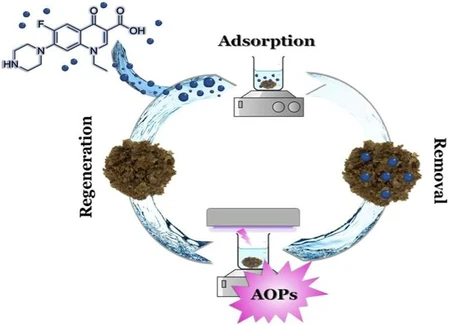
This study shows Coffee Silver Skin removes Norfloxacin via adsorption. Regeneration with UV/TiO₂ achieves full degradation in 6 h. Reuse up to 3 cycles is possible, offering sustainable wastewater treatment.
Hydrothermal Synthesis of ZnO@MnO2-Montmorillonite Nanocomposites: Influence of Molarity on Structural, Optical, and Photocatalytic Performance toward Ciprofloxacin Degradation under Variable Conditions
Scientific article | Science and research

Hydrothermal Synthesis of ZnO@MnO2-Montmorillonite Nanocomposites: Influence of Molarity on Structural, Optical, and Photocatalytic Performance toward Ciprofloxacin Degradation under Variable Conditions

Hydrothermally prepared ZnO@MnO₂-montmorillonite nanocomposites display high photocatalytic efficiency in ciprofloxacin degradation and tunable optical–structural behavior.
 

Related articles

Atomic Antibiotics Developed by Czech Scientists Counter Bacterial Resistance
Article | Video

Atomic Antibiotics Developed by Czech Scientists Counter Bacterial Resistance

Scientists from Palacký University Olomouc and the Technical University of Ostrava, in collaboration with colleagues from China, have discovered a method for developing a new generation of antibiotics.
Enhancing Paper’s Mechanical Strength and Antibacterial Properties through a Biopolymer-Based Coating
Scientific article | Science and research

Enhancing Paper’s Mechanical Strength and Antibacterial Properties through a Biopolymer-Based Coating

Soybean flour–CMC biopolymer coating enhanced paper strength by 61.8% and showed up to 89% antibacterial reduction against E. coli, offering promise for sustainable packaging.
Coffee Silver Skin: A Useful Adsorbent Substrate for Norfloxacin Removal and Photodegradation
Scientific article | Science and research

Coffee Silver Skin: A Useful Adsorbent Substrate for Norfloxacin Removal and Photodegradation

This study shows Coffee Silver Skin removes Norfloxacin via adsorption. Regeneration with UV/TiO₂ achieves full degradation in 6 h. Reuse up to 3 cycles is possible, offering sustainable wastewater treatment.
Hydrothermal Synthesis of ZnO@MnO2-Montmorillonite Nanocomposites: Influence of Molarity on Structural, Optical, and Photocatalytic Performance toward Ciprofloxacin Degradation under Variable Conditions
Scientific article | Science and research

Hydrothermal Synthesis of ZnO@MnO2-Montmorillonite Nanocomposites: Influence of Molarity on Structural, Optical, and Photocatalytic Performance toward Ciprofloxacin Degradation under Variable Conditions

Hydrothermally prepared ZnO@MnO₂-montmorillonite nanocomposites display high photocatalytic efficiency in ciprofloxacin degradation and tunable optical–structural behavior.
 

Related articles

Atomic Antibiotics Developed by Czech Scientists Counter Bacterial Resistance
Article | Video

Atomic Antibiotics Developed by Czech Scientists Counter Bacterial Resistance

Scientists from Palacký University Olomouc and the Technical University of Ostrava, in collaboration with colleagues from China, have discovered a method for developing a new generation of antibiotics.
Enhancing Paper’s Mechanical Strength and Antibacterial Properties through a Biopolymer-Based Coating
Scientific article | Science and research

Enhancing Paper’s Mechanical Strength and Antibacterial Properties through a Biopolymer-Based Coating

Soybean flour–CMC biopolymer coating enhanced paper strength by 61.8% and showed up to 89% antibacterial reduction against E. coli, offering promise for sustainable packaging.
Coffee Silver Skin: A Useful Adsorbent Substrate for Norfloxacin Removal and Photodegradation
Scientific article | Science and research

Coffee Silver Skin: A Useful Adsorbent Substrate for Norfloxacin Removal and Photodegradation

This study shows Coffee Silver Skin removes Norfloxacin via adsorption. Regeneration with UV/TiO₂ achieves full degradation in 6 h. Reuse up to 3 cycles is possible, offering sustainable wastewater treatment.
Hydrothermal Synthesis of ZnO@MnO2-Montmorillonite Nanocomposites: Influence of Molarity on Structural, Optical, and Photocatalytic Performance toward Ciprofloxacin Degradation under Variable Conditions
Scientific article | Science and research

Hydrothermal Synthesis of ZnO@MnO2-Montmorillonite Nanocomposites: Influence of Molarity on Structural, Optical, and Photocatalytic Performance toward Ciprofloxacin Degradation under Variable Conditions

Hydrothermally prepared ZnO@MnO₂-montmorillonite nanocomposites display high photocatalytic efficiency in ciprofloxacin degradation and tunable optical–structural behavior.
 

Related articles

Atomic Antibiotics Developed by Czech Scientists Counter Bacterial Resistance
Article | Video

Atomic Antibiotics Developed by Czech Scientists Counter Bacterial Resistance

Scientists from Palacký University Olomouc and the Technical University of Ostrava, in collaboration with colleagues from China, have discovered a method for developing a new generation of antibiotics.
Enhancing Paper’s Mechanical Strength and Antibacterial Properties through a Biopolymer-Based Coating
Scientific article | Science and research

Enhancing Paper’s Mechanical Strength and Antibacterial Properties through a Biopolymer-Based Coating

Soybean flour–CMC biopolymer coating enhanced paper strength by 61.8% and showed up to 89% antibacterial reduction against E. coli, offering promise for sustainable packaging.
Coffee Silver Skin: A Useful Adsorbent Substrate for Norfloxacin Removal and Photodegradation
Scientific article | Science and research

Coffee Silver Skin: A Useful Adsorbent Substrate for Norfloxacin Removal and Photodegradation

This study shows Coffee Silver Skin removes Norfloxacin via adsorption. Regeneration with UV/TiO₂ achieves full degradation in 6 h. Reuse up to 3 cycles is possible, offering sustainable wastewater treatment.
Hydrothermal Synthesis of ZnO@MnO2-Montmorillonite Nanocomposites: Influence of Molarity on Structural, Optical, and Photocatalytic Performance toward Ciprofloxacin Degradation under Variable Conditions
Scientific article | Science and research

Hydrothermal Synthesis of ZnO@MnO2-Montmorillonite Nanocomposites: Influence of Molarity on Structural, Optical, and Photocatalytic Performance toward Ciprofloxacin Degradation under Variable Conditions

Hydrothermally prepared ZnO@MnO₂-montmorillonite nanocomposites display high photocatalytic efficiency in ciprofloxacin degradation and tunable optical–structural behavior.