Steroidal hormones and neurosteroids – novel therapeutic strategies in bacterial infections

Fr, 8.5.2026 | Original article from: IOCB Prague
New androstane-based steroid derivatives can significantly improve antibiotic efficacy against multidrug-resistant Staphylococcus aureus, offering a promising strategy to overcome efflux-mediated resistance.
<p><strong>IOCB Prague:</strong> Steroidal hormones and neurosteroids – novel therapeutic strategies in bacterial infections</p>

IOCB Prague: Steroidal hormones and neurosteroids – novel therapeutic strategies in bacterial infections

Researchers led by Eva Kudová from IOCB Prague and Jitka Viktorová from UCT Prague have identified new androstane-based steroid derivatives that can significantly improve the effectiveness of existing antibiotics against multidrug-resistant Staphylococcus aureus.

The team screened dozens of natural steroidal hormones and synthetic derivatives to see whether they could block bacterial efflux pumps – mechanisms that bacteria use to eject antibiotics and survive treatment. Two compounds emerged as particularly promising: they inhibited efflux pumps and lowered the effective doses of antibiotics such as ciprofloxacin and erythromycin.

Further analysis showed that one of the compounds also suppressed genes linked to bacterial virulence. Another key finding is that the most active molecules are non-toxic to human immune cells and showed no detectable endocrine activity, suggesting a favorable safety profile.

These findings support the idea that rationally designed steroid-based molecules could act as antibiotic adjuvants, helping existing drugs overcome bacterial resistance.

IOCB Prague: Steroidal hormones and neurosteroids – novel therapeutic strategies in bacterial infectionsIOCB Prague: Steroidal hormones and neurosteroids – novel therapeutic strategies in bacterial infections

Original Article

Steroidal hormones and neurosteroids - novel therapeutic strategies in bacterial infections: Design, synthesis, and biological evaluation

Daniela Brdová, Bára Křížkovská, Jan Špaček, Zdeněk Míchal, Eva Jablonská, Ondřej Strnad, Hana Chodounská, Eszter Szánti-Pintér, Marina Morozovová, Václav Hanžl, Jan Tkadlec, Martijn Riool, Jan Lipov, Jitka Viktorová, Eva Kudová 

Eur. J. Med. Chem., 2026, 308, 118716

https://doi.org/10.1016/j.ejmech.2026.118716

licensed under CC-BY 4.0

Abstract

The global rise of antibiotic resistance necessitates novel therapeutic strategies for infectious diseases. Inhibition of bacterial efflux pumps, which contribute to multidrug resistance, represents a promising approach to restore or even increase the efficacy of existing antibiotics. Using fluorescence-based ethidium bromide accumulation, broth microdilution, and checkerboard assays, we evaluated 26 endogenous steroidal hormones and neurosteroids, along with 30 synthetic derivatives, for their ability to enhance antibiotic susceptibility in multidrug-resistant Staphylococcus aureus. Structure-activity relationship analysis identified compounds 13 and 16 as lead candidates, exhibiting strong efflux pump inhibition and marked reductions in the minimum inhibitory concentrations of ciprofloxacin and erythromycin. Both compounds showed additive effects in checkerboard assays. Modifications at C-3 (polar substitution) and C-17 (3α,5β-stereochemistry and nonpolar substitution) were essential for potent efflux inhibition and sensitization, although these modifications were not additive when combined. Transcriptome analysis further revealed that compound 13 significantly downregulated S. aureus virulence-associated genes when administered alone or in combination with antibiotics. Cytotoxicity assessment in human peripheral blood mononuclear cells and receptor transactivation assays for estrogen, androgen, and progesterone receptors indicated that the most active derivatives were non-toxic and lacked detectable endocrine activity, suggesting a favorable safety profile. Overall, these findings support the concept that rationally designed andostane-based steroidal scaffolds can function as competitive bacterial efflux pump inhibitors and serve as potential antibiotic adjuvants to mitigate efflux-mediated resistance.

Instrumentation

Structural characterization
Institute of Organic Chemistry and Biochemistry of the Czech Academy of Sciences
LinkedIn Logo
 

Related articles

Atomic Antibiotics Developed by Czech Scientists Counter Bacterial Resistance
Article | Video

Atomic Antibiotics Developed by Czech Scientists Counter Bacterial Resistance

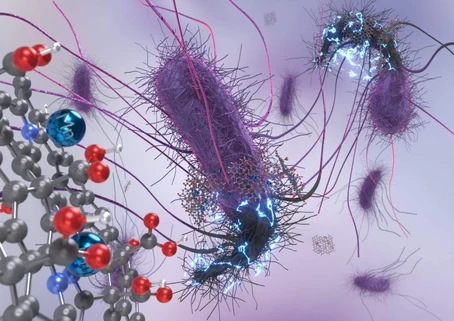
Scientists from Palacký University Olomouc and the Technical University of Ostrava, in collaboration with colleagues from China, have discovered a method for developing a new generation of antibiotics.
Synthesis and Evaluation of Pyridine-Based Antibacterial Agents that Inhibit ATP Synthase in Acinetobacter baumannii
Scientific article | Science and research

Synthesis and Evaluation of Pyridine-Based Antibacterial Agents that Inhibit ATP Synthase in Acinetobacter baumannii

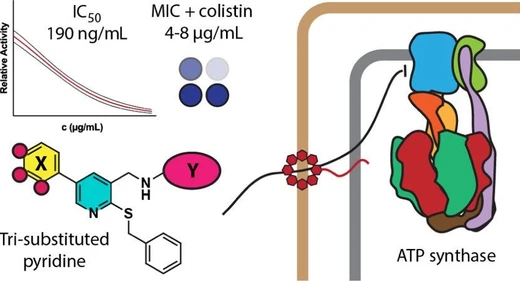
A new class of trisubstituted pyridines targets ATP synthase in Acinetobacter baumannii. Four lead compounds showed potent antibacterial effects and synergized with colistin against multidrug-resistant strains.
In Vitro Antibacterial Potential of Pinus nigra-Thymus serpyllum Essential Oil and Antibiotic Combinations
Scientific article | Science and research

In Vitro Antibacterial Potential of Pinus nigra-Thymus serpyllum Essential Oil and Antibiotic Combinations

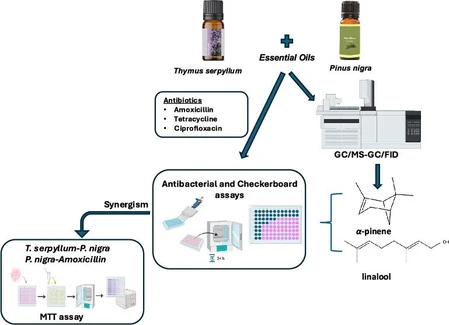
This study demonstrates synergistic antibacterial activity of Pinus nigra and Thymus serpyllum essential oils alone and combined with antibiotics against human pathogens.
 Fighting Antibiotic Resistance with LC-MS: Targeting Bacterial Cell Walls
Interview | Video

Fighting Antibiotic Resistance with LC-MS: Targeting Bacterial Cell Walls

Discover how LC-MS is helping researchers identify new antibiotic targets by studying bacterial cell wall remodeling and developing chemical probes to combat antimicrobial resistance.
 

Related articles

Atomic Antibiotics Developed by Czech Scientists Counter Bacterial Resistance
Article | Video

Atomic Antibiotics Developed by Czech Scientists Counter Bacterial Resistance

Scientists from Palacký University Olomouc and the Technical University of Ostrava, in collaboration with colleagues from China, have discovered a method for developing a new generation of antibiotics.
Synthesis and Evaluation of Pyridine-Based Antibacterial Agents that Inhibit ATP Synthase in Acinetobacter baumannii
Scientific article | Science and research

Synthesis and Evaluation of Pyridine-Based Antibacterial Agents that Inhibit ATP Synthase in Acinetobacter baumannii

A new class of trisubstituted pyridines targets ATP synthase in Acinetobacter baumannii. Four lead compounds showed potent antibacterial effects and synergized with colistin against multidrug-resistant strains.
In Vitro Antibacterial Potential of Pinus nigra-Thymus serpyllum Essential Oil and Antibiotic Combinations
Scientific article | Science and research

In Vitro Antibacterial Potential of Pinus nigra-Thymus serpyllum Essential Oil and Antibiotic Combinations

This study demonstrates synergistic antibacterial activity of Pinus nigra and Thymus serpyllum essential oils alone and combined with antibiotics against human pathogens.
 Fighting Antibiotic Resistance with LC-MS: Targeting Bacterial Cell Walls
Interview | Video

Fighting Antibiotic Resistance with LC-MS: Targeting Bacterial Cell Walls

Discover how LC-MS is helping researchers identify new antibiotic targets by studying bacterial cell wall remodeling and developing chemical probes to combat antimicrobial resistance.
 

Related articles

Atomic Antibiotics Developed by Czech Scientists Counter Bacterial Resistance
Article | Video

Atomic Antibiotics Developed by Czech Scientists Counter Bacterial Resistance

Scientists from Palacký University Olomouc and the Technical University of Ostrava, in collaboration with colleagues from China, have discovered a method for developing a new generation of antibiotics.
Synthesis and Evaluation of Pyridine-Based Antibacterial Agents that Inhibit ATP Synthase in Acinetobacter baumannii
Scientific article | Science and research

Synthesis and Evaluation of Pyridine-Based Antibacterial Agents that Inhibit ATP Synthase in Acinetobacter baumannii

A new class of trisubstituted pyridines targets ATP synthase in Acinetobacter baumannii. Four lead compounds showed potent antibacterial effects and synergized with colistin against multidrug-resistant strains.
In Vitro Antibacterial Potential of Pinus nigra-Thymus serpyllum Essential Oil and Antibiotic Combinations
Scientific article | Science and research

In Vitro Antibacterial Potential of Pinus nigra-Thymus serpyllum Essential Oil and Antibiotic Combinations

This study demonstrates synergistic antibacterial activity of Pinus nigra and Thymus serpyllum essential oils alone and combined with antibiotics against human pathogens.
 Fighting Antibiotic Resistance with LC-MS: Targeting Bacterial Cell Walls
Interview | Video

Fighting Antibiotic Resistance with LC-MS: Targeting Bacterial Cell Walls

Discover how LC-MS is helping researchers identify new antibiotic targets by studying bacterial cell wall remodeling and developing chemical probes to combat antimicrobial resistance.
 

Related articles

Atomic Antibiotics Developed by Czech Scientists Counter Bacterial Resistance
Article | Video

Atomic Antibiotics Developed by Czech Scientists Counter Bacterial Resistance

Scientists from Palacký University Olomouc and the Technical University of Ostrava, in collaboration with colleagues from China, have discovered a method for developing a new generation of antibiotics.
Synthesis and Evaluation of Pyridine-Based Antibacterial Agents that Inhibit ATP Synthase in Acinetobacter baumannii
Scientific article | Science and research

Synthesis and Evaluation of Pyridine-Based Antibacterial Agents that Inhibit ATP Synthase in Acinetobacter baumannii

A new class of trisubstituted pyridines targets ATP synthase in Acinetobacter baumannii. Four lead compounds showed potent antibacterial effects and synergized with colistin against multidrug-resistant strains.
In Vitro Antibacterial Potential of Pinus nigra-Thymus serpyllum Essential Oil and Antibiotic Combinations
Scientific article | Science and research

In Vitro Antibacterial Potential of Pinus nigra-Thymus serpyllum Essential Oil and Antibiotic Combinations

This study demonstrates synergistic antibacterial activity of Pinus nigra and Thymus serpyllum essential oils alone and combined with antibiotics against human pathogens.
 Fighting Antibiotic Resistance with LC-MS: Targeting Bacterial Cell Walls
Interview | Video

Fighting Antibiotic Resistance with LC-MS: Targeting Bacterial Cell Walls

Discover how LC-MS is helping researchers identify new antibiotic targets by studying bacterial cell wall remodeling and developing chemical probes to combat antimicrobial resistance.