Magnetic Bead-Based Protein Purification: A Faster and More Efficient Workflow

We, 8.4.2026 | Original article from: Phenomenex
Magnetic bead-based protein purification enables fast, efficient cleanup without centrifugation, improving reproducibility and supporting high-throughput workflows.
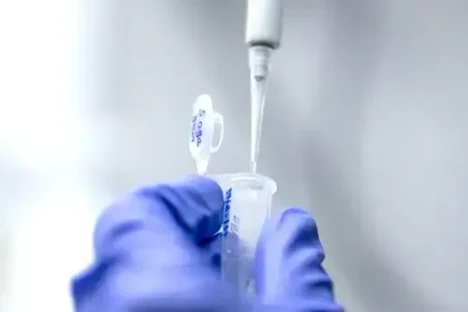
  • Photo: Phenomenex: Magnetic Bead-Based Protein Purification: A Faster and More Efficient Workflow
  • Video: Phenomenex: How to - Phenomenex's Biozen MagBeads 

Traditional protein purification workflows in many laboratories still rely on ultracentrifugation and long incubation steps. These approaches often involve multi-step protocols, extended processing times, and the use of specialized equipment. As a result, workflows can become complex, time-consuming, and prone to variability.

Magnetic bead-based protein purification offers a faster, simpler, and more efficient alternative by enabling selective capture and rapid magnetic separation.

Limitations of Conventional Protein Cleanup Methods

In standard laboratory workflows, protein cleanup typically involves:

  • Multiple processing steps
  • Centrifugation and column equilibration
  • Dependence on specialized instrumentation
  • Long processing times

These factors introduce several challenges:

  • Increased complexity of workflows
  • Variability between runs, reducing reproducibility
  • Risk of sample loss during transfers, especially for small sample volumes or scarce targets
  • Limited throughput due to manual handling

Principle of Magnetic Bead-Based Purification

Magnetic beads enable selective protein capture through surface functionalization.

Each bead is coated with streptavidin, allowing the attachment of a biotinylated ligand. This ligand can be selected based on the target analyte and may include:

  • Antibodies
  • Aptamers
  • Antigen fragments

This functionalization step provides the beads with the specificity required to bind the target analyte.

Materials and Key Components

Magnetic Beads

  • Streptavidin-coated surface
  • Functionalized with biotinylated ligands

Ligands

  • Selected for target specificity
  • Attached to beads prior to purification

Step-by-Step Procedure

1. Bead Activation

Load the biotinylated ligand onto the streptavidin-coated magnetic beads to confer specificity.

2. Washing

Remove impurities after ligand loading to prepare the beads for interaction with the sample.

3. Incubation with Sample

Incubate the functionalized beads with the sample to allow binding between the ligand and the target analyte.

4. Magnetic Separation

Place the sample on a magnet:

  • Magnetic beads (with bound analyte) are attracted to the vessel wall
  • The liquid phase can be separated easily

5. Washing

Wash the beads while they remain immobilized by the magnetic field to remove:

  • Weak interactions
  • Non-specific binding

6. Elution

Add an elution solvent to release the purified analyte from the beads.

Downstream Applications

After elution, the purified sample is ready for further analysis, including:

  • LC-MS
  • Western blot
  • ELISA
  • Activity assays

Advantages of Magnetic Bead-Based Workflows

Magnetic bead-based purification offers several key benefits:

Speed and Simplicity

  • No centrifugation required
  • No complex instrumentation needed

Improved Reproducibility

  • Consistent magnetic separation
  • Reduced variability between runs

Reduced Sample Loss

  • Fewer transfer steps
  • Suitable for small or scarce samples

Scalability and Throughput

  • Compatible with automation
  • Supports microplate formats:
    • 96-well plates
    • 384-well plates

Biozen™ Magnetic Beads Features

Phenomenex Biozen™ magnetic beads incorporate several design features:

  • Hydrophilic co-polymer surface
    • Reduces non-specific hydrophobic interactions
  • Biotinylated BSA spacer
    • Acts as a linker to streptavidin
    • Helps orient capture ligands
  • Monodispersed capture ligands
    • Optimized binding capacity

These features contribute to:

  • Reduced non-specific binding
  • Improved capture consistency
  • Cleaner eluates

When to Use Magnetic Beads

Magnetic bead-based purification is particularly suitable when:

  • Sample volumes are small
  • Fast turnaround is required
  • Minimal equipment is preferred
  • High-throughput workflows are needed

Conclusion

Magnetic bead-based protein purification simplifies traditional workflows by eliminating centrifugation and reducing complexity. Through selective capture and efficient magnetic separation, it enables faster processing, improved reproducibility, and compatibility with high-throughput and automated systems.


Phenomenex
LinkedIn Logo
 

Related articles

Automated Mag-Net Enrichment Unlocks Deep and Cost-Effective LC–MS Plasma Proteomics
Scientific article | Science and research

Automated Mag-Net Enrichment Unlocks Deep and Cost-Effective LC–MS Plasma Proteomics

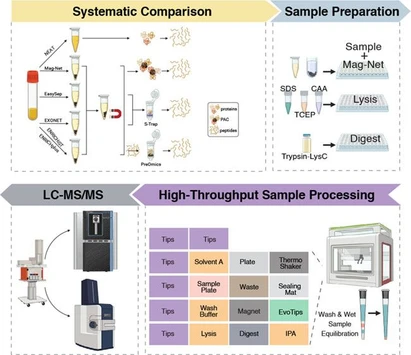
This study demonstrates automated Mag-Net enrichment for high-throughput LC–MS plasma proteomics, delivering up to 4500 proteins per sample at low cost and high reproducibility.
Benchmarking Lysosome Enrichment Methods: A Guide for Research and Clinical Translation
Scientific article | Science and research

Benchmarking Lysosome Enrichment Methods: A Guide for Research and Clinical Translation

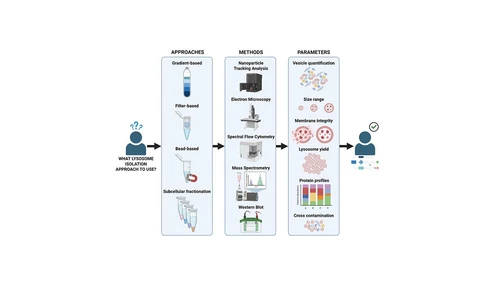
This study benchmarks four lysosome isolation techniques, highlighting trade-offs in enrichment, purity, scalability, and reproducibility.
Exploring Protein Purification Methods: Essential Techniques for Accurate Results
Article | Academy

Exploring Protein Purification Methods: Essential Techniques for Accurate Results

Explore the main protein purification methods, from precipitation and centrifugation to affinity and ion exchange chromatography, with Phenomenex solutions for reliable biomolecule separation.
Protein Purification by HPLC: Methods, Benefits, and Best Practices
Article | Academy

Protein Purification by HPLC: Methods, Benefits, and Best Practices

Discover how HPLC enables efficient protein purification for biopharmaceuticals, proteomics, and biotechnology. Learn about purification modes, key benefits, optimization strategies, and best practices.
 

Related articles

Automated Mag-Net Enrichment Unlocks Deep and Cost-Effective LC–MS Plasma Proteomics
Scientific article | Science and research

Automated Mag-Net Enrichment Unlocks Deep and Cost-Effective LC–MS Plasma Proteomics

This study demonstrates automated Mag-Net enrichment for high-throughput LC–MS plasma proteomics, delivering up to 4500 proteins per sample at low cost and high reproducibility.
Benchmarking Lysosome Enrichment Methods: A Guide for Research and Clinical Translation
Scientific article | Science and research

Benchmarking Lysosome Enrichment Methods: A Guide for Research and Clinical Translation

This study benchmarks four lysosome isolation techniques, highlighting trade-offs in enrichment, purity, scalability, and reproducibility.
Exploring Protein Purification Methods: Essential Techniques for Accurate Results
Article | Academy

Exploring Protein Purification Methods: Essential Techniques for Accurate Results

Explore the main protein purification methods, from precipitation and centrifugation to affinity and ion exchange chromatography, with Phenomenex solutions for reliable biomolecule separation.
Protein Purification by HPLC: Methods, Benefits, and Best Practices
Article | Academy

Protein Purification by HPLC: Methods, Benefits, and Best Practices

Discover how HPLC enables efficient protein purification for biopharmaceuticals, proteomics, and biotechnology. Learn about purification modes, key benefits, optimization strategies, and best practices.
 

Related articles

Automated Mag-Net Enrichment Unlocks Deep and Cost-Effective LC–MS Plasma Proteomics
Scientific article | Science and research

Automated Mag-Net Enrichment Unlocks Deep and Cost-Effective LC–MS Plasma Proteomics

This study demonstrates automated Mag-Net enrichment for high-throughput LC–MS plasma proteomics, delivering up to 4500 proteins per sample at low cost and high reproducibility.
Benchmarking Lysosome Enrichment Methods: A Guide for Research and Clinical Translation
Scientific article | Science and research

Benchmarking Lysosome Enrichment Methods: A Guide for Research and Clinical Translation

This study benchmarks four lysosome isolation techniques, highlighting trade-offs in enrichment, purity, scalability, and reproducibility.
Exploring Protein Purification Methods: Essential Techniques for Accurate Results
Article | Academy

Exploring Protein Purification Methods: Essential Techniques for Accurate Results

Explore the main protein purification methods, from precipitation and centrifugation to affinity and ion exchange chromatography, with Phenomenex solutions for reliable biomolecule separation.
Protein Purification by HPLC: Methods, Benefits, and Best Practices
Article | Academy

Protein Purification by HPLC: Methods, Benefits, and Best Practices

Discover how HPLC enables efficient protein purification for biopharmaceuticals, proteomics, and biotechnology. Learn about purification modes, key benefits, optimization strategies, and best practices.
 

Related articles

Automated Mag-Net Enrichment Unlocks Deep and Cost-Effective LC–MS Plasma Proteomics
Scientific article | Science and research

Automated Mag-Net Enrichment Unlocks Deep and Cost-Effective LC–MS Plasma Proteomics

This study demonstrates automated Mag-Net enrichment for high-throughput LC–MS plasma proteomics, delivering up to 4500 proteins per sample at low cost and high reproducibility.
Benchmarking Lysosome Enrichment Methods: A Guide for Research and Clinical Translation
Scientific article | Science and research

Benchmarking Lysosome Enrichment Methods: A Guide for Research and Clinical Translation

This study benchmarks four lysosome isolation techniques, highlighting trade-offs in enrichment, purity, scalability, and reproducibility.
Exploring Protein Purification Methods: Essential Techniques for Accurate Results
Article | Academy

Exploring Protein Purification Methods: Essential Techniques for Accurate Results

Explore the main protein purification methods, from precipitation and centrifugation to affinity and ion exchange chromatography, with Phenomenex solutions for reliable biomolecule separation.
Protein Purification by HPLC: Methods, Benefits, and Best Practices
Article | Academy

Protein Purification by HPLC: Methods, Benefits, and Best Practices

Discover how HPLC enables efficient protein purification for biopharmaceuticals, proteomics, and biotechnology. Learn about purification modes, key benefits, optimization strategies, and best practices.