Trimming a GC Column: Purpose, Symptoms, and Proper Technique

Th, 2.4.2026 | Original article from: Phenomenex
GC column trimming helps resolve contamination, ghost peaks, baseline instability, and peak tailing. Learn key symptoms and the correct technique for proper column cutting.
  • Photo: Phenomenex: Trimming a GC Column: Purpose, Symptoms, and Proper Technique
  • Video: Phenomenex: GC Column Trimming: Is It Really Necessary? | GC Tips

In this technical tip from Phenomenex, the topic of gas chromatography (GC) column trimming is addressed from a troubleshooting perspective. The key question explored is whether trimming a GC column is necessary and how it impacts chromatographic performance.

Why Trim a GC Column?

Column trimming is primarily used to restore chromatographic performance by removing damaged or contaminated sections, typically located at the column inlet.

1. Baseline Bleed, Noise, Ghost Peaks, Poor Peak Shape
  • Cause: Column contamination
  • Removing the contaminated stationary phase at the column entrance helps restore performance.
2. Elevated Baseline (Especially at High Temperature)
  • Cause: Column bleed
  • Degradation of the stationary phase due to oxygen exposure or thermal damage leads to increased baseline.
3. Ghost Peaks (Peaks Without Injection)
  • Cause: Residual sample or contamination
  • Compounds trapped at the beginning of the column can appear as peaks even when no sample is injected.
4. Peak Tailing (Asymmetrical Peaks)
  • Cause: Damaged or contaminated column sections
  • These issues result in adsorption effects or poor flow dynamics.
5. Retention Time Shifts
  • Cause: Contamination or damage near the inlet
  • Although trimming slightly changes retention time, it can correct shifts caused by inlet-side issues.
6. Baseline Noise and Spikes
  • Cause: Particulate matter or degraded stationary phase
  • These can lead to detector instability and random signal fluctuations.
7. Baseline Drift or Wander
  • Cause: Contamination or oxidized column sections
  • Removing these regions stabilizes the baseline.
8. Loss of Resolution or Sensitivity
  • Cause: General column degradation
  • Trimming removes the most exposed and damaged portions, effectively rejuvenating column performance.

How to Trim a GC Column

A capillary GC column consists of:

  • Polyimide outer coating (protective layer)
  • Fused silica tubing (fragile but flexible core)

Step-by-Step Procedure

1. Scoring the Column
  • Use a ceramic wafer
  • Hold it at an inclined angle
  • Score the polyimide coating perpendicular to the column
2. Breaking the Column
  • Perform a quick, decisive flick
  • This ensures a clean, square cut
3. Inspecting the Cut

After trimming, visually inspect the column end.

Examples of Column Cuts

Good Cut

  • Clean, square end
  • Ensures proper sealing and connection
Bad Cuts
  • Slight Irregularity
    • Small imperfection at the edge
    • Can cause leaks and active sites
  • Poor / Rough Cuts
    • Uneven or jagged edges
    • Lead to:
      • Poor connections
      • Active sites
      • Peak tailing

Conclusion

Trimming a GC column is a simple yet effective troubleshooting step. By removing contaminated or damaged sections—especially near the inlet—it can resolve a wide range of chromatographic issues, including baseline instability, ghost peaks, and loss of performance.

Proper cutting technique is essential to avoid introducing new problems such as leaks or active sites.


Phenomenex
LinkedIn Logo
 

Related articles

Gas Chromatography (GC) Column Installation - Injector Installation
Article | Academy

Gas Chromatography (GC) Column Installation - Injector Installation

Prepare your GC system: replace traps and seals, clean injector, inspect column, and install with correct positioning. Follow manual guidelines for optimal performance.
Phenomenex technical tip for Baseline problems - offset
Article | Academy

Phenomenex technical tip for Baseline problems - offset

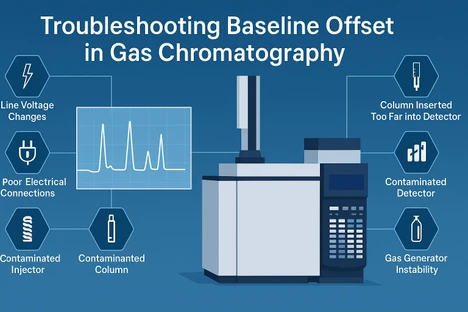
Learn how to fix baseline offset in gas chromatography. Identify causes like voltage changes, contamination, or gas flow issues and apply targeted maintenance for stable results.
News from LabRulezGCMS Library - Week 06, 2026
Article | Application

News from LabRulezGCMS Library - Week 06, 2026

This week we bring you technical note by Agilent Technologies and application notes by BaySpec, Metrohm and Shimadzu!
GC Columns - Troubleshooting & Maintenance
Article | Academy

GC Columns - Troubleshooting & Maintenance

A practical guide to GC column troubleshooting. Learn how to identify and resolve peak tailing, loss of resolution, ghost peaks, baseline drift, sensitivity issues, and retention time shifts.
 

Related articles

Gas Chromatography (GC) Column Installation - Injector Installation
Article | Academy

Gas Chromatography (GC) Column Installation - Injector Installation

Prepare your GC system: replace traps and seals, clean injector, inspect column, and install with correct positioning. Follow manual guidelines for optimal performance.
Phenomenex technical tip for Baseline problems - offset
Article | Academy

Phenomenex technical tip for Baseline problems - offset

Learn how to fix baseline offset in gas chromatography. Identify causes like voltage changes, contamination, or gas flow issues and apply targeted maintenance for stable results.
News from LabRulezGCMS Library - Week 06, 2026
Article | Application

News from LabRulezGCMS Library - Week 06, 2026

This week we bring you technical note by Agilent Technologies and application notes by BaySpec, Metrohm and Shimadzu!
GC Columns - Troubleshooting & Maintenance
Article | Academy

GC Columns - Troubleshooting & Maintenance

A practical guide to GC column troubleshooting. Learn how to identify and resolve peak tailing, loss of resolution, ghost peaks, baseline drift, sensitivity issues, and retention time shifts.
 

Related articles

Gas Chromatography (GC) Column Installation - Injector Installation
Article | Academy

Gas Chromatography (GC) Column Installation - Injector Installation

Prepare your GC system: replace traps and seals, clean injector, inspect column, and install with correct positioning. Follow manual guidelines for optimal performance.
Phenomenex technical tip for Baseline problems - offset
Article | Academy

Phenomenex technical tip for Baseline problems - offset

Learn how to fix baseline offset in gas chromatography. Identify causes like voltage changes, contamination, or gas flow issues and apply targeted maintenance for stable results.
News from LabRulezGCMS Library - Week 06, 2026
Article | Application

News from LabRulezGCMS Library - Week 06, 2026

This week we bring you technical note by Agilent Technologies and application notes by BaySpec, Metrohm and Shimadzu!
GC Columns - Troubleshooting & Maintenance
Article | Academy

GC Columns - Troubleshooting & Maintenance

A practical guide to GC column troubleshooting. Learn how to identify and resolve peak tailing, loss of resolution, ghost peaks, baseline drift, sensitivity issues, and retention time shifts.
 

Related articles

Gas Chromatography (GC) Column Installation - Injector Installation
Article | Academy

Gas Chromatography (GC) Column Installation - Injector Installation

Prepare your GC system: replace traps and seals, clean injector, inspect column, and install with correct positioning. Follow manual guidelines for optimal performance.
Phenomenex technical tip for Baseline problems - offset
Article | Academy

Phenomenex technical tip for Baseline problems - offset

Learn how to fix baseline offset in gas chromatography. Identify causes like voltage changes, contamination, or gas flow issues and apply targeted maintenance for stable results.
News from LabRulezGCMS Library - Week 06, 2026
Article | Application

News from LabRulezGCMS Library - Week 06, 2026

This week we bring you technical note by Agilent Technologies and application notes by BaySpec, Metrohm and Shimadzu!
GC Columns - Troubleshooting & Maintenance
Article | Academy

GC Columns - Troubleshooting & Maintenance

A practical guide to GC column troubleshooting. Learn how to identify and resolve peak tailing, loss of resolution, ghost peaks, baseline drift, sensitivity issues, and retention time shifts.