Determining biodiesel composition according to ISO 14103

Tu, 1.7.2025 | Original article from: DataApex
This whitepaper explains how to calculate the content of fatty acid methyl esters (FAME) and the linoleic acid methyl ester in biodiesel fuel according to ISO 14103 in Clarity.
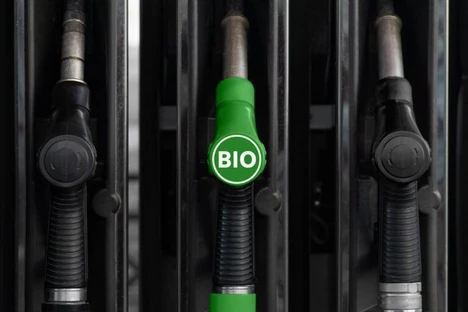
  • Photo: DataApex: Determining biodiesel composition according to ISO 14103
  • Video: DataApex: Clarity - What's new in 10.1

Calculation of biodiesel composition can be done directly in Clarity

This whitepaper explains how to calculate the content of fatty acid methyl esters (FAME) and the linoleic acid methyl ester in biodiesel fuel according to ISO 14103 in Clarity. As stated in the norm, the content of FAME in biodiesel is greater than 90 % (m/m), while the content of the linoleic acid methyl ester is between 1 % and 15 % (m/m). The methyl esters in FAME should be between C14 and C24.

Principle

The determination of the content of FAME employs internal calibration (ISTD – methyl heptadecanoate). The ester content in m/m percent is calculated as:

DataApex: Determining biodiesel composition according to ISO 14103.DataApex: Determining biodiesel composition according to ISO 14103.

where 𝐶 is the ester content, 𝐴 is the total peak area of the methyl esters from C14 to C24, 𝐴ISTD is the peak area of the ISTD compound, 𝐶ISTD is the concentration of ISTD (in mg/ml), 𝑉ISTD is the volume of ISTD (in ml), 𝑚ISTD is the mass of ISTD (in mg), and 𝑚 is the mass of the sample (including ISTD mass; in mg).

The linoleic acid methyl ester content in m/m percent is given as:

DataApex: Determining biodiesel composition according to ISO 14103.DataApex: Determining biodiesel composition according to ISO 14103.

where 𝐿 is the linoleic acid methyl ester content, ∑𝐴 is the total peak area of the methyl esters from C14 to C24, 𝐴ISTD is the peak area of ISTD, and 𝐴𝐿 is the peak area corresponding to the linoleic acid methyl ester.

Preparing chromatogram and calibration

After measuring your sample, open your chromatogram in Clarity. Group the FAME peaks using the Peak Groups… function (menu Chromatogram – Peak). In the Groups dialog, set an ID, click Add, and select the corresponding peaks. In the example chromatogram (download link below), Group A (FAME) does not contain the ISTD peak – this simplifies the subsequent calculations.

Create a new calibration and open the sample chromatogram as a standard. In the Calibration Options, change the Display Mode to ISTD and Mode to Recalibrate. Use the Add Peak function to add the ISTD (methyl heptadecanoate) peak and linoleic acid peak to the calibration. In the Amount column, write the known ISTD amount. To add the group of FAME peaks, use the Add Group function. Then, on the linoleic acid and FAME compound tabs, set the Calculate By option to the ISTD compound name. Save the calibration and link it to the sample chromatogram. To improve clarity, in the Common for All Signals pane, select the All Identified Peaks option in the Report in Result Table section.

Procedure for calculation of FAME content

The desired results can be calculated directly in Clarity using the User Columns: right click anywhere in the Result Table pane in the Results tab of the Chromatogram window and select User Columns – Add… in the context menu. In the Add User Column dialog, fill in the Title and Units (e.g. FAME in %) and uncheck the Calculate Total checkbox. The following expression can be used to calculate the FAME content, if the ISTD peak was not included in the FAME peak group:

([FAME$Area] / [ISTD$Area]) * ([ISTD1 Amount] / ([Sample Amount] + [ISTD1 Amount]))*100

If the ISTD peak was included in the FAME peak group, its area must be subtracted from the area of the FAME group:

(([FAME$Area] - [ISTD$Area]) / [ISTD$Area]) * ([ISTD1 Amount] / ([Sample Amount] + [ISTD1 Amount]))*100

Procedure for calculation of the linoleic acid methyl ester content

Calculation of linoleic acid methyl ester content is analogous to calculation of the FAME content. Add another user column, fil in the Title and Units (e.g., Linoleic Acid in %) and uncheck the Calculate Total checkbox. If the ISTD peak was not included in the FAME peak group, the following expression can be used:

[Linoleic acid$Area] / [FAME$Area]*100

Analogously, if the ISTD peak was included in the FAME group, it must be subtracted:

[Linoleic acid$Area] / ([FAME$Area] - [ISTD$Area])*100

Example of an evaluated chromatogram

Sample data for Clarity

DataApex
LinkedIn Logo
 

Related articles

Untargeted metabolomics study of mature human milk from women with and without gestational diabetes mellitus
Article | Scientific article

Untargeted metabolomics study of mature human milk from women with and without gestational diabetes mellitus

In the study published in the Food Chemistry journal, researchers investigated the impact of gestational diabetes mellitus (GDM) on the metabolite profile of mature human milk (MHM) using GC–MS and LC-MS.
Automating Biodiesel Quality Testing With Gas Chromatography (GC)
Article | Product

Automating Biodiesel Quality Testing With Gas Chromatography (GC)

The usage of biofuels has been expanding quickly, as businesses and industries throughout the world invest in the technology to lower their carbon footprint and meet renewable energy targets.
KOH-Promoted Catalyst Derived from Coffee Husk and Eggshell Composite for Biodiesel Production from Waste Frying Oil
Scientific article | Science and research

KOH-Promoted Catalyst Derived from Coffee Husk and Eggshell Composite for Biodiesel Production from Waste Frying Oil

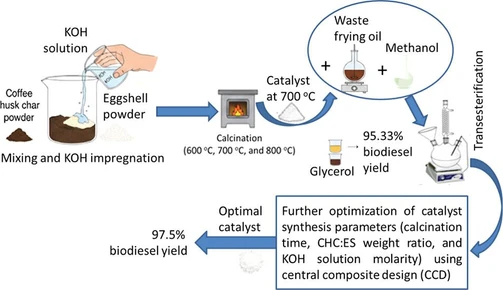
This study develops a waste-derived heterogeneous catalyst from coffee husk and eggshell for biodiesel production from waste frying oil, achieving yields up to 97.5%.
News from LabRulezGCMS Library - Week 26, 2026
Article | Application

News from LabRulezGCMS Library - Week 26, 2026

This week we bring you brochure by Agilent Technologies, application note by Shimadzu and posters by MDCW / William & Mary and Waters Corporation / ASMS!
 

Related articles

Untargeted metabolomics study of mature human milk from women with and without gestational diabetes mellitus
Article | Scientific article

Untargeted metabolomics study of mature human milk from women with and without gestational diabetes mellitus

In the study published in the Food Chemistry journal, researchers investigated the impact of gestational diabetes mellitus (GDM) on the metabolite profile of mature human milk (MHM) using GC–MS and LC-MS.
Automating Biodiesel Quality Testing With Gas Chromatography (GC)
Article | Product

Automating Biodiesel Quality Testing With Gas Chromatography (GC)

The usage of biofuels has been expanding quickly, as businesses and industries throughout the world invest in the technology to lower their carbon footprint and meet renewable energy targets.
KOH-Promoted Catalyst Derived from Coffee Husk and Eggshell Composite for Biodiesel Production from Waste Frying Oil
Scientific article | Science and research

KOH-Promoted Catalyst Derived from Coffee Husk and Eggshell Composite for Biodiesel Production from Waste Frying Oil

This study develops a waste-derived heterogeneous catalyst from coffee husk and eggshell for biodiesel production from waste frying oil, achieving yields up to 97.5%.
News from LabRulezGCMS Library - Week 26, 2026
Article | Application

News from LabRulezGCMS Library - Week 26, 2026

This week we bring you brochure by Agilent Technologies, application note by Shimadzu and posters by MDCW / William & Mary and Waters Corporation / ASMS!
 

Related articles

Untargeted metabolomics study of mature human milk from women with and without gestational diabetes mellitus
Article | Scientific article

Untargeted metabolomics study of mature human milk from women with and without gestational diabetes mellitus

In the study published in the Food Chemistry journal, researchers investigated the impact of gestational diabetes mellitus (GDM) on the metabolite profile of mature human milk (MHM) using GC–MS and LC-MS.
Automating Biodiesel Quality Testing With Gas Chromatography (GC)
Article | Product

Automating Biodiesel Quality Testing With Gas Chromatography (GC)

The usage of biofuels has been expanding quickly, as businesses and industries throughout the world invest in the technology to lower their carbon footprint and meet renewable energy targets.
KOH-Promoted Catalyst Derived from Coffee Husk and Eggshell Composite for Biodiesel Production from Waste Frying Oil
Scientific article | Science and research

KOH-Promoted Catalyst Derived from Coffee Husk and Eggshell Composite for Biodiesel Production from Waste Frying Oil

This study develops a waste-derived heterogeneous catalyst from coffee husk and eggshell for biodiesel production from waste frying oil, achieving yields up to 97.5%.
News from LabRulezGCMS Library - Week 26, 2026
Article | Application

News from LabRulezGCMS Library - Week 26, 2026

This week we bring you brochure by Agilent Technologies, application note by Shimadzu and posters by MDCW / William & Mary and Waters Corporation / ASMS!
 

Related articles

Untargeted metabolomics study of mature human milk from women with and without gestational diabetes mellitus
Article | Scientific article

Untargeted metabolomics study of mature human milk from women with and without gestational diabetes mellitus

In the study published in the Food Chemistry journal, researchers investigated the impact of gestational diabetes mellitus (GDM) on the metabolite profile of mature human milk (MHM) using GC–MS and LC-MS.
Automating Biodiesel Quality Testing With Gas Chromatography (GC)
Article | Product

Automating Biodiesel Quality Testing With Gas Chromatography (GC)

The usage of biofuels has been expanding quickly, as businesses and industries throughout the world invest in the technology to lower their carbon footprint and meet renewable energy targets.
KOH-Promoted Catalyst Derived from Coffee Husk and Eggshell Composite for Biodiesel Production from Waste Frying Oil
Scientific article | Science and research

KOH-Promoted Catalyst Derived from Coffee Husk and Eggshell Composite for Biodiesel Production from Waste Frying Oil

This study develops a waste-derived heterogeneous catalyst from coffee husk and eggshell for biodiesel production from waste frying oil, achieving yields up to 97.5%.
News from LabRulezGCMS Library - Week 26, 2026
Article | Application

News from LabRulezGCMS Library - Week 26, 2026

This week we bring you brochure by Agilent Technologies, application note by Shimadzu and posters by MDCW / William & Mary and Waters Corporation / ASMS!