Gas Chromatography (GC) Column Conditioning, Testing and Checks
We, 25.6.2025 | Original article from: Phenomenex
Gas Chromatography (GC) Column Conditioning, Testing and Checks
<p><strong>Phenomenex:</strong> Gas Chromatography (GC) Column Conditioning, Testing and Checks</p>

Phenomenex: Gas Chromatography (GC) Column Conditioning, Testing and Checks

In this technical tip we are pleased to bring you some valuable guidelines for Gas Chromatography (GC) related to installation, from column conditioning to installation testing and through leak checks. Ensuring proper column installation and performance is crucial for accurate and reliable analysis. Let's dive into some important good practices:

Column Conditioning

  • Allow sufficient time for the carrier gas to flow through the column to purge any oxygen that may be in the system.
  • Raise the temperature of the column to the maximum isothermal operating temperature that is listed on your individual GC Column Test Report. Maintain this temperature until a constant baseline is achieved. Conditioning times will depend on the phase identity and thickness, with thicker films taking longer to stabilize. In order to minimize the downtime of the instrument, columns can be conditioned overnight at the maximum isothermal temperature.

Installation Testing

  • Inject a detectable unretained sample, such as methane for an FID, to determine dead volume time and linear gas velocity at the desired column temperature. Adjust gas pressure for optimal flow depending on carrier gas selection.
  • The non-retained peak must have ideal peak shape or installation is faulty and needs to be redone.

Checking for Leaks

  • Use a thermocouple-thermometer to check for leaks. It is highly sensitive to H2, He, and N2 and will not contaminate the instrument or column. Liquid leak indicators are not recommended for capillary columns. There is the risk of drawing the liquid into the column or fittings and contaminating the system.
  • Any carrier gas that is leaking from the column will alter the conductivity across the thermocouple. As such, just watch for fluctuations within the temperature reading, which would indicate a possible leak near the location of the thermocouple. This prevents any contact and possible contamination of the column.

Note: If Vespel® ferrules are being used, leakage can occur after the initial heating phase due to ferrule deformation. Be sure that the fitting is re-tightened after this initial heating phase, then carefully check all corrections for leaks.

Remember, following these practices will contribute to the optimal performance and longevity of your GC columns, reducing downtime due to system maintenance.


Phenomenex
LinkedIn Logo
 

Related articles

7 Steps to changing carrier gas from Helium to Hydrogen
Article | Product

7 Steps to changing carrier gas from Helium to Hydrogen

Going through the 7 steps Dr Ed Connor will give an explanation of how easy it is to switch gases and what considerations and actions are required to do so.
GC Technical Tip: Retention Times Prolonged or Shortened
Article | Academy

GC Technical Tip: Retention Times Prolonged or Shortened

Learn how to diagnose and fix retention time shifts in GC. This guide explains common column performance issues, their causes, and practical remedies for consistent chromatographic results.
Single-Ended HPLC Column by SIELC
Article | Product

Single-Ended HPLC Column by SIELC

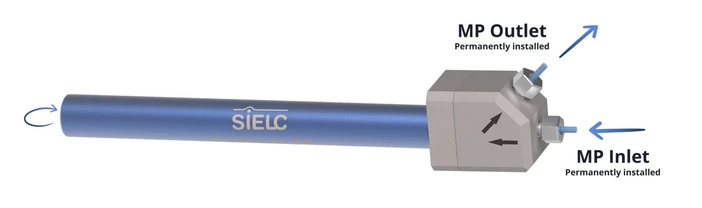
SIELC introduces a single-ended HPLC column that eliminates fittings, dead volume, and leaks. Discover a new connection standard that simplifies installation, improves reliability, and streamlines LC workflows.
GC Columns - Troubleshooting & Maintenance
Article | Academy

GC Columns - Troubleshooting & Maintenance

A practical guide to GC column troubleshooting. Learn how to identify and resolve peak tailing, loss of resolution, ghost peaks, baseline drift, sensitivity issues, and retention time shifts.
 

Related articles

7 Steps to changing carrier gas from Helium to Hydrogen
Article | Product

7 Steps to changing carrier gas from Helium to Hydrogen

Going through the 7 steps Dr Ed Connor will give an explanation of how easy it is to switch gases and what considerations and actions are required to do so.
GC Technical Tip: Retention Times Prolonged or Shortened
Article | Academy

GC Technical Tip: Retention Times Prolonged or Shortened

Learn how to diagnose and fix retention time shifts in GC. This guide explains common column performance issues, their causes, and practical remedies for consistent chromatographic results.
Single-Ended HPLC Column by SIELC
Article | Product

Single-Ended HPLC Column by SIELC

SIELC introduces a single-ended HPLC column that eliminates fittings, dead volume, and leaks. Discover a new connection standard that simplifies installation, improves reliability, and streamlines LC workflows.
GC Columns - Troubleshooting & Maintenance
Article | Academy

GC Columns - Troubleshooting & Maintenance

A practical guide to GC column troubleshooting. Learn how to identify and resolve peak tailing, loss of resolution, ghost peaks, baseline drift, sensitivity issues, and retention time shifts.
 

Related articles

7 Steps to changing carrier gas from Helium to Hydrogen
Article | Product

7 Steps to changing carrier gas from Helium to Hydrogen

Going through the 7 steps Dr Ed Connor will give an explanation of how easy it is to switch gases and what considerations and actions are required to do so.
GC Technical Tip: Retention Times Prolonged or Shortened
Article | Academy

GC Technical Tip: Retention Times Prolonged or Shortened

Learn how to diagnose and fix retention time shifts in GC. This guide explains common column performance issues, their causes, and practical remedies for consistent chromatographic results.
Single-Ended HPLC Column by SIELC
Article | Product

Single-Ended HPLC Column by SIELC

SIELC introduces a single-ended HPLC column that eliminates fittings, dead volume, and leaks. Discover a new connection standard that simplifies installation, improves reliability, and streamlines LC workflows.
GC Columns - Troubleshooting & Maintenance
Article | Academy

GC Columns - Troubleshooting & Maintenance

A practical guide to GC column troubleshooting. Learn how to identify and resolve peak tailing, loss of resolution, ghost peaks, baseline drift, sensitivity issues, and retention time shifts.
 

Related articles

7 Steps to changing carrier gas from Helium to Hydrogen
Article | Product

7 Steps to changing carrier gas from Helium to Hydrogen

Going through the 7 steps Dr Ed Connor will give an explanation of how easy it is to switch gases and what considerations and actions are required to do so.
GC Technical Tip: Retention Times Prolonged or Shortened
Article | Academy

GC Technical Tip: Retention Times Prolonged or Shortened

Learn how to diagnose and fix retention time shifts in GC. This guide explains common column performance issues, their causes, and practical remedies for consistent chromatographic results.
Single-Ended HPLC Column by SIELC
Article | Product

Single-Ended HPLC Column by SIELC

SIELC introduces a single-ended HPLC column that eliminates fittings, dead volume, and leaks. Discover a new connection standard that simplifies installation, improves reliability, and streamlines LC workflows.
GC Columns - Troubleshooting & Maintenance
Article | Academy

GC Columns - Troubleshooting & Maintenance

A practical guide to GC column troubleshooting. Learn how to identify and resolve peak tailing, loss of resolution, ghost peaks, baseline drift, sensitivity issues, and retention time shifts.