UTA chemist developing method to recycle more plastics

With standard recycling, most plastics still end up in landfills.
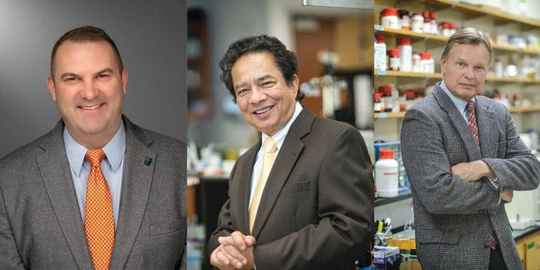
  • Photo: The University of Texas at Arlington: UTA chemist developing method to recycle more plastics - Kevin Schug, the Shimadzu Distinguished Professor of Analytical Chemistry at The University of Texas at Arlington
  • Video: The College Tour: The University of Texas at Arlington - Full Episode | The College Tour

Despite consumer efforts to sort and separate recyclables, most plastic bottles still end up in the landfill. Standard recycling methods to sort, shred and remake plastics are limited to just type-1 and type-2 plastics—basically only soda bottles, water bottles and milk jugs.

The University of Texas at Arlington: UTA chemist developing method to recycle more plastics - Kevin Schug, the Shimadzu Distinguished Professor of Analytical Chemistry at The University of Texas at Arlington.The University of Texas at Arlington: UTA chemist developing method to recycle more plastics - Kevin Schug, the Shimadzu Distinguished Professor of Analytical Chemistry at The University of Texas at Arlington.

Global plastic production has increased from 2 million tons in 1950 to 360 million tons in 2018, and about 50% of that plastic becomes trash after a single use. By 2050, it’s predicted that 12 billion tons of plastic waste will be in the environment and landfills.

To improve recycling rates, Kevin Schug, the Shimadzu Distinguished Professor of Analytical Chemistry at The University of Texas at Arlington, is working on new ways to separate and recycle mixed plastics. He and a team of graduate and undergraduate researchers at UTA collaborated on a new peer-reviewed study published in April in Journal of Chromatography A.

“A prominent means of chemical recycling is called pyrolysis,” Schug said. “During pyrolysis, plastics are heated in an oxygen-free environment until they decompose into pyrolysis oils. These oils have much of the same characteristics as crude oil, with a few exceptions. Importantly, they can be further refined into fuels and, even better, turned into chemical feedstocks to make new plastics.”

Unlike traditional plastic recycling that requires sorting and shredding before the material can be recycled, pyrolysis is not limited to specific plastic types. It can accommodate them all.

However, the pyrolysis of mixed plastic waste does create some complex mixtures that manufacturers must examine closely. Contaminants such as sulfur and nitrogen can create chemical compounds that can hurt downstream processing strategies.

“Pyrolysis has become quite a big deal. Many companies are ramping up large chemical recycling operations,” Schug said. “Still, the characterization of the pyrolysis oils requires the development of new analytical methods, such as the one we describe in our new peer-reviewed research.”

With the support of Jean-Francois Borny from Lummus Technologies LLC, a Houston-based chemical company, Schug and his colleagues at UTA - graduate students Alexander Kaplitz and Niray Bhakta and undergraduate researchers Shane Marshall and Sadid Morshed - created a new supercritical fluid chromatography method that can separate the pyrolysis oils. The researchers found they could clearly differentiate oils created from polyethylene versus polypropylene feedstocks.

“This is just the beginning, but we’re very excited at the potential of this technique to differentiate oils produced from many different plastics and mixtures,” Schug said. “Finding a way to better recycle these plastics will help us reduce our reliance on new fossil fuels and, hopefully, do our part to stop contributing to climate change.”


The University of Texas at Arlington
LinkedIn Logo
 

Related articles

TRIO OF UTA CHEMISTS RECOGNIZED AS LEADING LIGHTS
Article | Scientists

TRIO OF UTA CHEMISTS RECOGNIZED AS LEADING LIGHTS

Three chemists from The University of Texas at Arlington are among the most influential analytical scientists in the world, as selected by a top publication.
UTA RESEARCH TAGGED AS “HOT ARTICLE” IN GREEN CHEMISTRY JOURNAL
Article | Scientific article

UTA RESEARCH TAGGED AS “HOT ARTICLE” IN GREEN CHEMISTRY JOURNAL

Chromatography made more environmentally friendly through use of carbonated water.
That some plastic ends up in incinerators? Fine with me.
Article | Scientists

That some plastic ends up in incinerators? Fine with me.

An interview with Professor Jan Merna, head of UCT Prague’s Department of Polymers. Merna also discusses trends in polymer research, new approaches to 3D printing, and .biodegradable polymers.
UTA chemist acclaimed as up-and-coming scientist
Article | Scientists

UTA chemist acclaimed as up-and-coming scientist

Kevin Schug wins Chromatography Society 2024 Silver Jubilee Medal.
 

Related articles

TRIO OF UTA CHEMISTS RECOGNIZED AS LEADING LIGHTS
Article | Scientists

TRIO OF UTA CHEMISTS RECOGNIZED AS LEADING LIGHTS

Three chemists from The University of Texas at Arlington are among the most influential analytical scientists in the world, as selected by a top publication.
UTA RESEARCH TAGGED AS “HOT ARTICLE” IN GREEN CHEMISTRY JOURNAL
Article | Scientific article

UTA RESEARCH TAGGED AS “HOT ARTICLE” IN GREEN CHEMISTRY JOURNAL

Chromatography made more environmentally friendly through use of carbonated water.
That some plastic ends up in incinerators? Fine with me.
Article | Scientists

That some plastic ends up in incinerators? Fine with me.

An interview with Professor Jan Merna, head of UCT Prague’s Department of Polymers. Merna also discusses trends in polymer research, new approaches to 3D printing, and .biodegradable polymers.
UTA chemist acclaimed as up-and-coming scientist
Article | Scientists

UTA chemist acclaimed as up-and-coming scientist

Kevin Schug wins Chromatography Society 2024 Silver Jubilee Medal.
 

Related articles

TRIO OF UTA CHEMISTS RECOGNIZED AS LEADING LIGHTS
Article | Scientists

TRIO OF UTA CHEMISTS RECOGNIZED AS LEADING LIGHTS

Three chemists from The University of Texas at Arlington are among the most influential analytical scientists in the world, as selected by a top publication.
UTA RESEARCH TAGGED AS “HOT ARTICLE” IN GREEN CHEMISTRY JOURNAL
Article | Scientific article

UTA RESEARCH TAGGED AS “HOT ARTICLE” IN GREEN CHEMISTRY JOURNAL

Chromatography made more environmentally friendly through use of carbonated water.
That some plastic ends up in incinerators? Fine with me.
Article | Scientists

That some plastic ends up in incinerators? Fine with me.

An interview with Professor Jan Merna, head of UCT Prague’s Department of Polymers. Merna also discusses trends in polymer research, new approaches to 3D printing, and .biodegradable polymers.
UTA chemist acclaimed as up-and-coming scientist
Article | Scientists

UTA chemist acclaimed as up-and-coming scientist

Kevin Schug wins Chromatography Society 2024 Silver Jubilee Medal.
 

Related articles

TRIO OF UTA CHEMISTS RECOGNIZED AS LEADING LIGHTS
Article | Scientists

TRIO OF UTA CHEMISTS RECOGNIZED AS LEADING LIGHTS

Three chemists from The University of Texas at Arlington are among the most influential analytical scientists in the world, as selected by a top publication.
UTA RESEARCH TAGGED AS “HOT ARTICLE” IN GREEN CHEMISTRY JOURNAL
Article | Scientific article

UTA RESEARCH TAGGED AS “HOT ARTICLE” IN GREEN CHEMISTRY JOURNAL

Chromatography made more environmentally friendly through use of carbonated water.
That some plastic ends up in incinerators? Fine with me.
Article | Scientists

That some plastic ends up in incinerators? Fine with me.

An interview with Professor Jan Merna, head of UCT Prague’s Department of Polymers. Merna also discusses trends in polymer research, new approaches to 3D printing, and .biodegradable polymers.
UTA chemist acclaimed as up-and-coming scientist
Article | Scientists

UTA chemist acclaimed as up-and-coming scientist

Kevin Schug wins Chromatography Society 2024 Silver Jubilee Medal.