Study reveals soil's role in air pollution and human health hazard

We, 24.4.2024 | Original article from: RECETOX
A new study recently published by an international team of scientists has uncovered a significant yet previously overlooked environmental concern.
  • Photo: RECETOX: Study reveals soil's role in air pollution and human health hazard.
  • Video: RECETOX: 40 years on a path toward a healthy future

A new study recently published by an international team of scientists has uncovered a significant yet previously overlooked environmental concern. It revealed that soils, particularly in populated and industrialized areas, are not just passive repositories for polycyclic aromatic compounds (PACs) but active contributors to air pollution and its transport to remote locations. This phenomenon contributes to the deterioration of air quality and enhances its adverse effects on human health and the ecosystem in both populated and remote locations.

RECETOX: Study reveals soil's role in air pollution and human health hazardRECETOX: Study reveals soil's role in air pollution and human health hazard

PACs (PAHs, oxygenated-PAHs, and nitrated-PAHs) are widely distributed toxic air pollutants that are products of combustion processes ubiquitous in human and industrial activities. These air pollutants are eventually deposited and stored in soils. Mostly in summer, they volatilize from the soils and re-evaporate into the air. That way, the direction of air-soil mass exchange is reversed, soils become secondary sources of these pollutants in the air, and the pollutants are transported further away from their source region to previously unpolluted remote locations.

Gerhard Lammel from RECETOX Centre emphasizes the importance of these findings: “Such re-emissions might add significantly to the concentrations of PACs in ambient air of source areas, albeit this contribution is not yet quantifiable. Despite European efforts to reduce PAH emissions over recent decades, this study indicates that emission inventories may overlook one type of emissions i.e., secondary emissions.”

Furthermore, the research highlights the 'grasshopper effect,' where these toxic compounds can travel long distances from their source areas, extending their hazardous impacts on the environment and human health.

For more information, please contact prof. Dr. Gerhard Lammel.

The research was supported by the Czech Science Foundation (20-07117S); the Max Planck Society; Research Infrastructure ACTRIS-CZ (No. LM2023030) and RECETOX (No. LM2023069) financed by the Ministry of Education, Youth and Sports, and the OP RDE (the CETOCOEN EXCELLENCE project No. CZ.02.1.01/0.0/0.0/17_043/0009632).

Link to published article.

RECETOX - Centrum pro výzkum toxických látek v prostředí
LinkedIn Logo
 

Related articles

A new project in the EMSO Physical Access programme tackles marine persistent pollutants
Article | Water

A new project in the EMSO Physical Access programme tackles marine persistent pollutants

The research analyzes the presence, seasonal variations, and air-sea exchange of a wide range of POPs, such as PFAS, DDT, PCBs, and others using passive sampling.
People understand that air pollution needs to be addressed, but they often don’t realize that the problem affects them as well
Article | Science and research

People understand that air pollution needs to be addressed, but they often don’t realize that the problem affects them as well

Ondřej Mikeš works at the RECETOX center as an environmental epidemiologist in the Human Exposure and Risk Assessment group, focusing on external exposures in epidemiological research.
Development of GC-ITQ-MS chromatographic system for the identification of hydroxy derivatives of polycyclic aromatic hydrocarbons in wastewater
Scientific article | Science and research

Development of GC-ITQ-MS chromatographic system for the identification of hydroxy derivatives of polycyclic aromatic hydrocarbons in wastewater

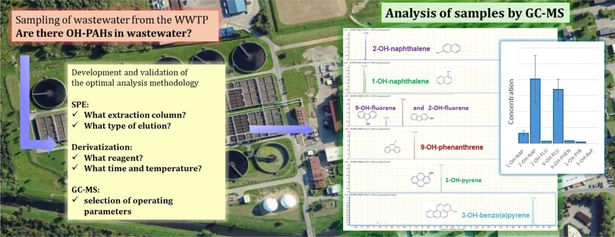
This study developed and validated a GC-ITQ-MS method for detecting OH-PAHs in wastewater, focusing on sample prep optimization and pollutant stability in real samples.
Long-Term Air Monitoring Shows Pesticides Aren’t Gone—They’re Coming Back
Article | Science and research

Long-Term Air Monitoring Shows Pesticides Aren’t Gone—They’re Coming Back

A decade-long study from the Czech National Atmospheric Observatory shows that banned pesticides persist in the air decades later, driven by soil re-emission and slow environmental degradation.
 

Related articles

A new project in the EMSO Physical Access programme tackles marine persistent pollutants
Article | Water

A new project in the EMSO Physical Access programme tackles marine persistent pollutants

The research analyzes the presence, seasonal variations, and air-sea exchange of a wide range of POPs, such as PFAS, DDT, PCBs, and others using passive sampling.
People understand that air pollution needs to be addressed, but they often don’t realize that the problem affects them as well
Article | Science and research

People understand that air pollution needs to be addressed, but they often don’t realize that the problem affects them as well

Ondřej Mikeš works at the RECETOX center as an environmental epidemiologist in the Human Exposure and Risk Assessment group, focusing on external exposures in epidemiological research.
Development of GC-ITQ-MS chromatographic system for the identification of hydroxy derivatives of polycyclic aromatic hydrocarbons in wastewater
Scientific article | Science and research

Development of GC-ITQ-MS chromatographic system for the identification of hydroxy derivatives of polycyclic aromatic hydrocarbons in wastewater

This study developed and validated a GC-ITQ-MS method for detecting OH-PAHs in wastewater, focusing on sample prep optimization and pollutant stability in real samples.
Long-Term Air Monitoring Shows Pesticides Aren’t Gone—They’re Coming Back
Article | Science and research

Long-Term Air Monitoring Shows Pesticides Aren’t Gone—They’re Coming Back

A decade-long study from the Czech National Atmospheric Observatory shows that banned pesticides persist in the air decades later, driven by soil re-emission and slow environmental degradation.
 

Related articles

A new project in the EMSO Physical Access programme tackles marine persistent pollutants
Article | Water

A new project in the EMSO Physical Access programme tackles marine persistent pollutants

The research analyzes the presence, seasonal variations, and air-sea exchange of a wide range of POPs, such as PFAS, DDT, PCBs, and others using passive sampling.
People understand that air pollution needs to be addressed, but they often don’t realize that the problem affects them as well
Article | Science and research

People understand that air pollution needs to be addressed, but they often don’t realize that the problem affects them as well

Ondřej Mikeš works at the RECETOX center as an environmental epidemiologist in the Human Exposure and Risk Assessment group, focusing on external exposures in epidemiological research.
Development of GC-ITQ-MS chromatographic system for the identification of hydroxy derivatives of polycyclic aromatic hydrocarbons in wastewater
Scientific article | Science and research

Development of GC-ITQ-MS chromatographic system for the identification of hydroxy derivatives of polycyclic aromatic hydrocarbons in wastewater

This study developed and validated a GC-ITQ-MS method for detecting OH-PAHs in wastewater, focusing on sample prep optimization and pollutant stability in real samples.
Long-Term Air Monitoring Shows Pesticides Aren’t Gone—They’re Coming Back
Article | Science and research

Long-Term Air Monitoring Shows Pesticides Aren’t Gone—They’re Coming Back

A decade-long study from the Czech National Atmospheric Observatory shows that banned pesticides persist in the air decades later, driven by soil re-emission and slow environmental degradation.
 

Related articles

A new project in the EMSO Physical Access programme tackles marine persistent pollutants
Article | Water

A new project in the EMSO Physical Access programme tackles marine persistent pollutants

The research analyzes the presence, seasonal variations, and air-sea exchange of a wide range of POPs, such as PFAS, DDT, PCBs, and others using passive sampling.
People understand that air pollution needs to be addressed, but they often don’t realize that the problem affects them as well
Article | Science and research

People understand that air pollution needs to be addressed, but they often don’t realize that the problem affects them as well

Ondřej Mikeš works at the RECETOX center as an environmental epidemiologist in the Human Exposure and Risk Assessment group, focusing on external exposures in epidemiological research.
Development of GC-ITQ-MS chromatographic system for the identification of hydroxy derivatives of polycyclic aromatic hydrocarbons in wastewater
Scientific article | Science and research

Development of GC-ITQ-MS chromatographic system for the identification of hydroxy derivatives of polycyclic aromatic hydrocarbons in wastewater

This study developed and validated a GC-ITQ-MS method for detecting OH-PAHs in wastewater, focusing on sample prep optimization and pollutant stability in real samples.
Long-Term Air Monitoring Shows Pesticides Aren’t Gone—They’re Coming Back
Article | Science and research

Long-Term Air Monitoring Shows Pesticides Aren’t Gone—They’re Coming Back

A decade-long study from the Czech National Atmospheric Observatory shows that banned pesticides persist in the air decades later, driven by soil re-emission and slow environmental degradation.