Zaměření
Type of News
Focus

Article | Science and research
Beads with a nanofiber core. This is a better way to purify water.
The HYMNA project combines MBR and MBBR technologies with nanofiber biomass carriers to improve ammonia nitrogen removal and enable modular wastewater treatment.

Article | Product
Trace Metal Analysis in High Salt Matrices by ICP-MS
High-salt samples no longer have to limit ICP-MS performance. Discover how the iCAP MSX delivers accurate trace element analysis in seawater and industrial brines with less maintenance and higher productivity.
Scientific article | Science and research
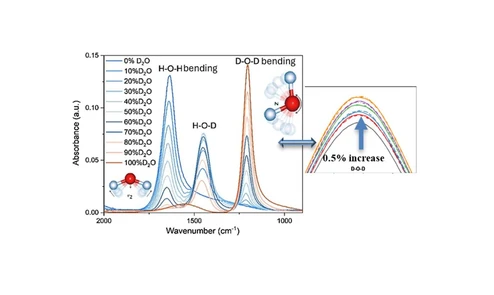
Rapid Identification of Hydrogen Isotopes in Water Mixtures by FTIR Spectroscopy
A rapid FTIR method was developed to measure hydrogen isotope ratios in water. Using molecular bending vibrations, it achieved ~0.5% sensitivity and ~1% deviation, proving reliable for H2O/D2O mixtures.
Scientific article | Science and research
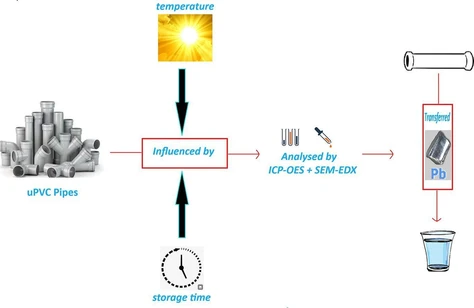
Evaluating lead leaching from uPVC pipes into drinking water: Characterization with SEM-EDX and ICP-OES
Assess lead leaching from locally sourced uPVC pipes into drinking water under varying temperature and time, using ICP-OES for quantification and SEM-EDX for surface mapping of lead.
Article | Laboratories
EnviroMail™ 20/Europe: Sampling and Sampling Containers as the Foundation for Reliable Water Analyses
Proper sampling and the use of suitable containers are key pre-lab steps that greatly impact the accuracy of environmental analyses and the reliability of final reported results.
Article | Academy
EnviroMail™23/Europe: Global Best Practices for High Quality Analysis of Waters for Trace Metals & Mercury
This EnviroMail outlines key practices for collecting water samples for trace metals and mercury analysis to improve data quality and sampling efficiency, reducing false results.

Article | Water
A new project in the EMSO Physical Access programme tackles marine persistent pollutants
The research analyzes the presence, seasonal variations, and air-sea exchange of a wide range of POPs, such as PFAS, DDT, PCBs, and others using passive sampling.
Article | Water
Biden-Harris Administration Finalizes First-Ever National Drinking Water Standard to Protect 100M People from PFAS Pollution
As part of the Administration’s commitment to combating PFAS pollution, EPA announces $1B investment through President Biden’s Investing in America agenda to address PFAS in drinking water

Article | Water
Hydrochemist Martin Pivokonský on how to improve water and wastewater treatment
Water has been a constant companion of Martin Pivokonský from the Institute of Hydrodynamics of the CAS all his professional life. Is there anything new left to be learned about water?