Pá, 27.11.2026 10:00 CET
Seznamte se s analýzou PFAS s ultrakrátkým řetězcem metodou GC-MS/MS, postupem AnyMatrix a automatizovanou přípravou vzorků a derivatizací, která omezuje spotřebu rozpouštědel.Přejít na webinář
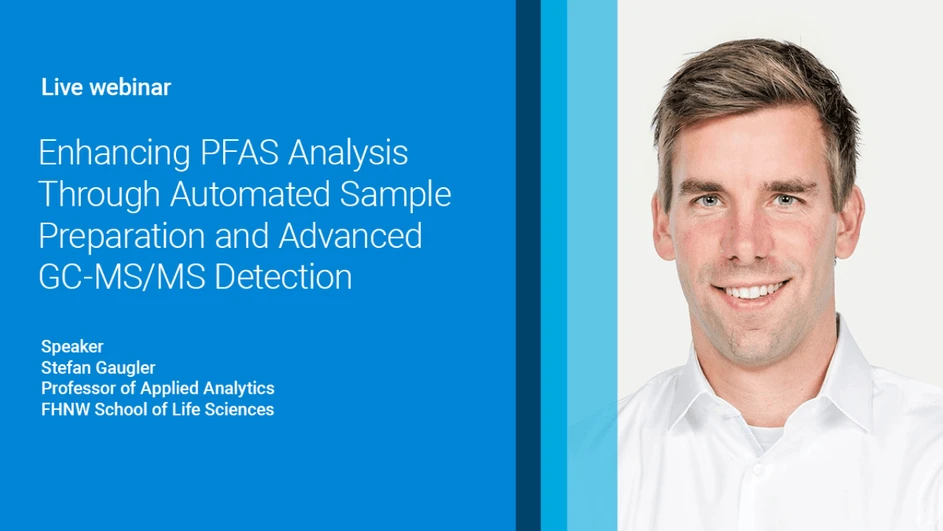
As regulatory attention on PFAS continues to grow, laboratories are facing increasing challenges in the accurate determination of ultra short-chain PFAS compounds. This session will present innovative analytical approaches for the robust and highly automated determination of these emerging contaminants, highlighting the strengths of GC-MS/MS workflows and demonstrating how automation can improve efficiency, reproducibility, and sustainability. Special attention will be given to applications where GC-based methods provide advantages for ultra short-chain PFAS and related compounds, supporting laboratories in meeting current and future analytical demands.
Presenter: Stefan Gaugler (Professor of Applied Analytics, FHNW School of Life Sciences)
I am a researcher and lecturer at FHNW with a background in life sciences and analytical chemistry, driven by a long-standing fascination for translating complex biomarker diagnostics into accessible solutions. Over the past 14 years, my work has focused on microsampling technologies, particularly dried blood spot (DBS) analysis. Today, I lead the micro lab at FHNW, where we operate one of the world’s most technologically advanced dried blood spot laboratories and develop cutting-edge methods for trace analysis of emerging contaminants. Alongside my research, I teach advanced analytical techniques and laboratory automation, with a strong focus on bridging academia and real-world application. My current work and this talk focus on advancing PFAS analysis to better understand and address their impact on human health and the environment.