Út, 29.9.2026 16:00 CEST
Seznamte se se screeningem azbestu pomocí kompaktního XRD systému Aeris, včetně stopové detekce, identifikace fází a omezení vlivu pozadí.Přejít na webinář
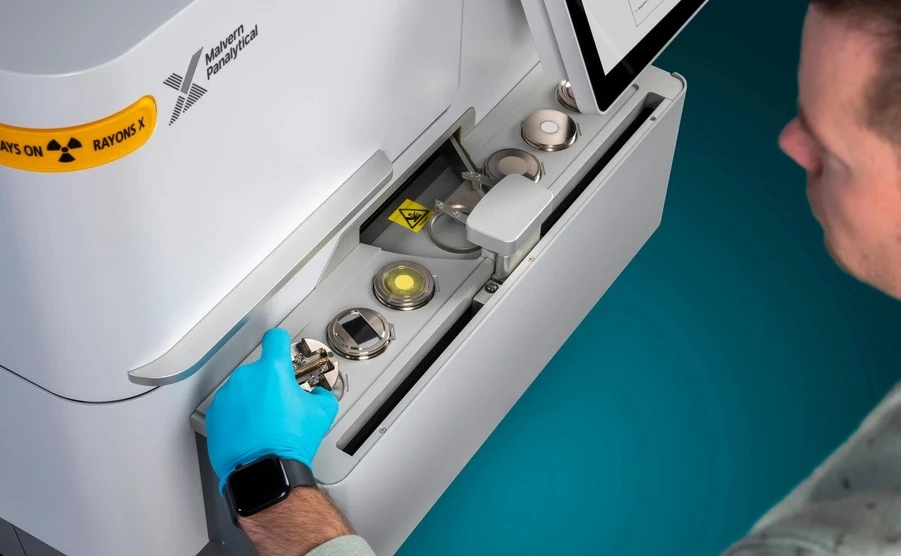
Rapid and reliable asbestos screening is becoming increasingly important as laboratories face growing pressure to identify regulated materials with confidence while maintaining efficient workflows. Detecting low levels of asbestos can be challenging, particularly when complex sample matrices and elevated background signals make results difficult to interpret.
Join this webinar to discover how the Aeris compact XRD can support routine asbestos screening by delivering high-quality diffraction data in a simple, benchtop platform. We will explore how Aeris helps laboratories improve confidence in asbestos identification, reduce background interference, and detect trace levels of asbestos while maintaining a streamlined workflow.
Through real measurement examples, you will learn how Aeris can help laboratories achieve reliable results for asbestos analysis while benefiting from the ease of use, compact footprint, and operational simplicity of a benchtop XRD system.
Speaker: Dr. Martin Schreyer (Application Specialist, Malvern Panalytical)
Dr Schreyer is an inorganic chemist converted to powder diffractionist with nearly 25 years of experience. His areas of expertise are in the research on heterogeneous catalysts, structure solution from PXRD data and polymers and other powder research involving in-situ and SAXS applications. He completed his PhD at the University of Bonn (Germany) in 2001 on the hunt for new superconducting transition metal oxides. He then gradually migrated southwards with postdoc positions at TU Darmstadt and TU München. In 2005, he accepted a teaching fellow position at Nanyang Technological University. He spent the next three years teaching students about crystallography and materials characterization. 2008 marked another change to more research, when he joined the Institute of Chemical and Engineering Sciences as a Senior Research Fellow (later Scientist II). In November 2018, Dr Schreyer joined Malvern Panalytical as an Application Specialist. His daily routine involves providing application support to customers in terms of recommending the type of instrumentation and experimental techniques according to their research. This includes also conducting tests on customer samples, testing new equipment, training customers and sharing his research or Malvern Panalytical research applications at events.
Speaker: Dr. Natalia Dadivanyan (Market Development Manager – Small Molecule Pharma, Malvern Panalytical)
Dr. Natalia Dadivanyan works as the Market Development Manager for Small Molecule Pharmaceuticals at Malvern Panalytical. Natalia joined Malvern Panalytical in 2012 as an X ray diffraction specialist. Since 2016, she has been deeply engaged with the pharmaceutical industry—translating complex development challenges into practical analytical workflows.
Speaker: Dr. Uwe König (Market Development Manager – Mining & Metals, Malvern Panalytical)
Dr. Uwe König studied mineralogy and geology at the Martin-Luther-University Halle (Germany), with a master thesis on the quantification of iron ores using X-ray diffraction and the Rietveld method and a PhD thesis on synthesis and characterization of manganous layered double hydroxides (LDHs). In 2005 Dr. Uwe König joined the company as application- and product specialist. His focus is the development of new XRD applications for the mining, minerals and metals industry.