ZÁZNAM | Proběhlo Út, 8.9.2026
Zjistěte, jak systém EVOS S1000 a Aluora kit od společnosti Thermo Fisher snižují náklady na vzorky při imagingu nádorů.Přejít na webinář
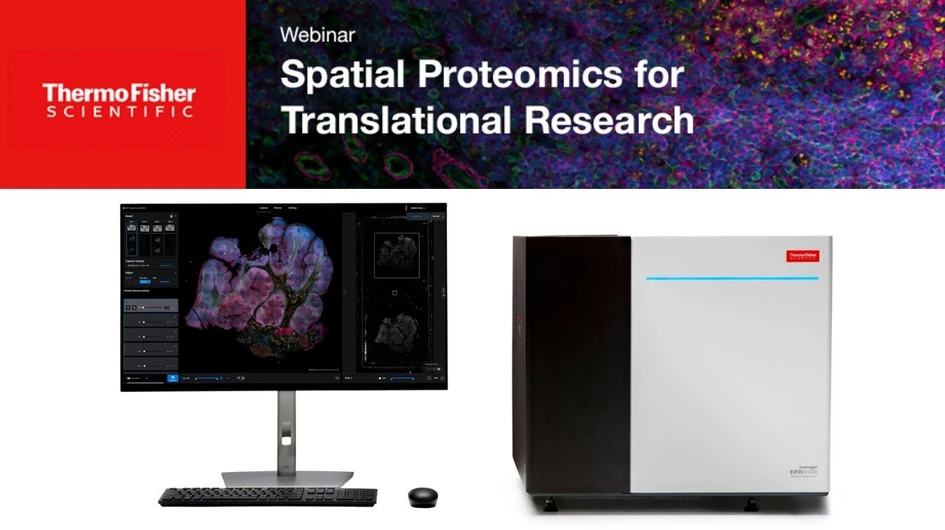
Understanding the tissue microenvironment in tumour samples is an important factor for predicting response to different treatment regimens. Highly multiplexed imaging of tenfolds of protein markers can help to define this complex biology. However, these assays are costly and not always easy to scale for larger translational studies that are often needed to translate findings to clinical evidence.
In this webinar, we demonstrate how we move from a highly multiplexed imaging platform used in a discovery phase to identify a marker for response prediction to immunotherapy at the translational phase. This transition was possible with the use of the Invitrogen™ EVOS™ S1000 Spatial Imaging System in combination with the Invitrogen™ Aluora™ Spatial Amplification Kits and a panel of 6 markers. By focusing on the most relevant targets from the discovery panel, the cost per sample is reduced to about 25 % of the initial assay, thereby resulting in a more affordable option for larger translational cohort studies. In addition, we show how relevant protein markers can be combined with in situ proximity Ligation Assay (is PLA) to simultaneously look at protein interactions, in this case demonstrated for PD-1/PD-L1. In summary, this workflow enables scalable, cost-effective spatial biology approaches that bridge discovery and clinical translation.
Presenter: Charlotte Stadler, PhD (Co-director of Spatial Biology and Head of the National Spatial Proteomics facility at Science for Life Laboratory)
Charlotte Stadler is the co-director of the Spatial Biology platform and Head of the National Spatial Proteomics facility at Science for Life Laboratory. She is also a Principal Investigator at the Royal Institute of Technology. She received her Ph.D. in 2012 within the framework of the Human Protein Atlas (HPA) project, with Prof. Emma Lundberg and Prof. Mathias Uhlén as her supervisors. During her PhD she established many of the protocols and pipelines for image based subcellular protein profiling that are used in the Human Protein Cell Atlas. Today, her main focus is to develop and implement services and technologies within spatial biology that can be used projects ranging from discovery to translational and clinical research. In her role she works with many companies in the spatial omics field including Thermo Fisher Scientific. Her internal research projects focus on the implementation and adaptation of multiplexed imaging solutions into clinical practice but also on integrating different omics types for a more complete molecular understanding of the tissue sample biology.
Presenter: Adyary Fallarero, PhD, MBA (Sr. Manager, Thermo Fisher Scientific, Faculty of Pharmacy, University of Helsinki, Finland)
Dr. Fallarero earned PhD in Biochemistry from the University of Havana, Cuba and a Master in International Business Management (MBA) from the Tampere University of Applied Sciences, in Finland.
During her more than 10 years of academic career, she published over 75 peer-reviewed publications, co-authored over 10 patents, and was awarded multiple grants to lead research programs focused on early drug discovery of anti-biofilms. In 2018, she received the prestigious Oskar Öflund’s Foundation Grand Prize, for her contributions to the development of the field of bacterial biofilms in Finland.
She joined Thermo Fisher Scientific in 2016 to work on cell analysis instrumentation, gaining significant expertise in new product development and product management. Since 2021, she has been responsible for new product introductions, portfolio management and commercial enablement of cell and tissue imaging systems.